

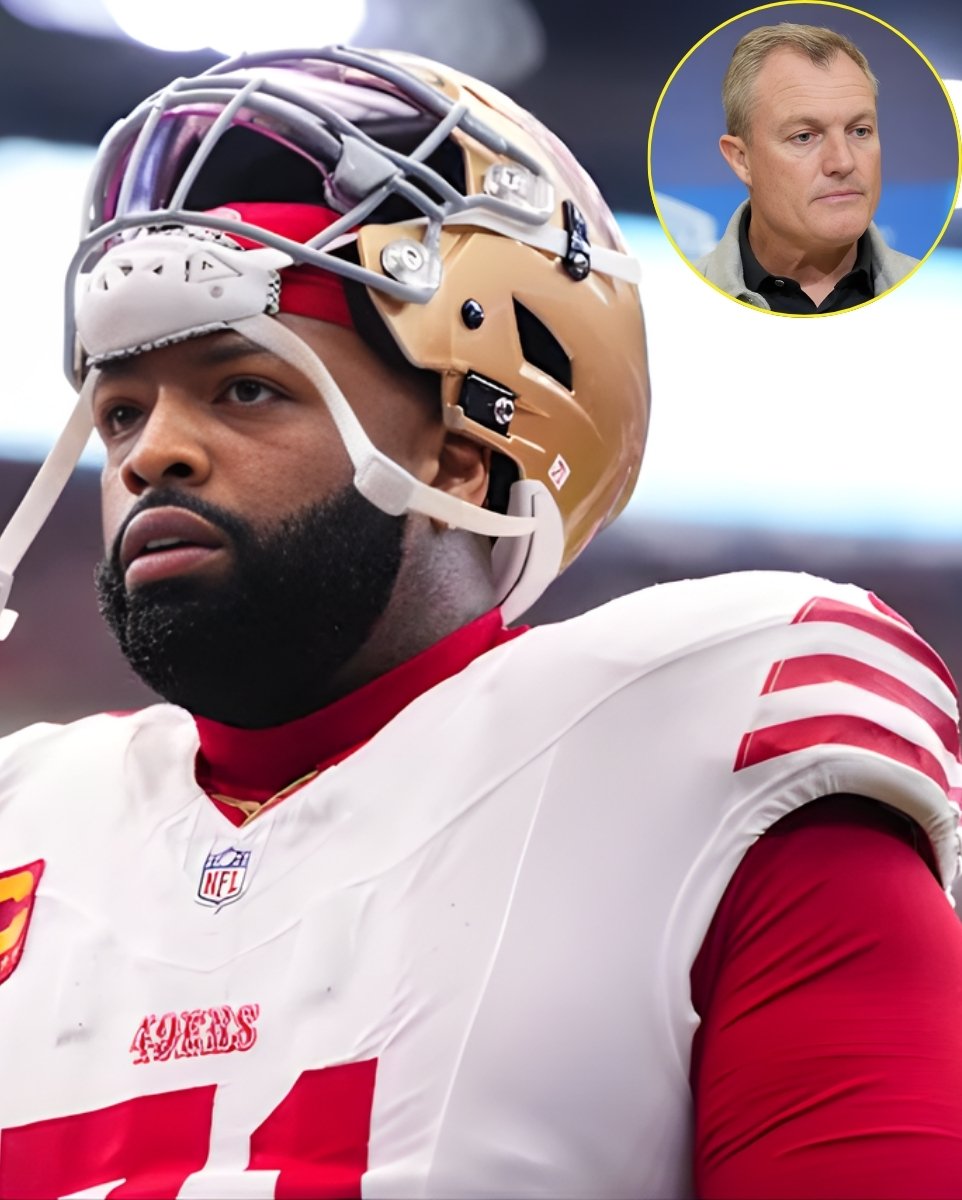
It wouldn’t be a 49ers offseason without tension — and this time, it’s coming from the blind side.
When rumors swirl around a franchise cornerstone, it’s never “just business.” It’s a potential turning point.
The San Francisco 49ers once again find themselves navigating contract drama, and this time it centers on All-Pro left tackle Trent Williams.
According to Adam Schefter, San Francisco could even consider releasing Williams due to the massive salary cap hit he carries next season.
Release him.
Even in an NFL landscape driven by cap mathematics, that’s a jarring sentence.
Calm Words, High Stakes
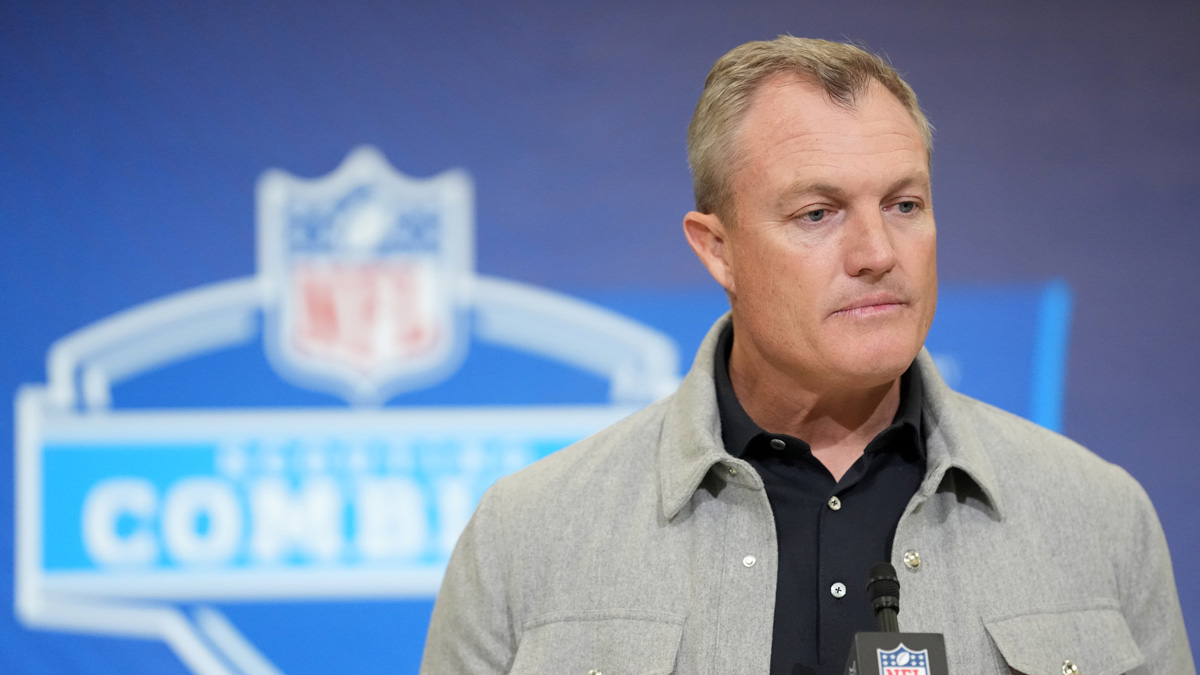
General manager John Lynch struck a measured tone while speaking to media at the NFL Combine. He didn’t sound alarmed. He didn’t escalate. He projected stability.
But front offices rarely reveal their full hand in February.
Behind the scenes, contingency planning is constant. And when you’re dealing with a 37-year-old star tackle commanding premium money, long-term calculations inevitably enter the conversation.
Williams isn’t just productive — he’s transformational. The numbers consistently show San Francisco’s offense functions at a higher level when he’s on the field. Protection stabilizes. The run game becomes more dynamic. Quarterback comfort increases.
He’s also a locker room pillar. His rapport with Brock Purdy is well established. His presence carries weight beyond scheme.
But the NFL does not pause for sentiment.
The Age Question Nobody Wants to Ask
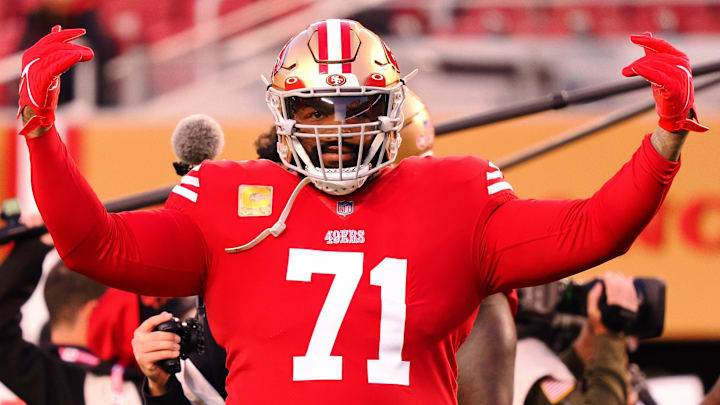
At 37, Williams remains elite — but the reality of time looms. Even the greatest tackles eventually hit the physical cliff. The 49ers must think about succession, whether publicly acknowledged or not.
Do they ride it out and risk a sudden drop-off?
Or do they act preemptively and secure the future?
If negotiations with Williams grow tense, San Francisco could pivot from defense to aggression.
And that’s where the conversation gets fascinating.
A Blockbuster Thought: Tristan Wirfs
What if the 49ers didn’t just replace Williams — what if they upgraded for the next decade?
Enter Tristan Wirfs of the Tampa Bay Buccaneers.
At just 26 years old, Wirfs is widely regarded as one of — if not the — best tackles in the NFL. Dominant. Athletic. Technically refined. And crucially, under contract through 2029.
This wouldn’t be a stopgap solution. It would be a generational reset at left tackle.
Of course, a straight swap is unrealistic. Tampa Bay would have zero incentive to exchange a 26-year-old cornerstone for a 37-year-old veteran, regardless of résumé.
But blockbuster trades are rarely simple.
San Francisco could theoretically package Williams with a high-value draft asset — perhaps a 2027 second-round pick and additional compensation — to entice the Buccaneers. From the 49ers’ perspective, surrendering premium draft capital to secure arguably the league’s top tackle under long-term control could justify the cost.
After all, if Williams departs, that same draft capital would likely be spent searching for his replacement anyway.
Why gamble on development when you can acquire certainty?
Risk vs. Reset
This scenario would represent more than a trade. It would signal a philosophical shift.
Keeping Williams is about maximizing the present. Trading for Wirfs would be about dominating the future.
There’s risk either way.
If the 49ers release or lose Williams without a premium replacement, the drop-off could destabilize the offense overnight. Left tackle is not a plug-and-play position. It’s foundational.
But if they overcommit to aging production and face regression mid-contract, they risk long-term roster flexibility.
The decision isn’t emotional. It’s strategic.
What Happens Next?
Realistically, San Francisco will exhaust every avenue to retain Williams. He remains elite. He remains vital. And moving on from a player of his stature would send shockwaves through the locker room.
Yet Schefter’s report alone changes the temperature.
Once release becomes a public possibility, leverage shifts. Agents recalibrate. Contingencies accelerate.
Lynch may project calm, but smart front offices prepare for volatility.
And if negotiations deteriorate, don’t be surprised if the 49ers explore something bold — even unprecedented.
Because elite teams don’t wait for decline. They anticipate it.
The Bottom Line
The most likely outcome? Williams remains in San Francisco, anchoring the line and chasing another Super Bowl.
But the mere existence of alternatives — including a potential pursuit of Tristan Wirfs — reveals how high the stakes truly are.
The 49ers are not just negotiating a contract.
They are deciding how they want to protect their future.
And when it comes to franchise left tackles, those decisions echo for years.