

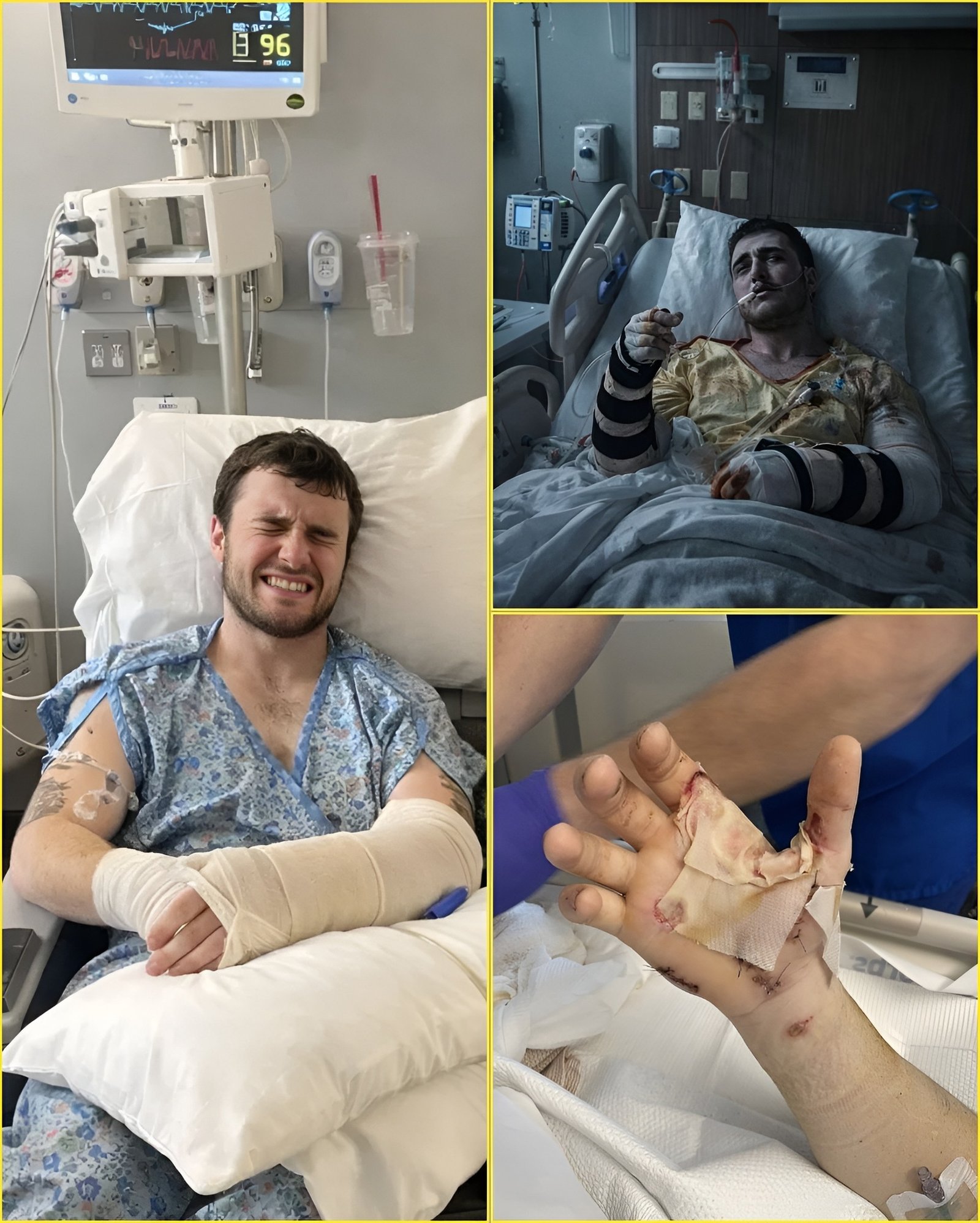
No alarms changed. No new procedure was announced.
But today, something powerful stepped into Hunter Alexander’s hospital room — proof that survival is possible.
BREAKING: A Fellow Lineman’s Survival Sparks New Hope in Hunter Alexander’s Fight
For weeks, Hunter Alexander’s hospital room has been defined by monitors, surgical updates, and the heavy rhythm of uncertainty.
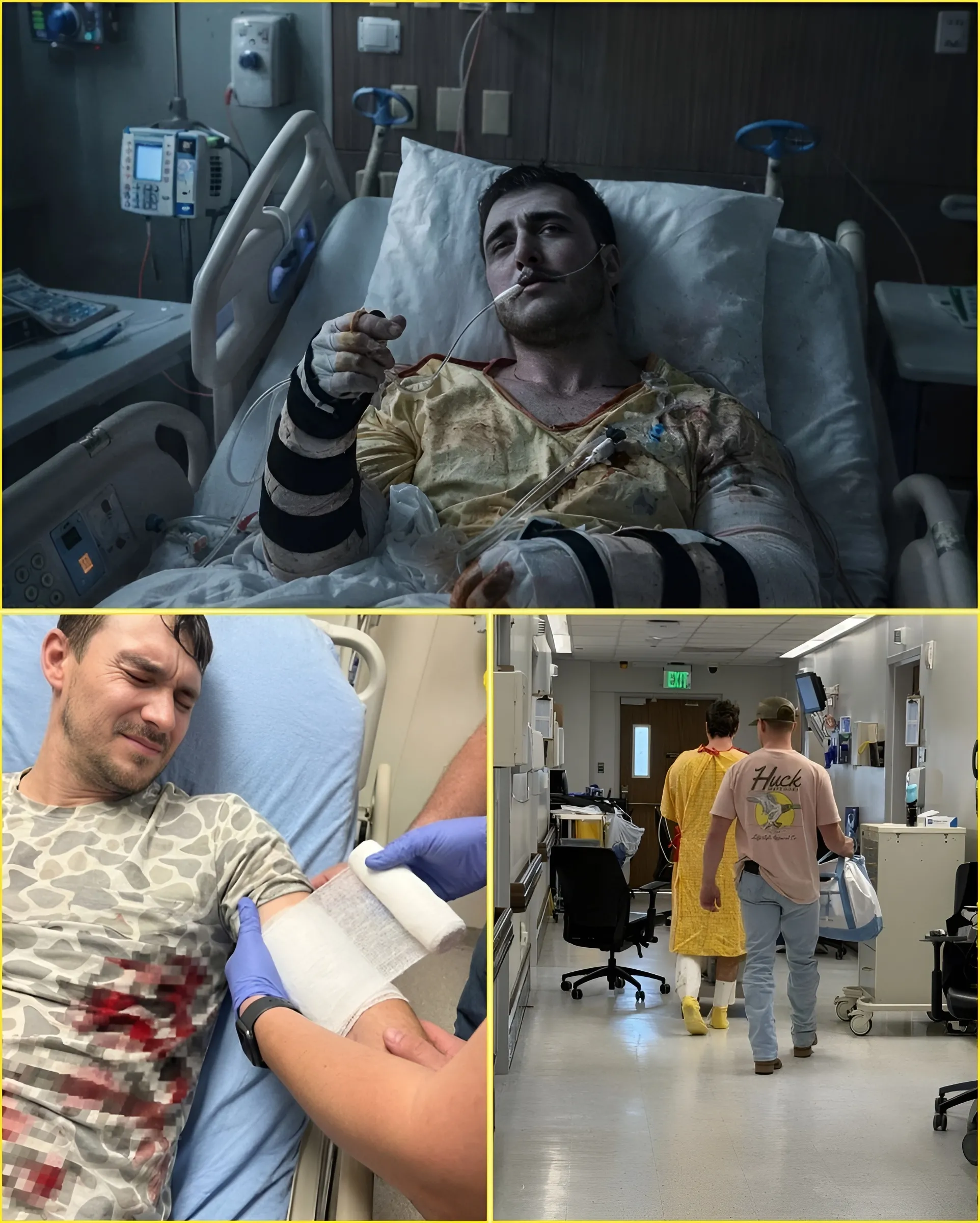
Today, it felt different.
Not because doctors delivered groundbreaking news.
Not because a surgery was canceled or confirmed.
But because hope walked through the door.
Hunter, the 24-year-old lineman fighting to recover from catastrophic electrical injuries, received visitors throughout the day. According to family members, the atmosphere shifted. There was laughter. There were stories. For a few hours, the room didn’t feel like a battlefield.
It felt human again.
But one visitor stood apart from the rest.
Mr. Frank Dennis.
And what makes his visit extraordinary is not just that he showed up — it’s who he is.
Frank Dennis is a fellow lineman. Nearly 30 years ago, he endured his own devastating workplace injury. He survived the kind of trauma that reshapes a life. And today, he drove all the way from Jennings, Louisiana, to sit beside Hunter’s bed.
He didn’t bring flowers.
He brought perspective.
A Living Reminder of What’s Possible
In a hospital room, comfort usually comes in soft words and quiet encouragement. But this visit carried something deeper.
Frank shared his story — not as a headline, not as a warning — but as proof.
Proof that survival doesn’t end in an ICU.
Proof that the road, while long, can still lead somewhere meaningful.
Proof that life after trauma exists.
He spoke candidly about the physical pain, the emotional weight, and the slow grind of recovery. He offered insight into what the coming weeks and months might feel like. He reminded Hunter that progress is rarely linear — and that resilience is built in moments when everything feels uncertain.
Family members described him as kind, grounded, and steady. The kind of man whose presence alone changes the temperature of a room.
Because when someone who has already walked through the fire looks you in the eye and says, “You can make it,” it doesn’t sound like encouragement.
It sounds like testimony.
Laughter in the Middle of the Storm
Hunter’s family said there was laughter today — genuine, unforced laughter.
Stories about job sites. About storms. About the brotherhood that exists among linemen who risk their lives to restore power for strangers.
For a while, Hunter wasn’t just a patient awaiting surgical updates. He was a young man surrounded by people who understand the cost of the work he was doing the day everything changed.
The moment didn’t erase the pain. It didn’t eliminate the medical uncertainty.
But it pushed back against it.
In trauma recovery, hope is not abstract. It is practical. It keeps patients engaged. It steadies families. It reminds everyone that the current chapter is not necessarily the final one.
Today, hope had a face — and it sat in a chair beside Hunter’s bed.
The Waiting Continues
Even with the emotional lift, the medical reality remains unchanged.
The family is still waiting to learn whether Hunter will undergo his third surgery today. Because the procedure has been classified as an “add-on,” it could be scheduled at any time depending on operating room availability and higher-priority emergencies.
That means there may be no warning.
No countdown.
Just a knock at the door.
A brief explanation.
And the familiar moment when the hospital bed begins to roll toward the operating room.
This is the rhythm of recovery now — joy and uncertainty existing side by side.
A Lifeline, Not Just a Visit
As the day comes to a close, nothing definitive has changed on the surgical schedule.
But something has shifted emotionally.
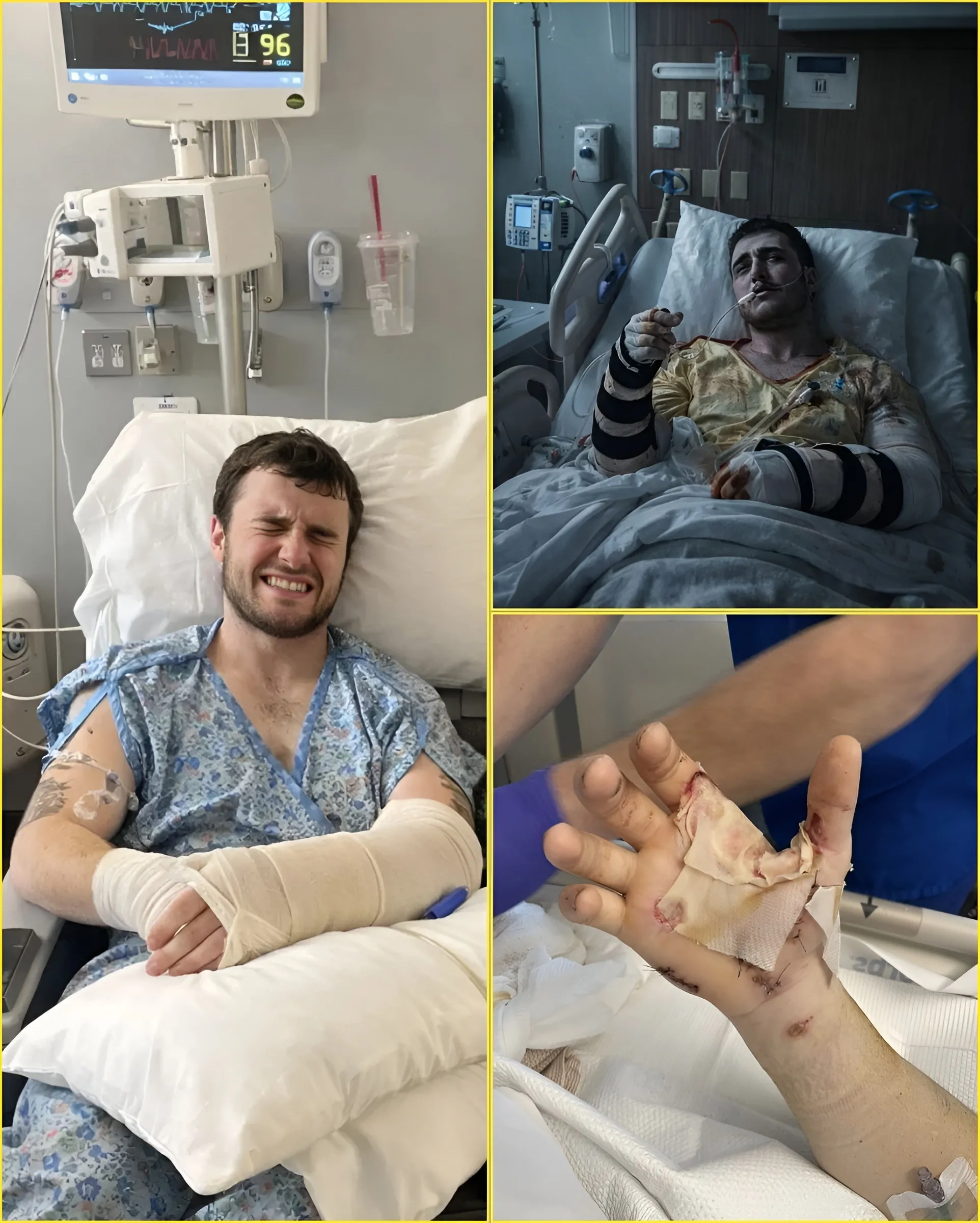
A man who survived nearly three decades ago walked into Hunter’s room and showed him — and everyone watching — that catastrophe does not have to be the end of the story.
In a journey filled with procedures, pain management, and high-stakes medical decisions, today offered something that can’t be prescribed:
A glimpse of the future.
And in a fight where every hour matters, that glimpse may be one of the most powerful medicines of all.