

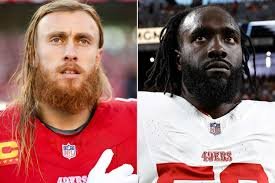
He was suited up. His name was called. The moment arrived.
And then — he refused.
On a tense Thursday night under the lights at Levi’s Stadium, what unfolded inside the San Francisco 49ers locker room may linger longer than the 12–6 loss to the Los Angeles Rams.
Because this wasn’t just about a defeat.
It was about a player who said no.
De’Vondre Campbell’s Stunning Sideline Standoff
During the third quarter of the Dec. 12 matchup, linebacker De’Vondre Campbell was expected to take the field. Injuries had thinned the depth chart. The team needed him. His number was called.
He refused.
Head coach Kyle Shanahan didn’t spin it, soften it, or reinterpret it.
“He said he didn’t want to play today.”
That was it.
No elaborate explanation. No cryptic ambiguity. Just a flat declaration that sent shockwaves through the sideline — and eventually through the locker room.
With linebackers dropping one after another, this wasn’t a luxury substitution. It was a necessity.
Earlier in the game, fan-favorite linebacker Dre Greenlaw had made an emotional return after tearing his Achilles in Super Bowl LVIII. His comeback alone had electrified the stadium. But after a strong first half — eight total tackles, three solo — Greenlaw exited with knee soreness.
Another linebacker, Dee Winters, was already unavailable.
The door opened for Campbell.
Instead, third-string linebacker Demetrius Flannigan-Fowles was sent in.
And the sideline noticed.
“It’s Just Dumb. It’s Stupid.”
If there was any doubt about how the locker room felt, tight end George Kittle erased it.
“Whatever his decision was, it wasn’t for this organization, it wasn’t for this team and that’s on him,” Kittle said after the game.
Then he got even more direct.
“It’s just dumb. It’s just stupid. It’s very immature. I just don’t see how you could do something like that to your team.”
This wasn’t polished PR talk. This was raw frustration.
Kittle made clear the loss wasn’t solely because of Campbell’s decision. “Is that the reason we lost? Absolutely not,” he admitted. But the damage wasn’t measured only on the scoreboard.
“Try to win football games when someone doesn’t want to play football, especially when you’re suited up,” Kittle said. “It kind of puts you down, especially when you lose two linebackers.”
In a league where players battle through torn ligaments, fractured fingers, and unimaginable physical strain, refusing to enter the game while dressed for action crosses an unspoken line.
And teammates felt it.
The Greenlaw Factor
Context matters.
Greenlaw’s return was one of the emotional storylines of the season. His Achilles tear in Super Bowl LVIII had been devastating — not just for him, but for those closest to him.
Linebacker Fred Warner had spoken publicly about the pain of seeing his teammate go down in the biggest game of the year.
“Those were real feelings,” Warner said months later. “My heart just hurt for him in that moment.”
That brotherhood is real in NFL locker rooms. Especially in San Francisco, where defensive identity has been a foundation.
So when Greenlaw clawed his way back — only to exit again with knee soreness — it was more than just another injury. It was a moment that demanded unity.
Instead, it produced fracture.
Campbell had reportedly seen reduced playing time with Greenlaw’s return. That frustration may have simmered beneath the surface. But when the team needed him most, the refusal became impossible to ignore.
Shanahan’s Cold Response
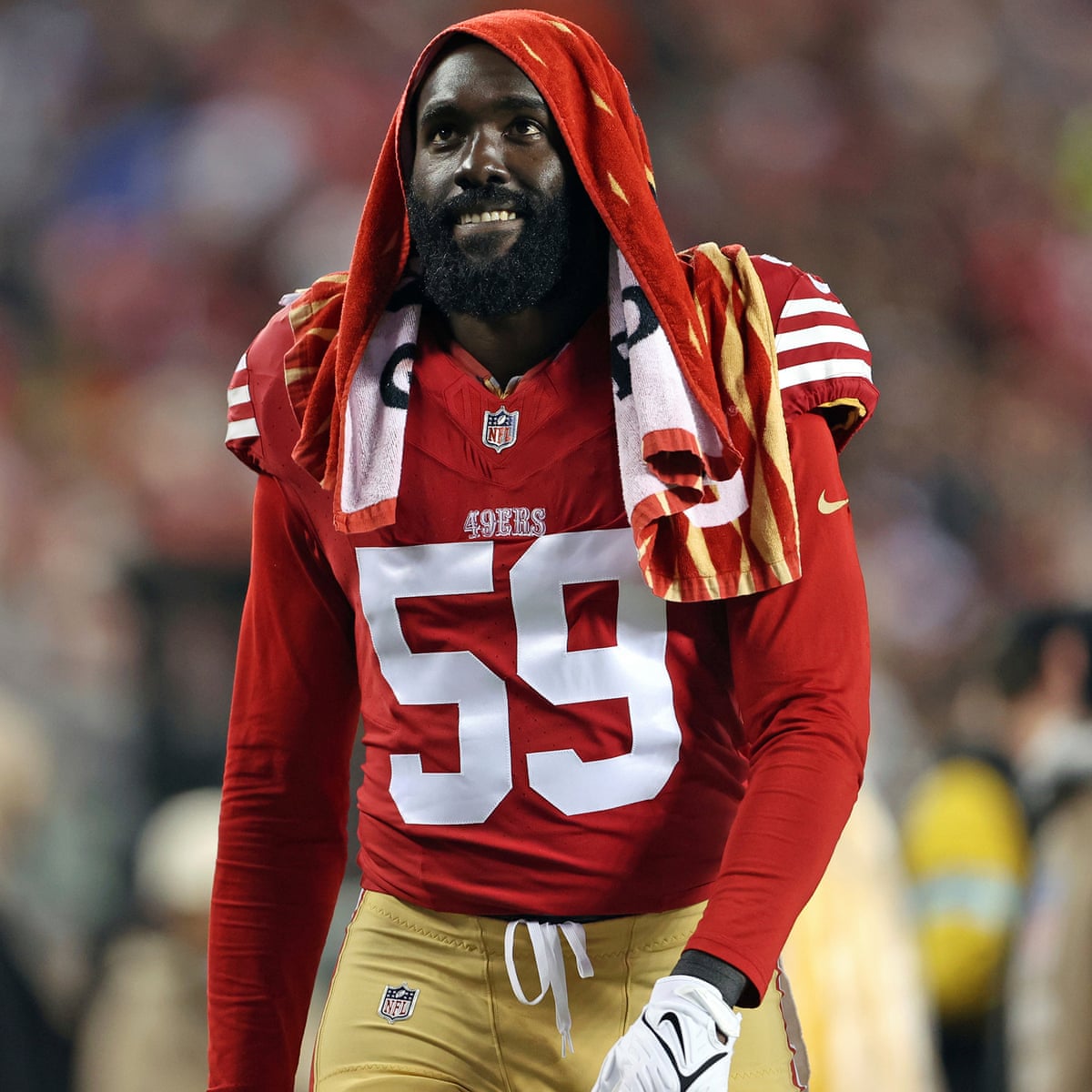
Shanahan didn’t rant. He didn’t explode.
He simply moved on.
“When someone says that, you move on,” he said. “That’s somebody who doesn’t want to play football. That’s pretty simple. I think our team and myself, we know how we feel about that, so we don’t need to talk about him anymore.”
In NFL language, that’s seismic.
Coaches rarely close doors publicly. They leave room for nuance. For reconciliation. For second chances.
Shanahan’s tone suggested something different — a line drawn.
Campbell’s status with the 49ers is now uncertain. His future with the team? Even more so.
And with San Francisco’s playoff hopes already hanging in a delicate balance, internal distractions are the last thing this roster can afford.
A Loss Bigger Than 12–6?
The 12–6 defeat itself was frustrating. Defensive grind. Offensive struggles. Missed opportunities.
But this storyline may outlast the box score.
Football culture revolves around one principle above all else: next man up.
Injuries are inevitable. Weather is unpredictable. Opponents are relentless.
But effort? Effort is non-negotiable.
When a suited-up player declines to enter the field in the middle of a tight divisional game, it challenges the foundation of that culture.
And it forces a question that teams rarely want to ask publicly: Can trust be repaired?
What Happens Now?
The 49ers still have games to play. A postseason race to chase. A locker room to stabilize.
Greenlaw’s health will be monitored closely. Warner remains the emotional anchor. Veterans like Kittle will continue to speak when something feels off.
As for Campbell?
Silence may say more than any press conference.
If this was a momentary flash of frustration, the consequences could still be severe. If it was something deeper — dissatisfaction, disengagement, or irreparable tension — the resolution could come swiftly.
Because in the NFL, availability and willingness are currency.
And on Thursday night, one player’s refusal became the loudest moment in a quiet, defensive battle.
The scoreboard read 12–6.
But the real fallout may still be unfolding.