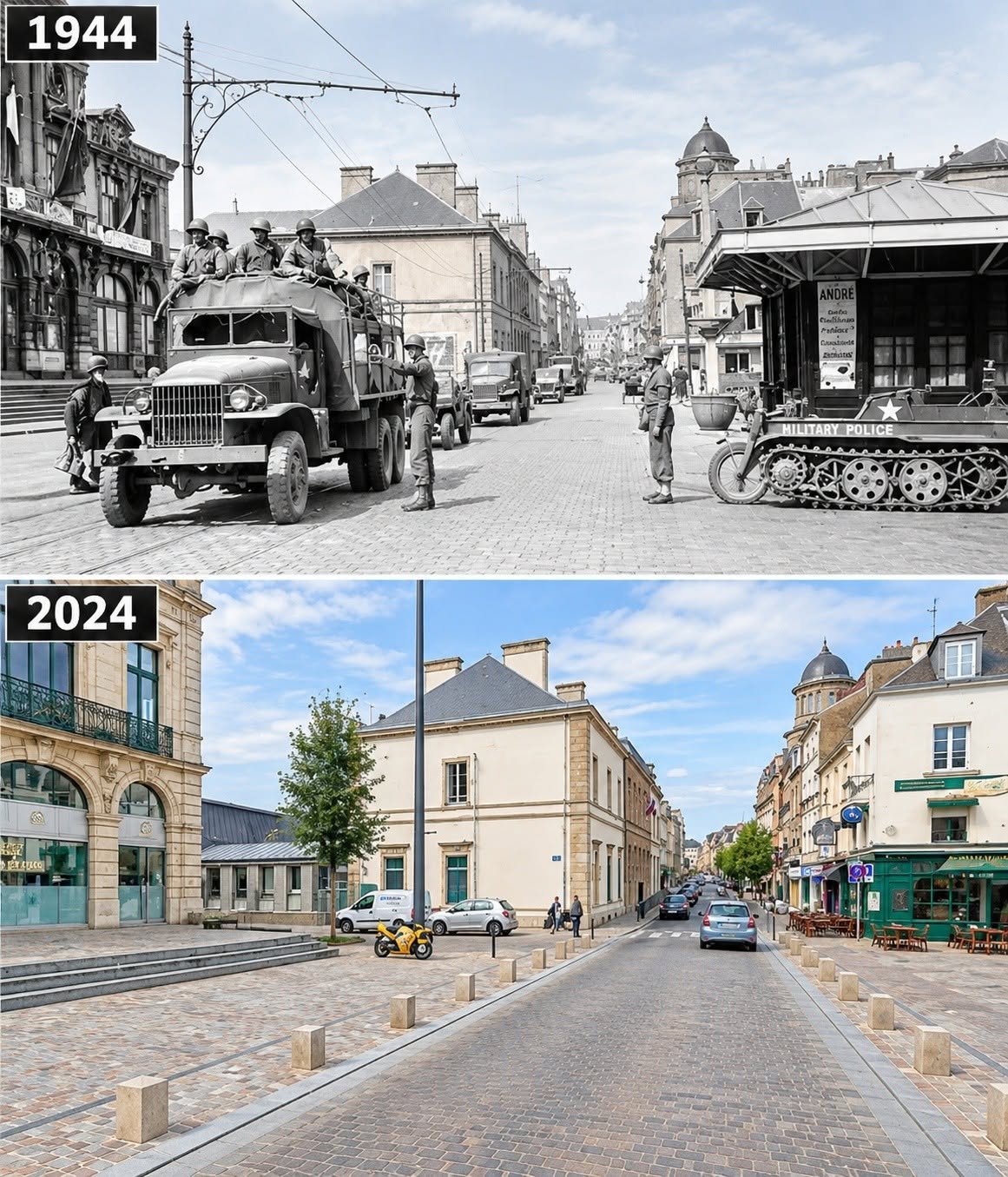
World War II ended in 1945, but the world that emerged from the conflict was almost unrecognizable. Cities had been destroyed, millions of people had been displaced, economies were struggling to recover, and a new political order was beginning to take shape.
Yet the years after the war were not simply a story of destruction. They were also a period of extraordinary transformation. New technologies entered everyday life, cities were rebuilt, families began to return to normal routines, transportation changed rapidly, and consumer culture started to reshape ordinary life.
These 100 historical photos offer a fascinating visual journey through that transformation. From damaged European streets and returning soldiers to crowded postwar cities, new cars, expanding suburbs, television sets, factories, schools, and changing fashions, each image helps tell the story of how the modern world began to emerge.
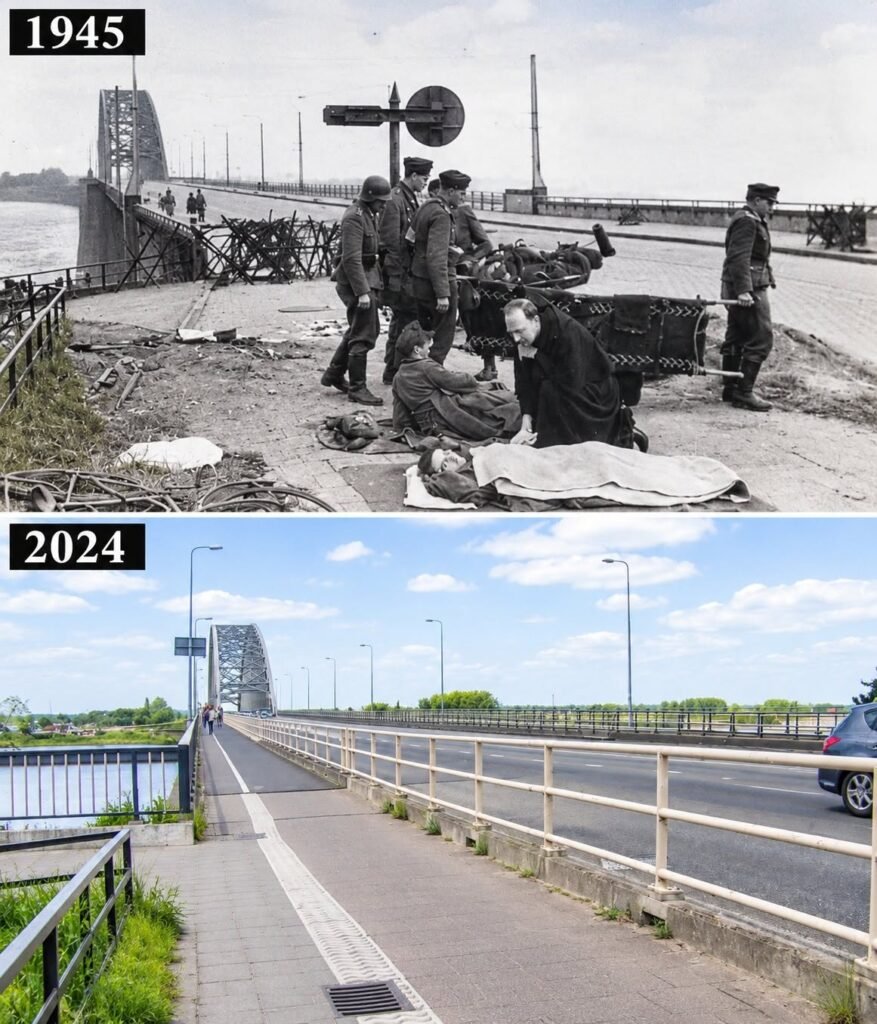
A World Trying to Rebuild
In the immediate aftermath of World War II, rebuilding was the priority.
Across Europe and parts of Asia, photographs captured streets filled with rubble, damaged buildings, temporary shelters, and people trying to reconstruct their lives. The physical destruction was enormous, but so was the determination to rebuild.
Cities such as London, Berlin, Warsaw, Rotterdam, and many others faced the enormous task of repairing homes, transportation networks, public buildings, and infrastructure.
The contrast between wartime destruction and postwar reconstruction became one of the defining visual stories of the era.
A photograph of a damaged street might appear simple at first glance, but it can reveal much more: where people lived, how transportation worked, how communities were organized, and how quickly ordinary citizens adapted to difficult circumstances.

1. Soldiers Coming Home
One of the most powerful images of the postwar period was the returning soldier.
Millions of servicemen and women came home after years away from their families. Railway stations, ports, and city streets became places of emotional reunions.
Photographs from this period often show people embracing relatives, carrying luggage, searching through crowds, or simply standing silently after finally reaching home.
For many families, the end of the war meant something they had been waiting years to experience: being together again.
2. Cities Rise From the Ruins
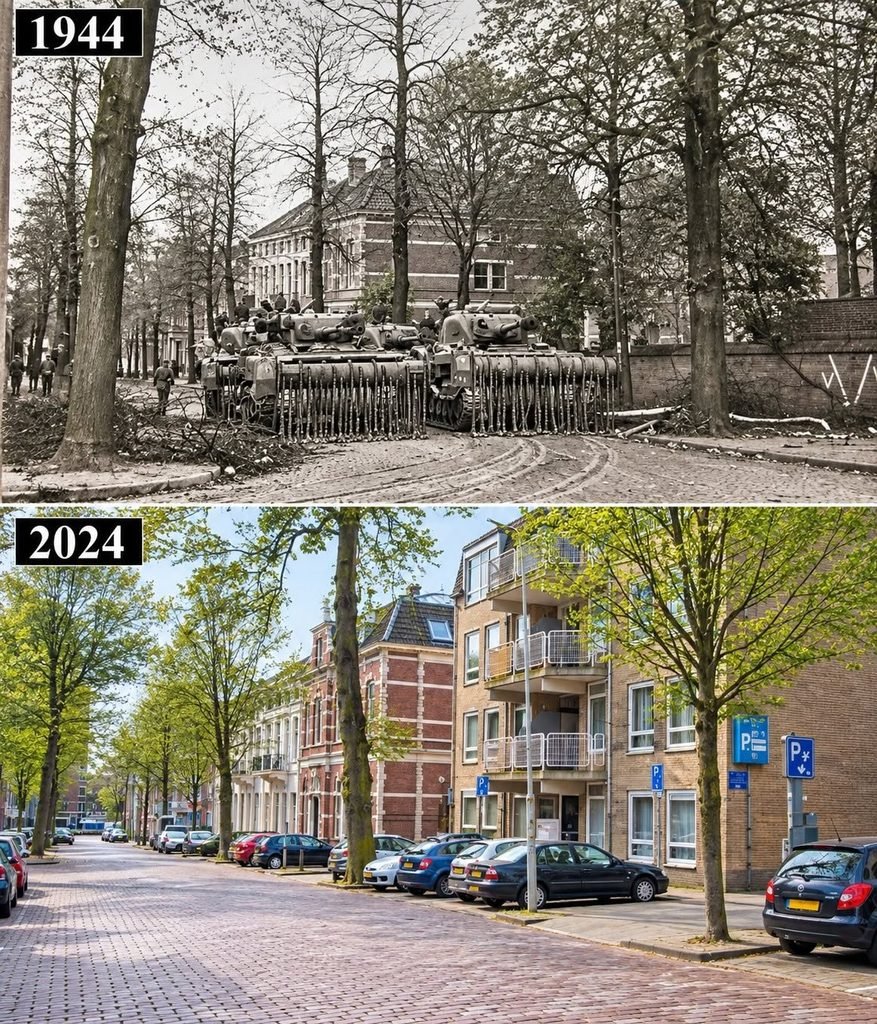
The rebuilding of cities became a symbol of the postwar era.
Construction workers appeared everywhere. Damaged buildings were repaired, roads were cleared, bridges were reconstructed, and new housing projects began to take shape.
The visual transformation could happen surprisingly quickly.
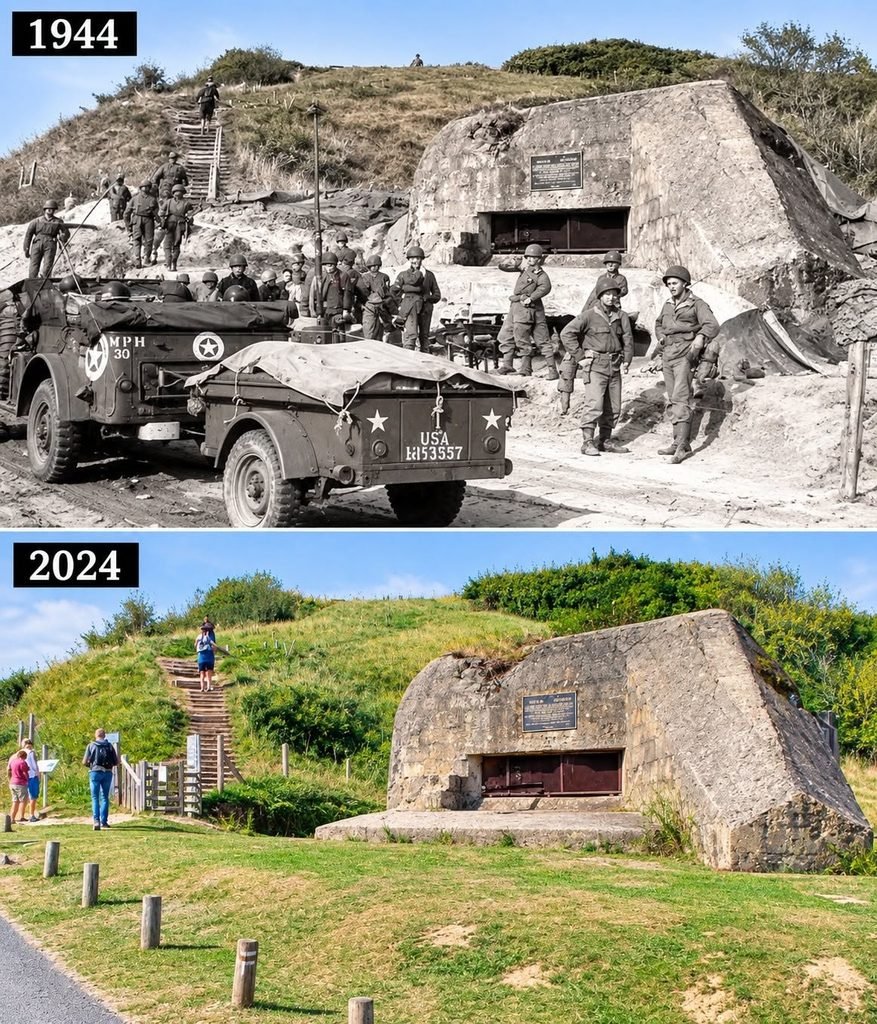
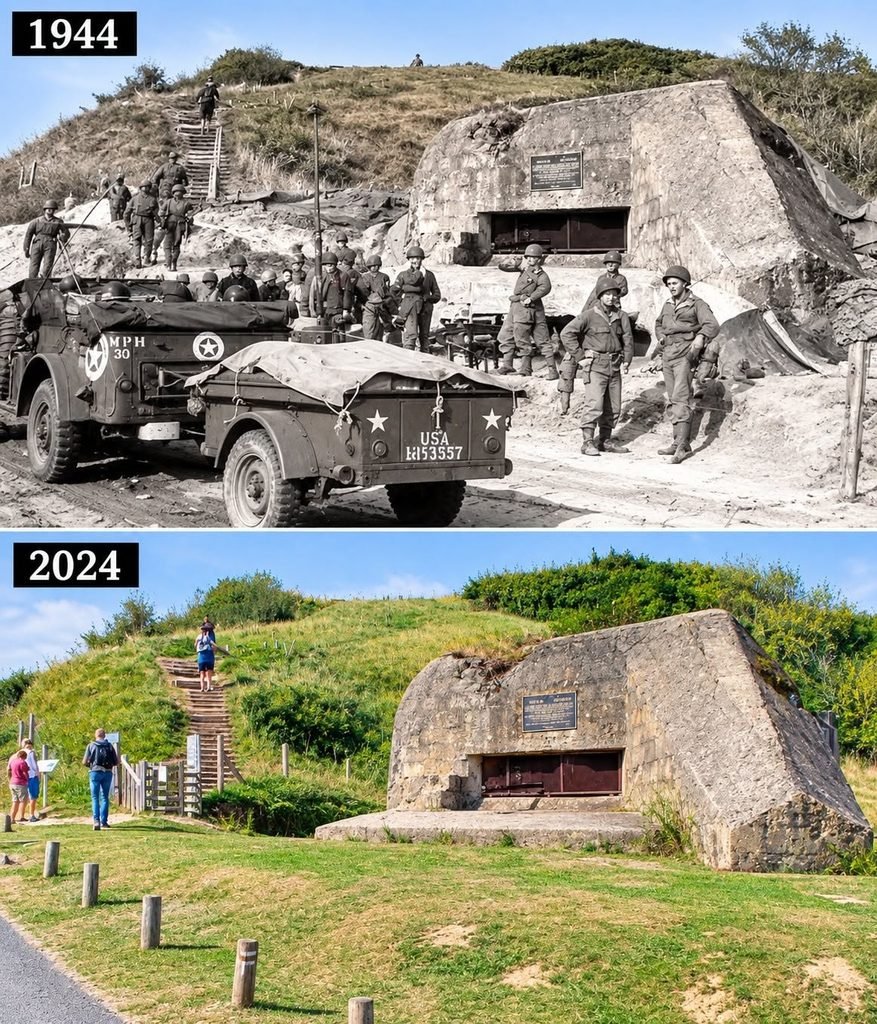
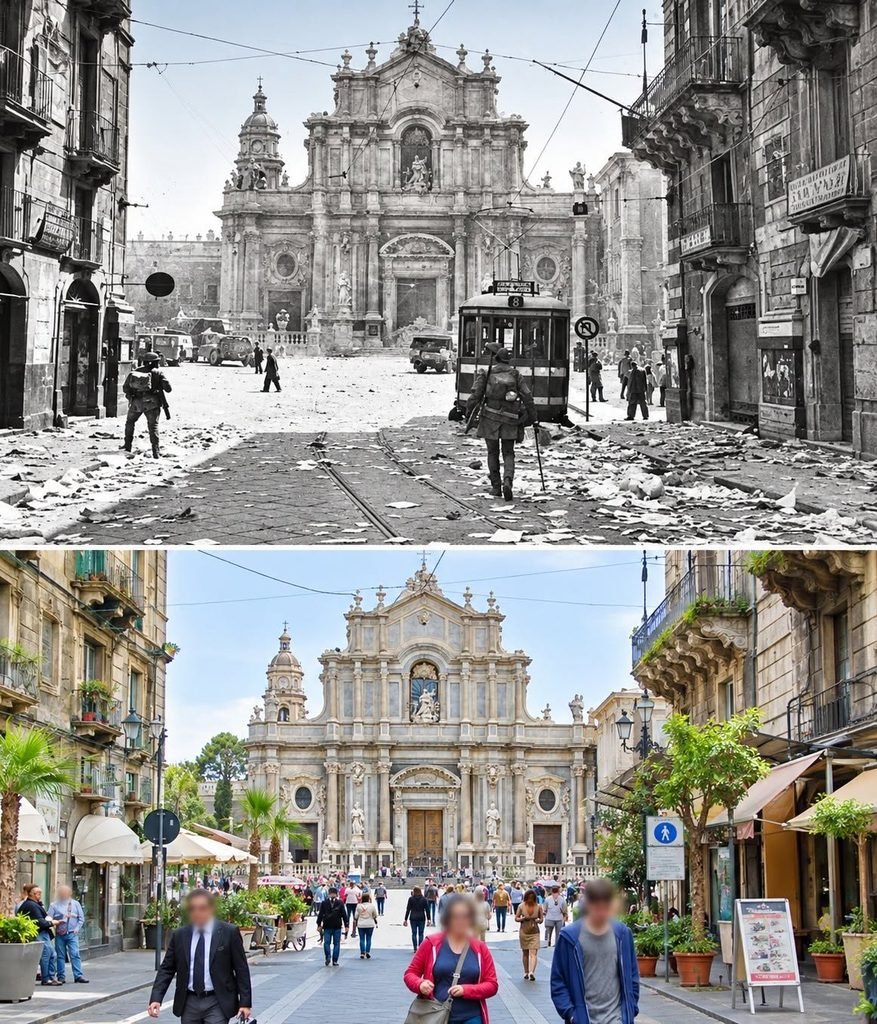
A photograph taken in 1945 might show a street covered in debris, while another image taken only a few years later could reveal shops, traffic, pedestrians, and newly reconstructed buildings.
These photographs show that history does not always change in a single dramatic moment. Sometimes it changes one building, one road, and one neighborhood at a time.
3. The Birth of the Suburban Lifestyle
One of the biggest changes after the war occurred outside traditional city centers.
In countries such as the United States, suburban communities expanded rapidly. New houses were built in large numbers, and families increasingly moved into neighborhoods designed around modern domestic life.
The detached house, driveway, garden, garage, and family car became powerful symbols of postwar prosperity.
Photographs of these neighborhoods reveal an important shift in how people lived.
Instead of crowded urban housing, many families were now dreaming about space, privacy, modern appliances, and a home of their own.
4. The Automobile Changes Everything
The postwar decades transformed transportation.
Cars became increasingly important in everyday life, particularly in countries experiencing strong economic growth. Roads expanded, traffic increased, and businesses began designing themselves around automobile travel.
Photographs of busy streets from the 1950s and 1960s often look surprisingly different from wartime images.
Gas stations, parking lots, drive-in restaurants, highways, and car dealerships became familiar parts of the landscape.
The automobile did more than change transportation. It changed where people lived, worked, shopped, and spent their free time.
5. Television Enters the Home
Another major transformation happened inside the home.
Television gradually became a central source of entertainment and information for millions of families.
Early television sets were often expensive and impressive pieces of furniture. Families sometimes gathered together in front of a single screen to watch news, sporting events, entertainment programs, and major historical moments.
Photographs of living rooms from the 1950s show how quickly television became part of everyday life.
The world was no longer experienced only through newspapers, radio, or cinema. Moving images could now enter the home every evening.
6. The Rise of Consumer Culture
The postwar economic boom helped create a new culture of consumption.
Stores filled with refrigerators, washing machines, radios, televisions, vacuum cleaners, kitchen appliances, clothing, toys, and other consumer goods.
For families who had experienced years of shortages and rationing, these products represented more than convenience.
They represented stability and prosperity.
Advertising increasingly encouraged people to associate happiness with modern homes, modern products, and modern lifestyles.
Photographs of postwar department stores capture this transformation remarkably well.

7. New Technology Becomes Everyday Technology
The postwar period also accelerated technological development.
Some technologies had existed before the war, but improvements in manufacturing and mass production allowed them to become more accessible.
Radios became common household objects. Televisions expanded rapidly. Household appliances became increasingly affordable. Cameras became more accessible to ordinary families.
The result was a society increasingly surrounded by technology.
What had once seemed futuristic was slowly becoming normal.
8. The Changing Workplace
Factories and offices also changed dramatically after the war.
Industrial production expanded in many countries. New machines, production methods, and organizational systems transformed the workplace.
Photographs of factories from the 1950s and 1960s show workers surrounded by equipment that looked very different from the industrial environments of previous generations.
At the same time, office work became increasingly important as economies shifted toward new industries and services.
The workplace was becoming more modern, specialized, and technologically dependent.

9. Fashion Enters a New Era
Clothing provides another fascinating way to see postwar change.
The severe conditions of wartime life had influenced fashion, but the postwar period brought new styles, new fabrics, and new attitudes.
The 1950s introduced distinctive silhouettes, while the 1960s brought even more dramatic changes.
Youth culture increasingly influenced fashion.
Shorter skirts, bold patterns, new hairstyles, denim, modern suits, and casual clothing became visible signs of changing social attitudes.
A collection of photographs from the period can almost function as a visual timeline of cultural change.
10. A New Generation Grows Up
Perhaps the most important change was generational.
Children born after the war grew up in a world very different from the one their parents had known.
In many countries, families became larger, schools expanded, and childhood became increasingly associated with education, organized activities, television, toys, and consumer culture.
Photographs of postwar children playing in streets, attending school, riding bicycles, or posing with their families reveal the emergence of a new generation.
They would eventually become the teenagers and young adults who transformed culture during the 1960s and beyond.
11. Schools and Education Expand
Education also became an important part of postwar reconstruction.
New schools were built, existing schools were expanded, and more children gained access to formal education.
Classroom photographs from the period reveal changes in teaching methods, school architecture, clothing, and technology.
The classroom became one of the places where the future was being shaped.
For many children, education offered opportunities that had been difficult or impossible for previous generations.
12. Women and the Changing Social Landscape
The postwar period also brought complicated changes in the lives of women.
During the war, millions of women had entered workplaces and taken on responsibilities traditionally associated with men serving in the military.
After the war, many were encouraged to return to domestic roles.
But the experience had already changed expectations.
Over the following decades, women increasingly challenged traditional social roles, entered universities and professions in greater numbers, and became part of broader movements for equality.
Photographs from different decades reveal this gradual transformation.

13. The Cold War Changes the World
The end of World War II did not produce a peaceful international order.
Instead, tensions between the United States and Soviet Union shaped global politics for decades.
The Cold War influenced military spending, technology, education, diplomacy, architecture, popular culture, and everyday fears.
Photographs of military parades, civil-defense drills, political leaders, and divided cities became symbols of a new global reality.
The world had survived one enormous conflict and quickly found itself divided into competing political blocs.
14. Berlin Becomes a Symbol
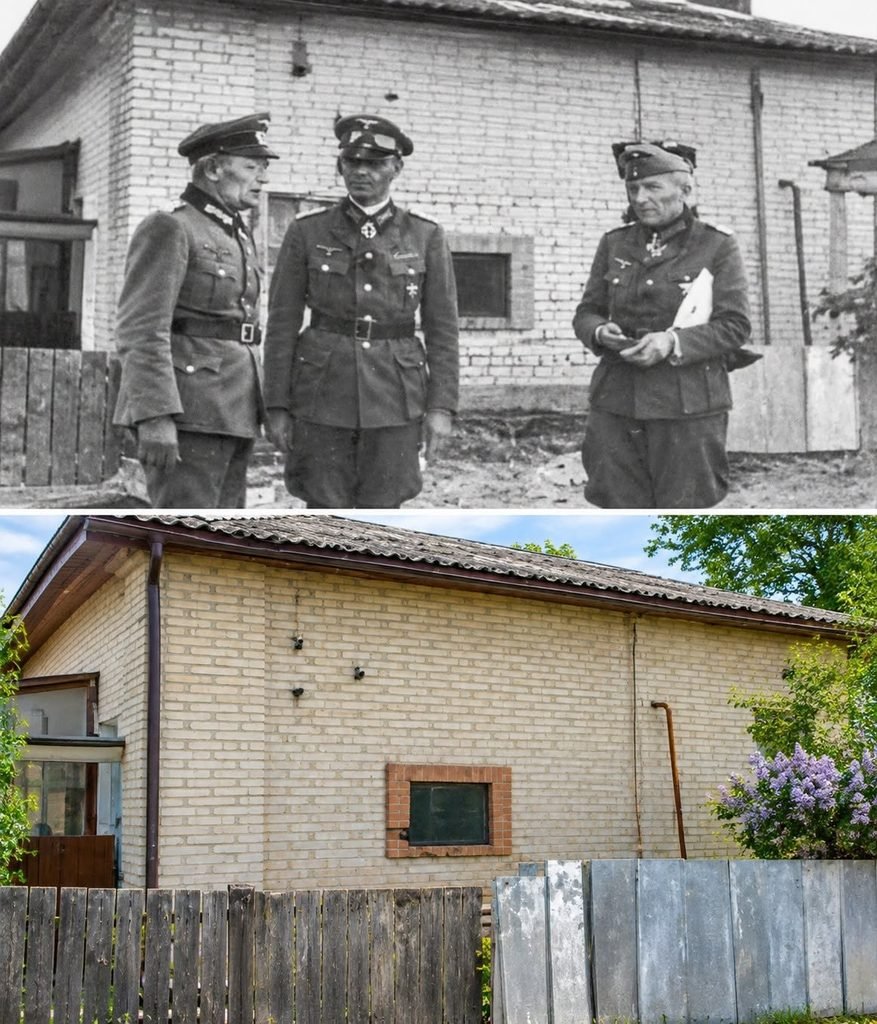
Few places represented the new postwar world more clearly than Berlin.
The city had been devastated during the war and later became a focal point of the Cold War.
The eventual construction of the Berlin Wall in 1961 transformed the city into one of the most powerful symbols of political division.
Photographs of the wall, checkpoints, soldiers, families separated by barriers, and people watching from opposite sides remain among the most recognizable images of the era.
15. The Space Age Begins
The postwar world also looked upward.
Scientific competition between major powers contributed to rapid advances in rocketry and space exploration.
The launch of Sputnik in 1957 shocked the world. The first human spaceflight followed in 1961.
Then came the American lunar program.
By the time humans landed on the Moon in 1969, the technological transformation that had begun in the postwar years had reached an extraordinary milestone.
Photographs of rockets, astronauts, mission control rooms, and television audiences watching space missions show how deeply technology had entered popular culture.
16. Highways and Modern Cities
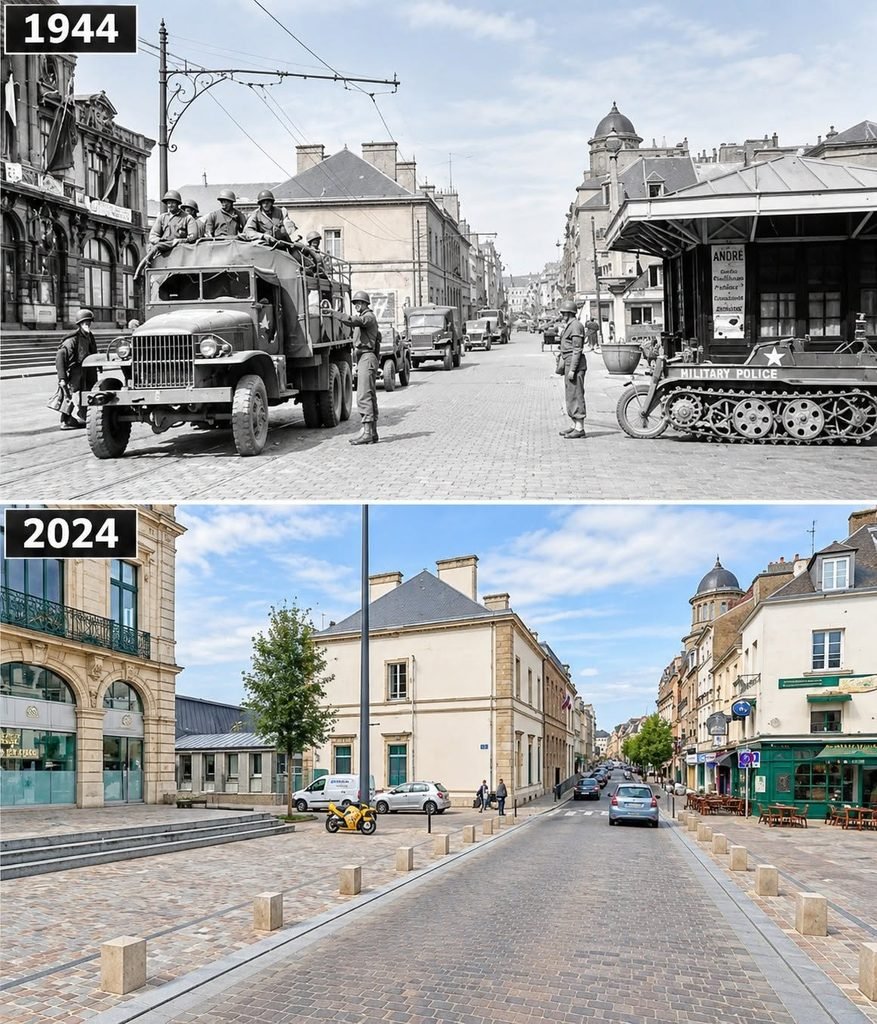
Urban landscapes changed dramatically.
Highways cut through metropolitan areas. Skyscrapers transformed city skylines. Shopping centers expanded beyond traditional downtown districts.
Traffic became a defining feature of urban life.
Photographs taken from elevated viewpoints often reveal just how dramatically cities expanded during the postwar decades.
The modern metropolitan landscape was taking shape.
17. Shopping Becomes an Experience
The shopping experience also changed.
Large department stores, supermarkets, shopping centers, and specialized retail chains became increasingly common.
Consumers could browse larger selections of products than previous generations had ever imagined.
Bright signs, large windows, colorful packaging, and modern displays became part of everyday life.
The visual language of advertising was changing along with the products being sold.

18. Entertainment Goes Mainstream
Movies, music, television, sports, and celebrity culture expanded dramatically.
Cinema remained enormously popular, while television created entirely new audiences.
Music increasingly became a defining part of youth culture.
By the 1960s, performers could become international cultural icons almost overnight.
Photographs of concerts, record stores, movie theaters, and television studios capture the beginnings of a global entertainment culture.
19. The Changing Face of Travel
Air travel also became more accessible.
Commercial aviation had existed before World War II, but the postwar period transformed it into a major form of international transportation.
Airports became larger and more modern.
Jet aircraft dramatically reduced travel times.
Photographs of passengers boarding early commercial jets show how air travel gradually shifted from an extraordinary luxury into a more familiar part of modern life.
20. The Rise of Modern Advertising
Advertising became more sophisticated after the war.
Companies increasingly used psychology, celebrity endorsements, television commercials, colorful packaging, and carefully designed campaigns to influence consumers.
The goal was no longer simply to tell people that a product existed.
Advertising began selling lifestyles.
A car could represent freedom. A refrigerator could represent modern family life. A television could represent entertainment and connection with the wider world.
This helped create a powerful consumer culture that continues to influence society today.
21. Changing Streets, Changing People
Perhaps the most fascinating thing about postwar photographs is that they show change at street level.
People walk to work.
Children play outside.
Cars fill intersections.
Workers leave factories.
Families shop at department stores.
Teenagers gather in public spaces.
None of these moments necessarily appears historic when viewed individually.
But together, they reveal one of the greatest transformations of the twentieth century.
22. The World Becomes More Connected
International communication expanded rapidly.
Radio broadcasts, television, aviation, telephones, newspapers, and later satellites allowed events in distant parts of the world to reach people faster than ever.
A major event could now become a global event.
The postwar world was gradually becoming more interconnected.
That transformation laid important foundations for the highly connected world of the twenty-first century.
23. From Ruins to Modernity
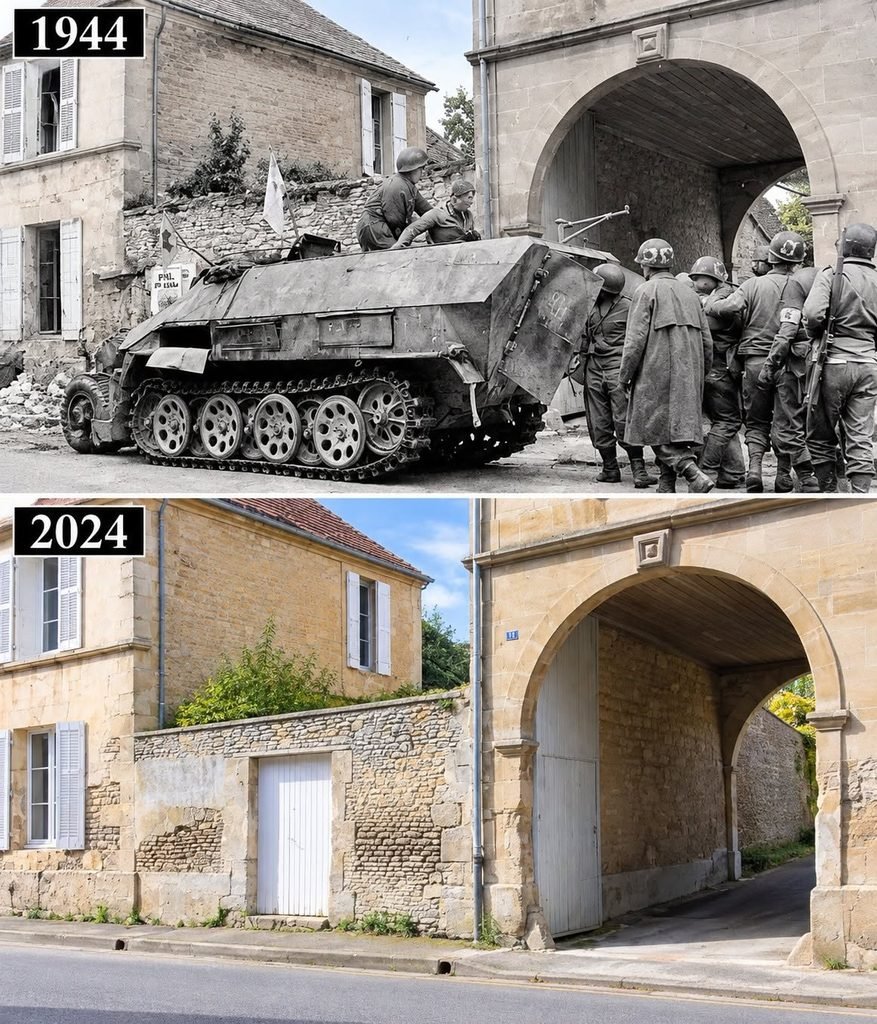
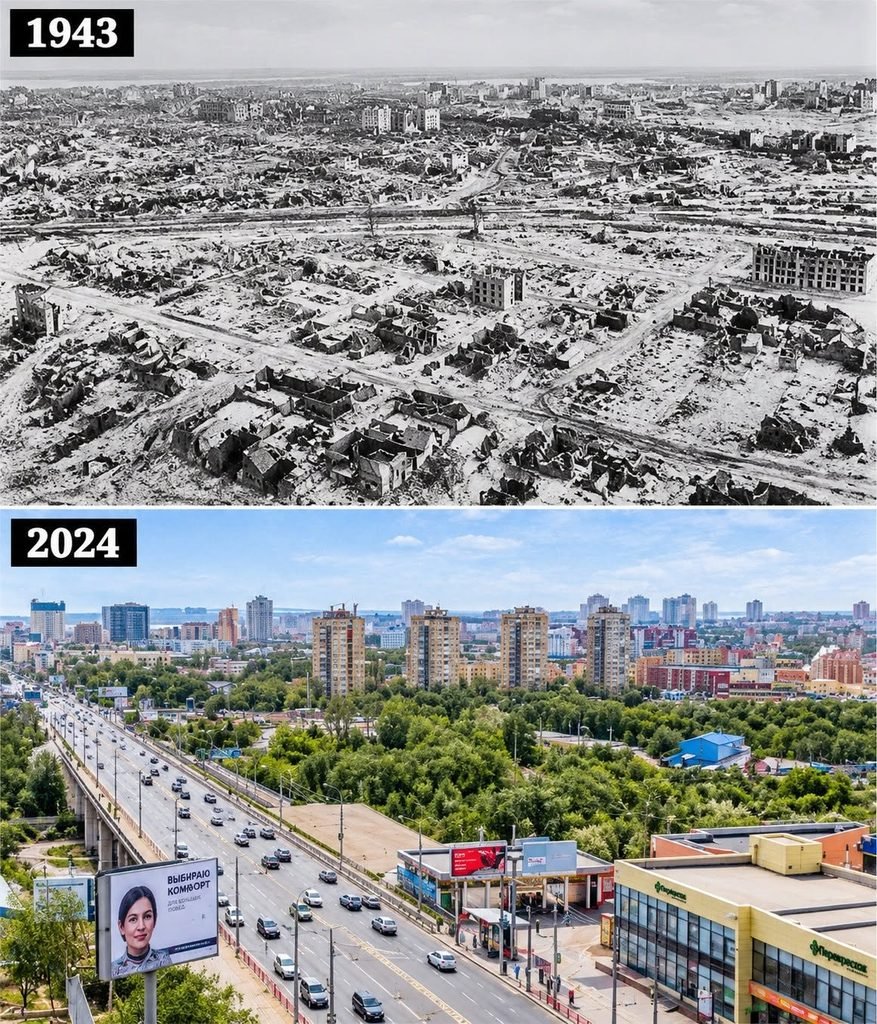
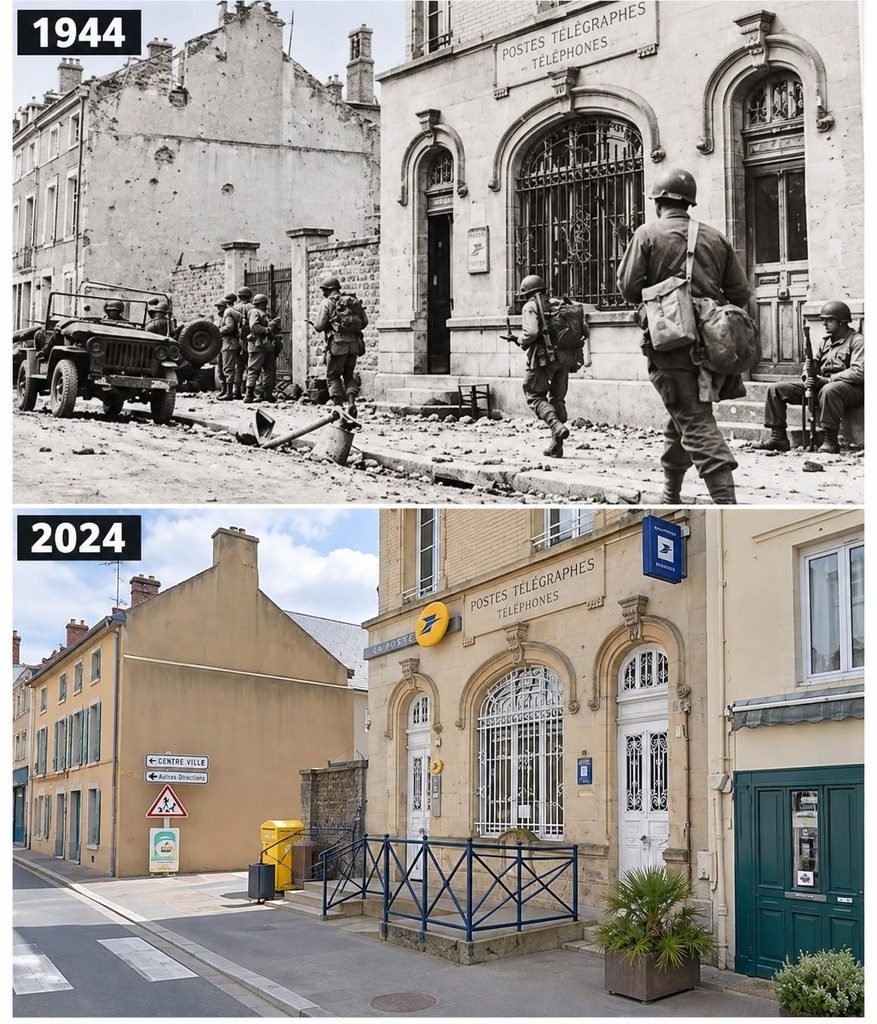
Perhaps the strongest message in these photographs is the contrast between destruction and renewal.
In 1945, much of Europe was physically devastated.
Within a generation, many cities had been rebuilt, economies had expanded, technologies had transformed daily life, and a new generation had grown up knowing peace rather than wartime mobilization.
The transition was far from simple or equal. Many countries faced poverty, political repression, discrimination, colonial conflicts, and continuing violence.
But the visual transformation was undeniable.
24. What These Photos Really Tell Us
Historical photographs do more than show what people looked like.
They reveal how societies functioned.
A street can tell us about transportation.
A kitchen can reveal technology and living standards.
A classroom can show educational priorities.
A supermarket can reveal consumer culture.
A family photograph can show changing ideas about home and relationships.
A photograph of a city skyline can tell us about economic growth and urban planning.
That is why collections of postwar photographs are so valuable.
They allow us to see history at human scale.
The World After 1945 Was the Beginning of Something New
World War II left enormous scars, but the decades that followed created a world that increasingly resembled the modern age.
Cities were rebuilt.
Homes became more technologically advanced.
Cars reshaped communities.
Television transformed entertainment.
Commercial aviation connected distant countries.
Mass production expanded consumer choice.
New generations challenged old traditions.
Space exploration changed humanity’s sense of possibility.
And photography documented nearly every stage of that transformation.
Looking at these images today, the most striking detail may not be how old they appear.
It may be how familiar some of the scenes still feel.
People were going to work, raising children, shopping, traveling, watching television, listening to music, building homes, and dreaming about the future.
In that sense, these photographs are more than records of a world that disappeared.
They are evidence of how the world we know today began to take shape.
A Visual Journey Through a Changing World
These 100 photos showing how the world changed after World War II offer a remarkable reminder that history is not only found in battlefields, treaties, and political speeches.
It can also be found in ordinary streets.
In the family car.
In a newly built house.
In a television sitting in a living room.
In a classroom filled with children.
In a crowded airport.
In a worker leaving a factory.
In a teenager wearing a new style of clothing.
And in the faces of millions of people who were simply trying to build a better future after one of the darkest periods in modern history.
The world after 1945 was changing faster than many people could have imagined.
And these photographs allow us to watch that transformation happen, one frame at a time.
Để lại một bình luận