

No alarms sounded. No charts changed.
But today, hope didn’t whisper — it walked in.
For weeks, Hunter Alexander’s hospital room has felt like a command center.
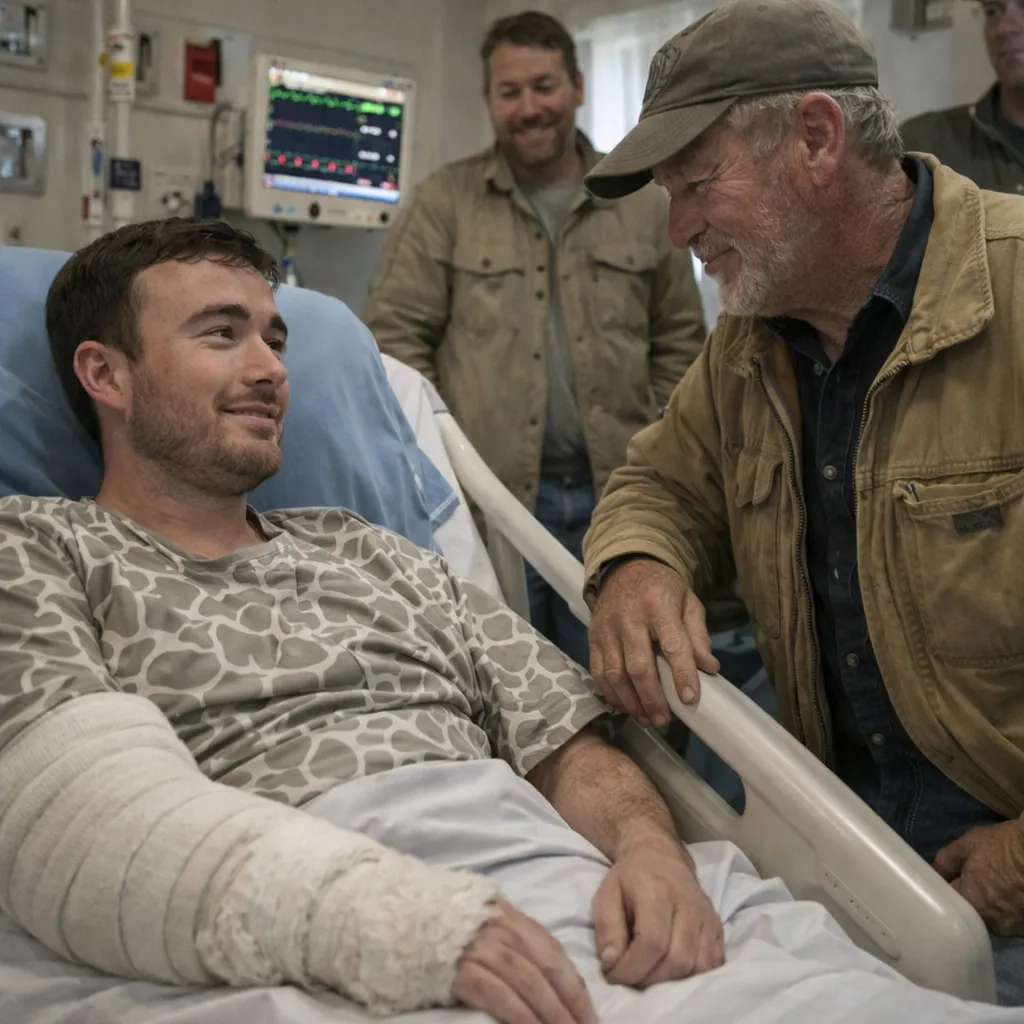
Monitors blinking.
Doctors speaking in measured tones.
Family members bracing for the next update.
But today, something extraordinary happened.
Not a new procedure.
Not a breakthrough medication.
Not a dramatic reversal.
Hope showed up in boots.
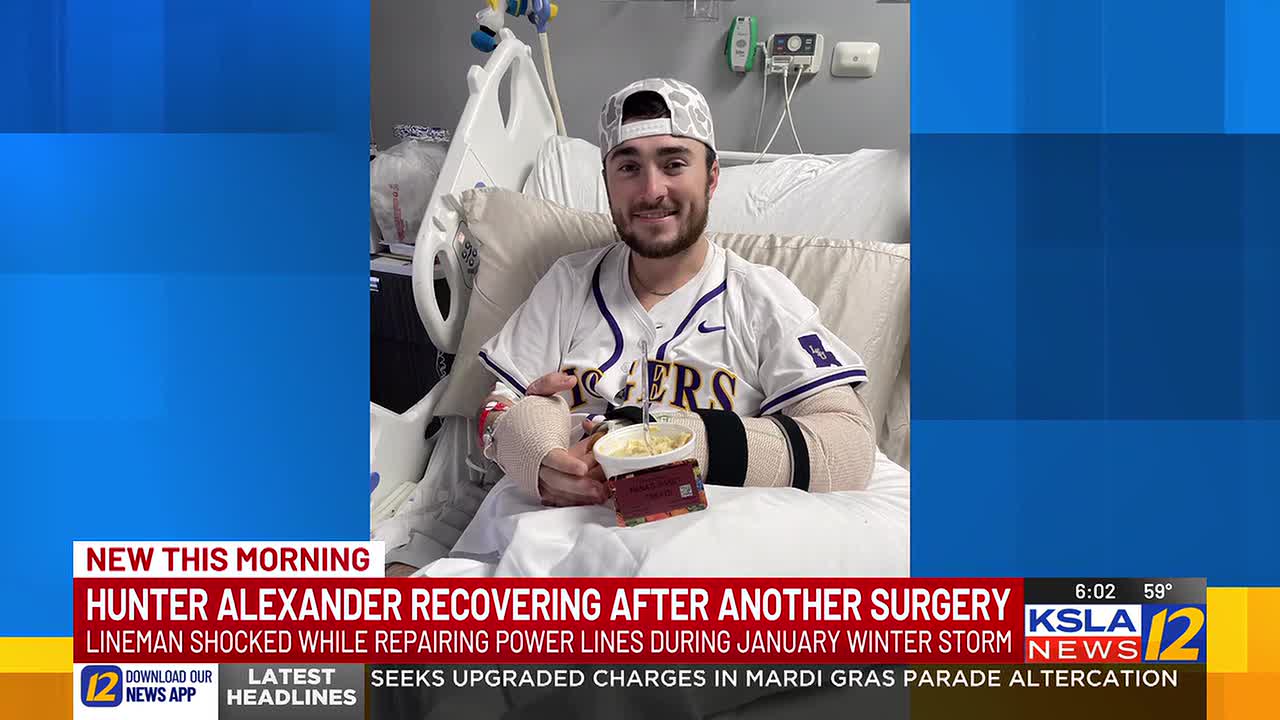
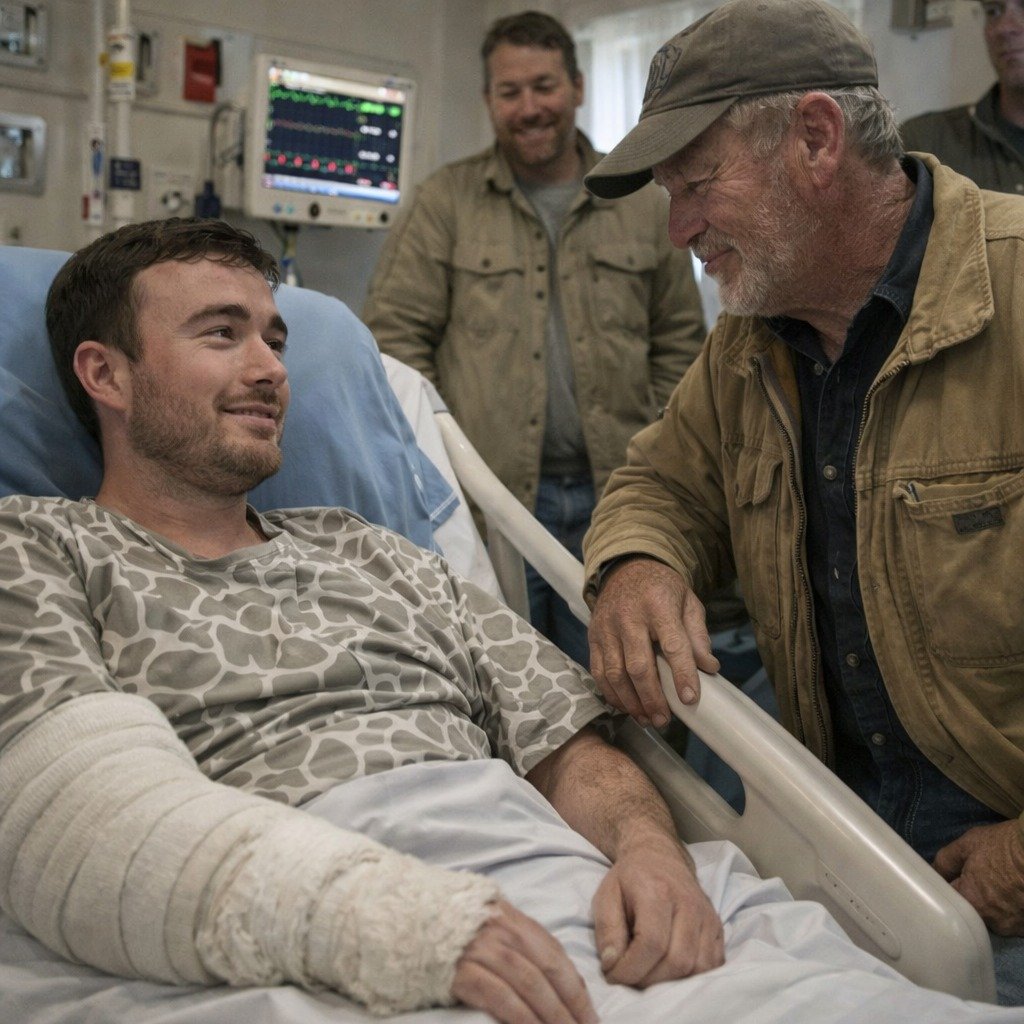
Hunter, the 24-year-old lineman recovering from catastrophic electrical injuries, received visitors throughout the day.
Family members say the mood shifted almost immediately. There was laughter — real laughter. Stories filled the air.
For a few hours, the room didn’t feel like a battlefield.
It felt human again.
But one visitor carried something different.
Mr. Frank Dennis.
Nearly 30 years ago, Frank — a fellow lineman — survived a devastating workplace injury of his own.
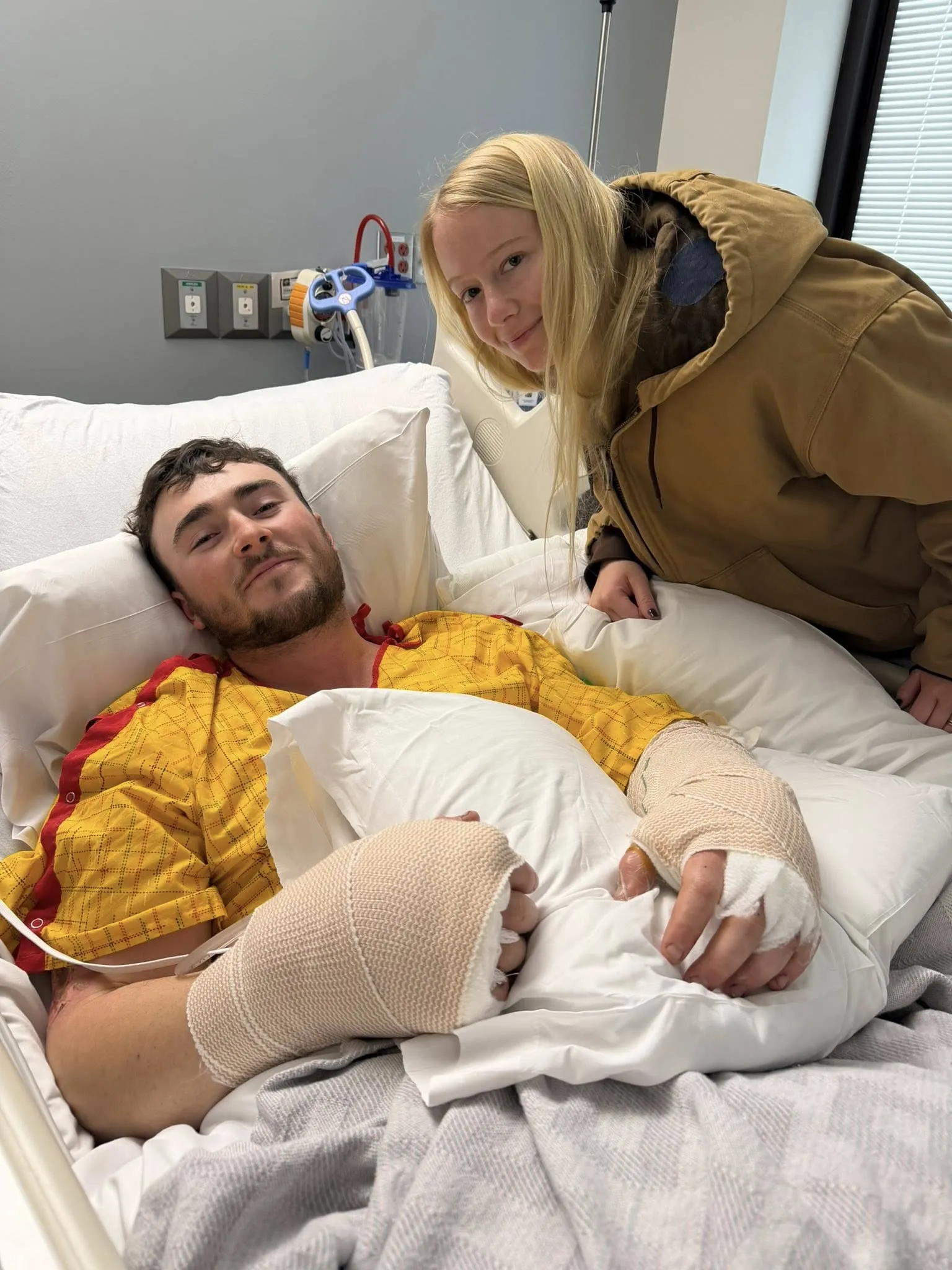
The kind that reshapes a body. The kind that tests identity. The kind that forces you to rebuild from the inside out.
And today, he drove from Jennings, Louisiana, to sit beside Hunter’s bed.
He didn’t bring sympathy.
He brought survival.
A Living Blueprint
Frank didn’t speak in vague encouragement. He spoke in lived truth.

He talked about pain — the kind that lingers.
He talked about recovery — the kind that feels slow.
He talked about the emotional weight — the kind no one prepares you for.
And then he did something powerful.
He looked at Hunter and said, “You can make it.”
When those words come from someone who has walked through trauma and come out standing, they land differently.
They aren’t motivational.
They’re evidence.

For a young man navigating surgeries, wound care, and an uncertain timeline, that kind of evidence matters.
Because recovery can feel isolating. It can feel like no one fully understands what it costs.
Today, someone did.
Laughter in the Middle of the Storm
Family members described the shift as immediate. Conversations turned to job sites. Ice storms.
Long shifts in bucket trucks. The unspoken brotherhood among linemen who step into danger so others can stay warm and safe.
For a while, Hunter wasn’t defined by dressings or surgical counts.
He was a lineman again.
A young man surrounded by people who understand what it means to risk
everything for a job that rarely makes headlines — until something goes wrong.
That laughter didn’t erase medical uncertainty.
But it pushed back against it.
In trauma recovery, hope isn’t abstract. It keeps patients engaged. It fuels endurance.
It steadies families who are running on emotional fumes.
Today, hope had a face — and it sat in a chair beside the bed.
The Waiting Isn’t Over
The medical reality remains.
The family is still waiting to learn whether Hunter will undergo his third surgery.
Classified as an “add-on,” the procedure could be scheduled at any moment depending on operating room availability and higher-priority emergencies.
There may be no countdown.
Just a knock.
A brief explanation.
And the familiar roll toward the OR doors.
This is the rhythm now — light and shadow coexisting in the same room.
More Than a Visit
Nothing changed on the surgical board today.
But something changed in the air.
A man who survived nearly three decades ago stepped into Hunter’s present and quietly showed him a possible future.
Not a perfect future.
Not an easy one.
But a real one.
And sometimes, in a recovery measured hour by hour, that glimpse is more powerful than any chart update.
Because in the middle of machines and medicine, Hunter was reminded of something vital:
Catastrophe does not automatically write the final chapter.
And when someone who has already walked through the fire tells you there is life on the other side —