


Jerusalem has seen empires rise and fall, prophets preach, armies march, and tourists argue about the best hummus in the Old City.
But this week, something far stranger has captured global attention: rumors that the ancient sealed gate of Jerusalem—yes, the one wrapped in centuries of prophecy, mystery, and theological speculation—is somehow “moving.”
And naturally, the internet reacted with the calm rationality of a cat spotting a cucumber.
Within hours of videos and dramatic posts spreading across social media, prophecy watchers, history buffs, and the occasional end-times enthusiast were all asking the same electrifying question:
Is this the sign of Jesus’ return?
Before we all start packing survival kits or preparing welcome banners for the Second Coming, let’s take a deep breath and explore the story behind one of the most mysterious doors on Earth—and why even the slightest hint of movement has people clutching their Bibles, cameras, and conspiracy theories.
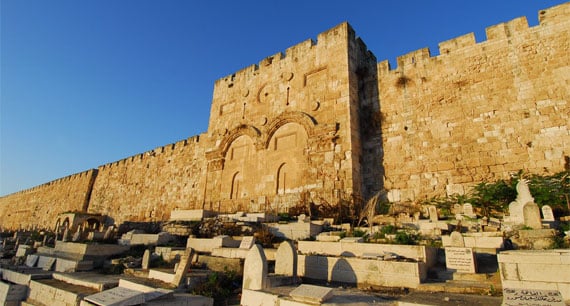
The gate in question is the Eastern Gate of Jerusalem, also famously known as the Golden Gate.

Located on the eastern wall of the Old City facing the Mount of Olives, it’s not just another ancient doorway.
This gate is arguably the most theologically famous piece of medieval architecture in the Middle East.
And it’s been sealed shut for centuries.
According to historical accounts, the gate was blocked during the Ottoman period in the 1500s, likely under Sultan Suleiman the Magnificent.
The reasons were partly defensive, partly symbolic, and—depending on who you ask—possibly prophetic.
Why prophetic? Because in Jewish and Christian traditions, the Eastern Gate carries enormous spiritual significance.
Some interpretations of biblical prophecy suggest that the Messiah will enter Jerusalem through this very gate.
Christians have long associated it with Jesus’ triumphant entry into Jerusalem described in the Gospels.
In fact, many believers interpret passages in the Book of Ezekiel as referencing a gate that would remain sealed until the arrival of the Lord.
So when rumors start circulating that this ancient sealed entrance is “moving,” it doesn’t take much imagination for the prophecy community to collectively shout, “WAIT A SECOND.”
The modern panic—or excitement, depending on your spiritual mood—appears to have started with a handful of videos circulating online.
In these clips, observers point to tiny shifts in the stonework, minor cracks, or subtle changes in the structure of the sealed gate.
One video narrator dramatically whispered, “Something is happening here… the gate is changing.”
Cue the prophecy countdown clock.
Within hours, comment sections exploded with declarations that the biblical timeline had just entered its final act.
Some viewers insisted the gate was physically shifting.
Others claimed the stones looked “looser” than before.
A few particularly enthusiastic posters declared the gate would open “any day now.”
Naturally, historians and archaeologists responded with the intellectual equivalent of a very long sigh.
Because while the gate may indeed show small signs of weathering—something that happens to literally every ancient structure on Earth—there is currently no verified evidence that the gate itself is dramatically “moving.
”
But that hasn’t stopped speculation from spreading faster than free samples at a bakery.
To understand why the idea of this gate opening fascinates so many people, you have to understand the centuries of prophecy tied to it.
According to one interpretation of the Book of Ezekiel, the eastern gate of the temple would remain sealed because the Lord had entered through it.
Some believers interpret this as a prophetic statement that the gate will only reopen when the Messiah returns.
Christians often connect this idea to Jesus’ future return, while Jewish traditions sometimes link the gate to the coming of the Messiah as well.
In other words, this doorway isn’t just architecture—it’s a theological lightning rod.
Which means that even the faintest rumor of movement can trigger a worldwide prophecy debate.
Enter the “experts.”
First up is Dr.Harold Bennett, a fictional but extremely confident prophecy researcher who has apparently spent 30 years analyzing biblical architecture and possibly too much time on YouTube.
“When people see the Eastern Gate,” Bennett explains dramatically, “they’re not just seeing stone.
They’re seeing a symbol of unfinished prophecy.”
He then pauses for effect, as if expecting thunder to rumble in the background.
“Now imagine hearing that the gate might be shifting.
For believers who study prophecy, that’s like hearing the opening notes of the final act.”
Another self-proclaimed historian, Professor Lydia Marcus, offers a slightly calmer perspective.
“Jerusalem’s structures are extremely old,” she says.
“Stone shifts, cracks appear, repairs happen.
That doesn’t mean prophecy is unfolding—it means gravity and time exist.”
A shocking theory, truly.
Still, the story refuses to die down.
Part of the reason is the unique position of the gate itself.
The Eastern Gate sits directly facing the Mount of Olives, a place deeply connected to Christian belief about the return of Jesus.
According to the New Testament, Jesus ascended to heaven from the Mount of Olives.

Some interpretations suggest that he will return there as well.
So naturally, when people notice anything unusual about the gate directly facing that location, imaginations begin sprinting faster than a marathon runner who accidentally drank five energy drinks.
Adding to the intrigue is the fact that the gate has remained sealed for roughly five centuries.
That’s a long time for a door to stay closed.
Which means the idea of it opening—even slightly—feels like something monumental, even if the explanation is something as mundane as erosion or minor structural shifting.
Of course, Jerusalem is also one of the most heavily studied cities in the world.
Archaeologists, historians, and engineers constantly monitor its ancient walls.
If the gate were actually moving in a significant way, experts would likely notice long before a viral video did.
But that doesn’t make the story any less fascinating.
For believers who see prophetic meaning in the gate, the symbolism is powerful.
The image of a sealed doorway waiting centuries for a promised arrival is the kind of poetic mystery that naturally fuels speculation.
And let’s be honest: humans love a good mystery.
Especially when it involves ancient cities, religious prophecy, and the possibility—however remote—of history’s most dramatic return.
Meanwhile, tourists visiting Jerusalem have reportedly begun wandering over to the Eastern Gate in greater numbers, squinting at the stonework like amateur detectives.
Some are praying.
Some are taking selfies.
And a few are carefully inspecting the cracks like structural engineers who forgot their measuring tape.
Local guides, who have probably answered this question about 10,000 times already, generally offer a polite but firm explanation: the gate has been sealed for centuries, and any minor changes are almost certainly natural wear rather than supernatural activity.
Still, the idea refuses to disappear.
Because whether you’re religious or simply fascinated by history, there’s something undeniably captivating about a mysterious ancient gate tied to centuries of prophecy.
It’s the kind of story that sits perfectly at the intersection of faith, legend, and human curiosity.
And in the age of social media, curiosity spreads fast.
So is the sealed gate of Jerusalem really moving?
Right now, the answer appears to be far less dramatic than the headlines suggest.
No credible evidence shows the gate dramatically shifting or preparing to swing open like the climax of a Hollywood epic.
But that hasn’t stopped people from wondering.
Because when a structure wrapped in thousands of years of spiritual meaning appears in a viral video with ominous music and dramatic narration, the internet doesn’t calmly verify architectural reports.
It panics first.
Research later.
Still, the story highlights something fascinating about Jerusalem itself.
Few places on Earth carry such deep layers of religious, historical, and emotional significance.
A single doorway there can spark conversations about prophecy, faith, history, and the future all at once.
And whether or not the Eastern Gate ever opens again, it will likely remain one of the most mysterious doors in human history.
For now, the gate is still sealed.
The stones remain in place.
The prophecies remain debated.
But somewhere out there, someone is probably already editing the next viral video titled:
“THE GATE IS ABOUT TO OPEN — YOU WON’T BELIEVE WHAT HAPPENS NEXT.”
And the internet, predictably, will click.