

For the first time in days, the word everyone feared never appeared in the medical update.
Amputation was not required.
At 9:40 PM on March 9, 2026, after hours inside the operating room, Hunter Alexander emerged from surgery — and the early report brought visible relief to family members who had been waiting anxiously through every minute.
According to doctors, the procedure went better than many had feared.
That single update changed the atmosphere almost instantly.
While the surgery was serious, the outcome suggested something deeply important: preservation was still possible.
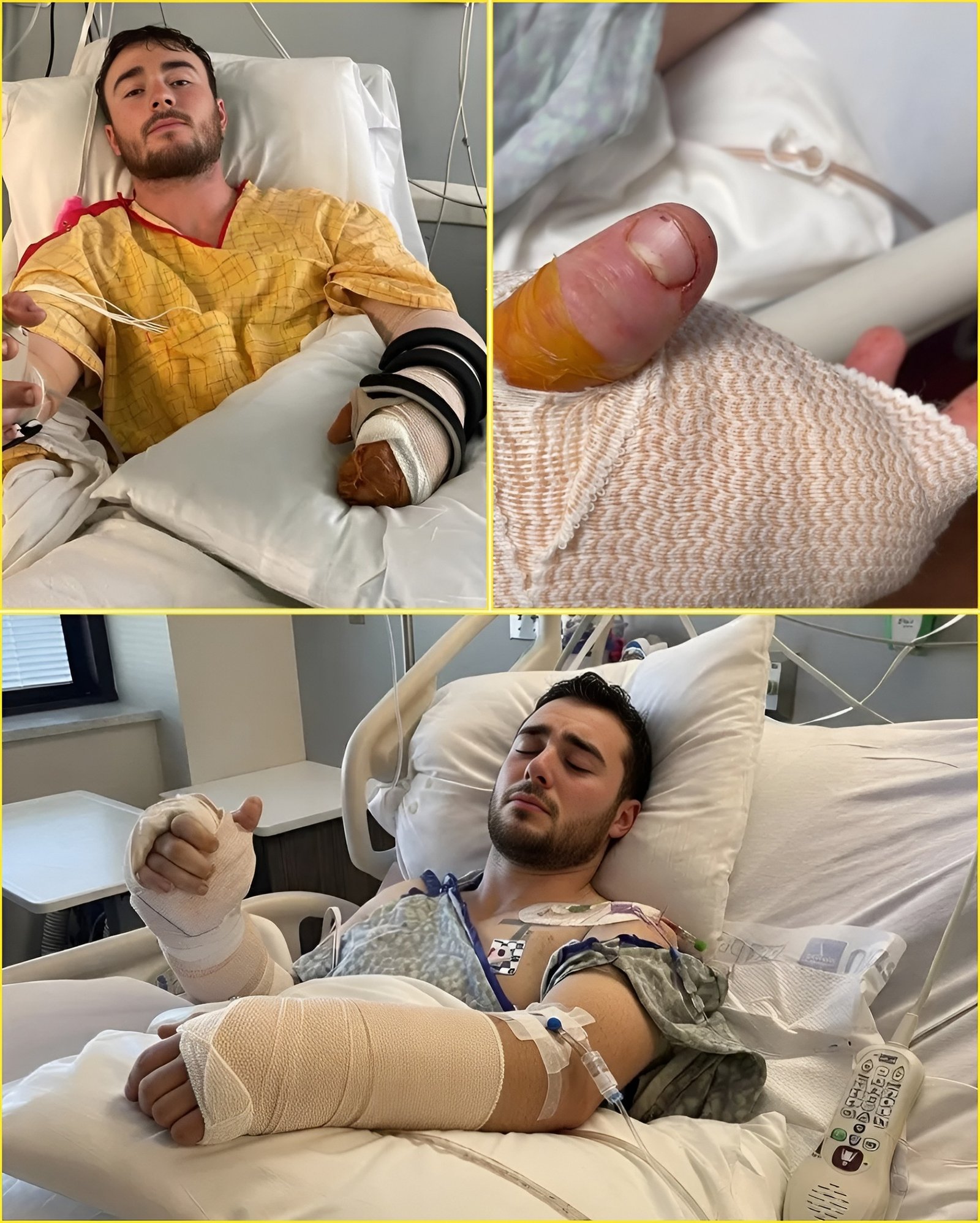
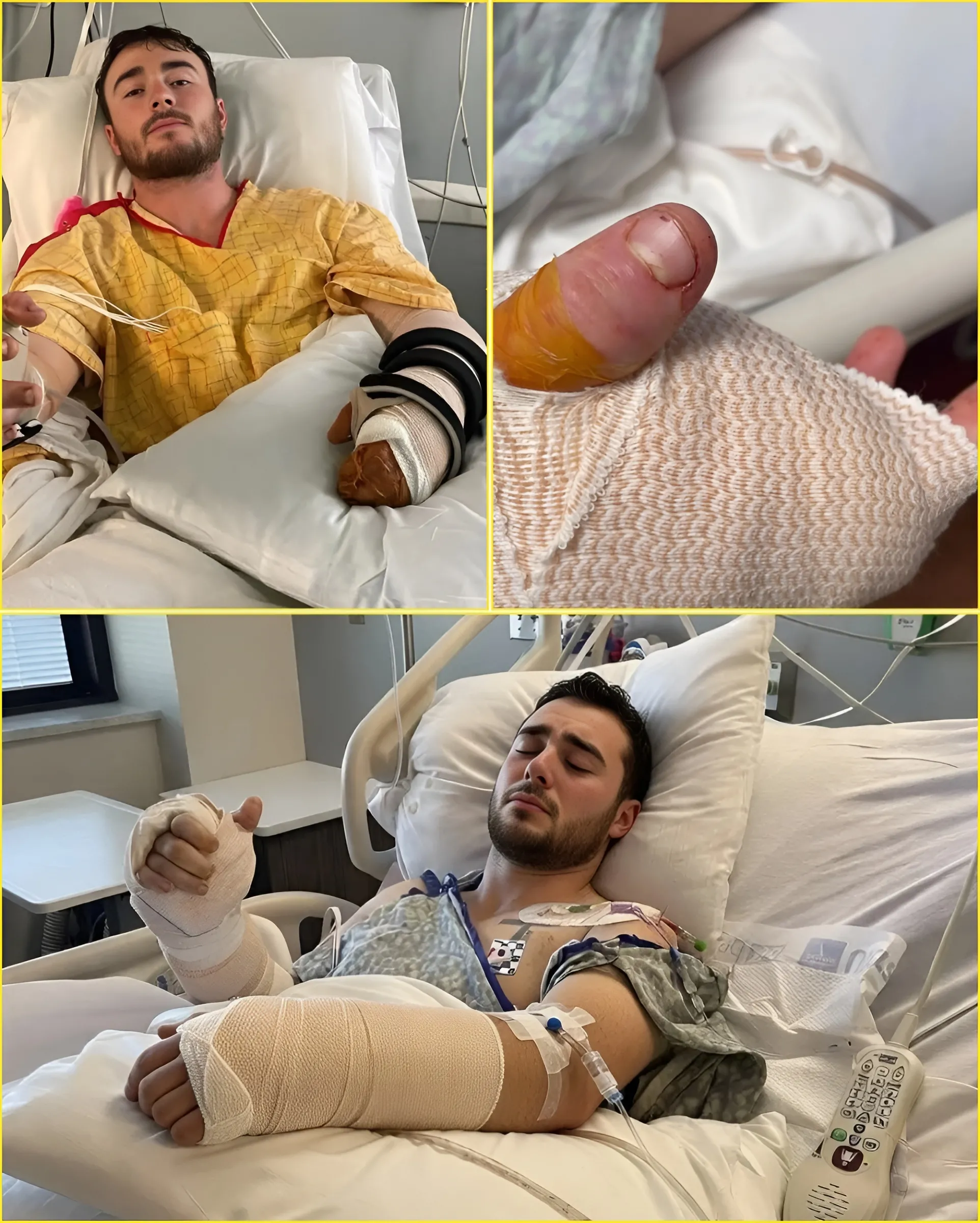
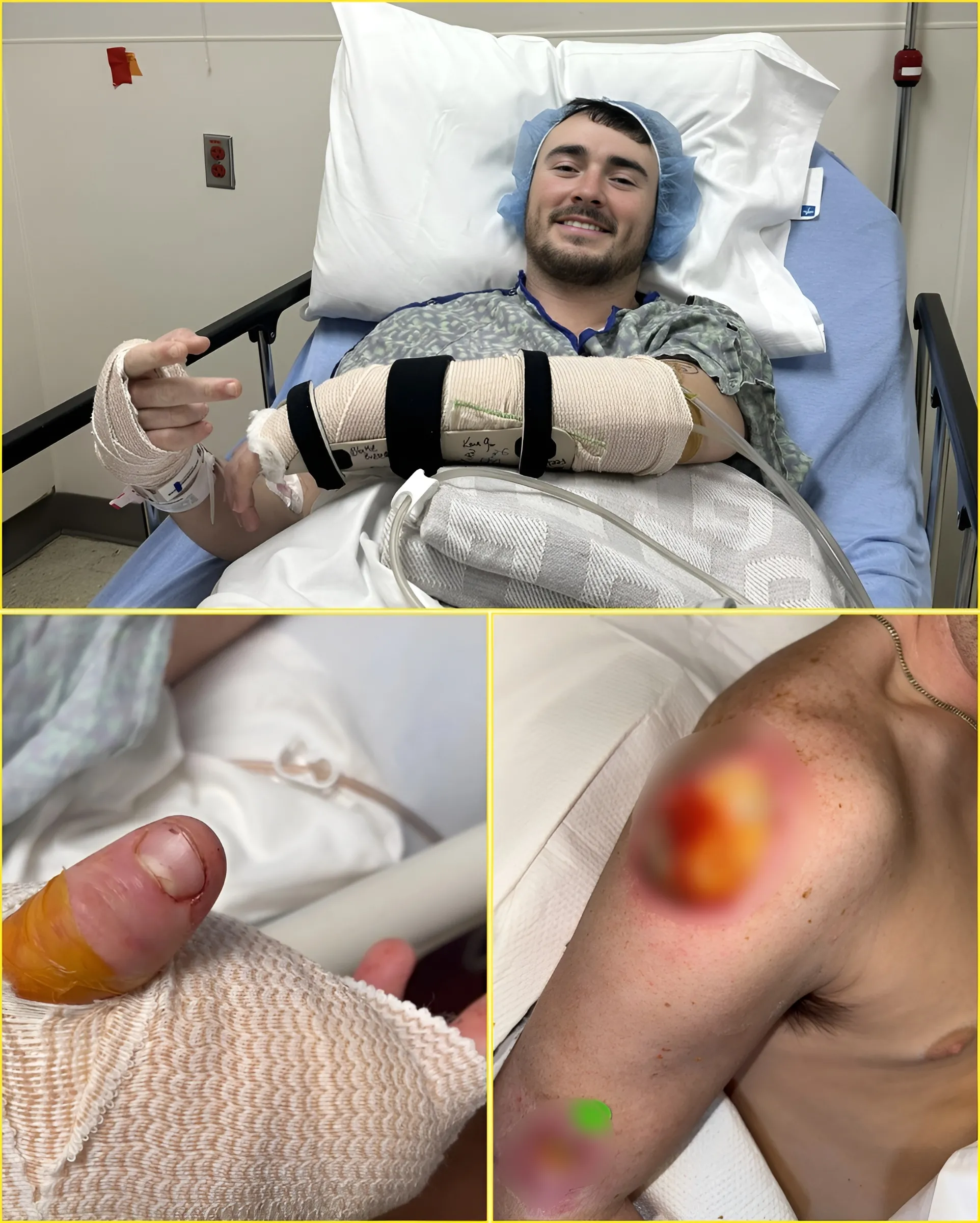
During the operation, surgeons performed a small amount of debridement near Hunter’s right thumb, removing damaged tissue to help prevent infection and support healing. Additional tissue had to be removed from a deep muscle in his left forearm and parts of the left wrist.
In trauma medicine, those descriptions may sound routine.
But emotionally, they carried enormous meaning.
The most critical structures — major nerves and blood vessels in the arm — remain intact and strong.
For weeks, surgeons had quietly focused on one central question: could circulation continue to support the damaged limb?
Tuesday night’s findings suggested the answer is yes.
And in cases involving severe electrical injury, that can make all the difference.
The Hidden Damage Doctors Had to Address
Despite the encouraging outcome, the surgery itself was far from minor.
Hunter’s left forearm and wrist suffered third-degree burns, which required surgeons to remove a layer of hardened dead tissue known as eschar.
Eschar forms after severe burns when tissue loses blood supply and dies. Although it may appear protective, it actually blocks healing and can trap bacteria beneath the surface.
Removing that tissue is one of the first critical steps toward recovery.
Once the damaged layers were cleared, doctors prepared the area for the next phase of treatment.
Hunter will require skin grafts to help rebuild the damaged sections of his arm. To support that process, surgeons also placed wound vacuum devices, often called wound vacs, which help draw fluid away from the injury while improving circulation beneath the surface.
These devices are widely used in complex trauma cases because they can significantly improve healing conditions.
But they also signal that recovery is still unfolding.
More Surgeries Already Expected
Doctors made it clear that Monday night’s operation was only one step in a longer process.
Hunter will likely need two to three additional surgeries as his treatment continues.
The next procedure could happen within the next three to five days, depending on how his body responds to the most recent operation. Physicians are currently watching swelling levels, circulation patterns, and tissue stability to determine the safest timing.
In trauma medicine, the body often dictates the schedule.
That means the coming days will be closely monitored.
A Moment of Relief — Not the End of the Fight
For Hunter’s family, the emotional weight of the update was enormous.
For days, uncertainty had surrounded whether surgeons might eventually be forced to consider far more drastic options. Supporters across the community had been praying for one outcome in particular: viable tissue and stable circulation.
Monday night’s report felt, to many, like those prayers had been answered.
Family members shared messages of gratitude, describing how overwhelmed they felt by the support that has poured in from friends, neighbors, and even strangers.
Calls, texts, messages, and prayers have arrived from across the country.
And they say every one of them mattered.
Still, the family is clear about one thing: the journey is far from finished.
Skin graft procedures are part of a complex reconstruction process. Wound vac therapy requires close observation and careful management. Each additional surgery will bring new recovery periods and more time waiting for the body to respond.
Yet tonight’s outcome changes the narrative.
This was not a loss.
It was a preservation.
Hunter’s arm remains intact.
The major nerves and blood vessels are functioning.
And doctors say those two factors alone represent a powerful sign of hope.
The Next Chapter Begins
Over the next several days, Hunter’s medical team will closely evaluate the condition of the injured tissue.
They will monitor swelling.
They will reassess blood circulation.
They will determine when his body is ready for the next surgery.
Recovery from severe trauma rarely happens in a single dramatic moment. Instead, it unfolds in stages — small steps layered on top of one another.
Monday night’s surgery was one of those steps.
For Hunter’s family, the message they want to share right now is simple:
Thank you.
They say the encouragement, prayers, and unwavering support from the community have helped carry them through some of the most difficult days imaginable.
And while the battle is not over, tonight brings something that had been hard to hold onto.
Progress.
The arm is still there.
The vital structures are strong.
And the next stage of healing has already begun.