

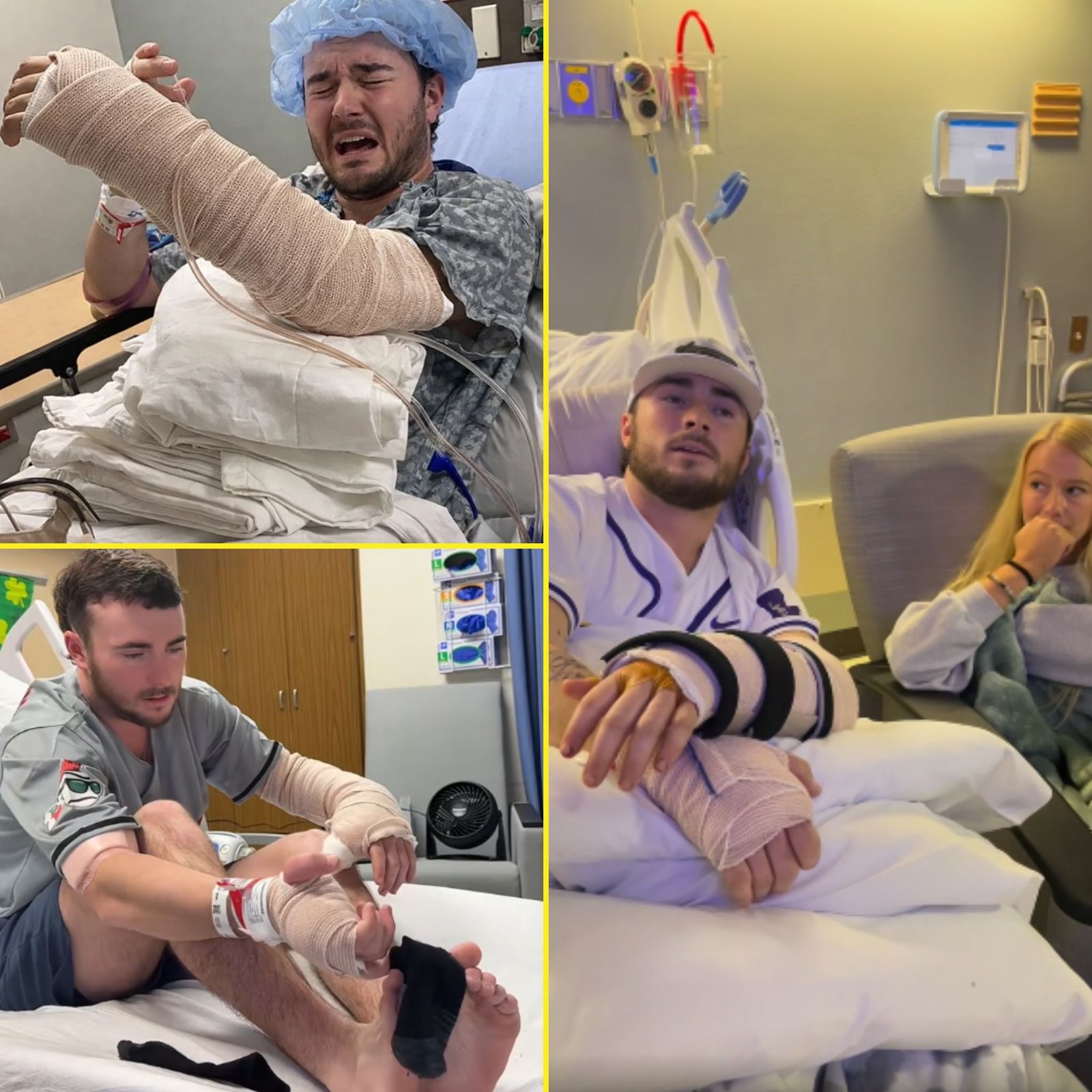
The operating room doors closed again.
And with them, the weight of one of the hardest possibilities in medicine.
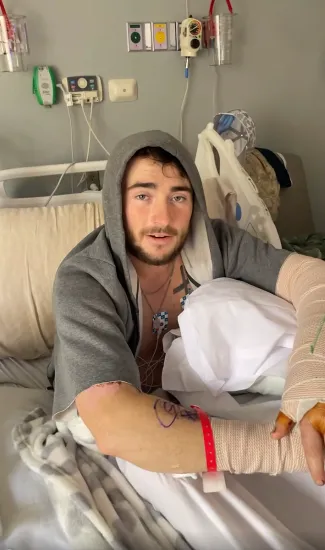
Inside the hospital corridors, the tension is unmistakable.
Another surgery has begun for Hunter Alexander, and the atmosphere surrounding this procedure feels heavier than any before it. Family members describe the moment as one filled with a quiet, gripping fear — the kind that settles in when everyone understands exactly what may be at stake.
Because this time, one word continues to linger in every conversation.
Amputation.
Doctors have returned Hunter to the operating room as they fight once again to preserve damaged tissue and restore circulation following the devastating effects of his electrical injury. It is a battle surgeons know well — but one that never becomes easier.
Behind the operating room doors, a race is unfolding against time, biology, and the unpredictable nature of severe trauma.
The Lingering Shadow Over Every Update
Electrical injuries can leave damage far deeper than the surface suggests.
While the initial trauma may occur in seconds, the destruction it leaves behind can continue evolving for days or even weeks. Muscles, nerves, and blood vessels may appear stable at first, only to deteriorate as circulation falters or tissue begins to fail.
That lingering uncertainty is what makes cases like Hunter’s so complex.
Doctors are not only treating the injury itself — they are constantly responding to how the body reacts afterward.
For surgeons, each procedure becomes both a rescue mission and a diagnostic search, revealing new information about which tissues remain viable and which areas may no longer recover.
The Unbearable Part: Waiting
Outside the operating room, the emotional toll is almost as intense as the surgical battle itself.
Family members say the hardest part isn’t the surgery.
It’s the waiting.
The long hours where every update could carry life-changing news.
In those quiet stretches of time, imaginations fill the silence. Every possibility runs through their minds — the hope that surgeons will succeed in preserving the limb, and the fear that they may discover damage too severe to reverse.
For those closest to Hunter, the tension grows with every passing minute.
The Moment That Could Change Everything
In trauma surgery, some operations represent more than just another step in recovery.
They become turning points.
Moments when doctors must determine whether continued reconstruction is possible or whether the injury has already taken more than the body can safely sustain.
If circulation cannot be restored or dead tissue threatens to spread infection, surgeons sometimes face the most difficult decision in reconstructive medicine.
Amputation.
It is never considered lightly.
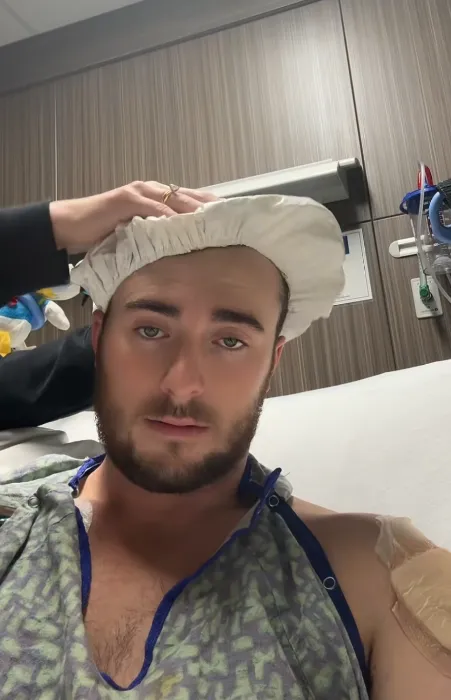
In many cases, surgeons exhaust every available option before even discussing the possibility.
But when the patient’s overall health is at risk, the choice may shift from saving a limb to saving a life.
A Community Holding Its Breath
Supporters following Hunter Alexander’s journey have felt the emotional intensity of this moment as well.
Across social media and among those who know the family personally, prayers and messages of support have surged once again.
People understand that this operation carries enormous weight.
They know that one decision made inside that operating room could redefine Hunter’s entire future — from how he moves to how he rebuilds daily independence.
That awareness has spread a quiet tension through everyone watching his story unfold.
The Unpredictable Nature of Trauma Recovery
Medical teams often emphasize that trauma recovery rarely follows a straight path.
Even when progress appears promising, unexpected complications can force sudden changes in strategy.
A new surgery may reveal hidden healing.
Or it may uncover damage that earlier scans could not fully detect.
This uncertainty is what makes each procedure so emotionally charged.
Every operation brings the possibility of a breakthrough — or a devastating realization.
Hope Refuses to Disappear
Despite the fear surrounding this moment, those closest to Hunter continue holding on to hope.
Modern trauma surgery has achieved remarkable advances in limb salvage. Techniques involving vascular repair, tissue reconstruction, and regenerative wound therapies have saved limbs that once would have been considered beyond recovery.
Doctors know that outcomes once deemed impossible are sometimes achieved.
And that possibility — however fragile — is what keeps everyone waiting.
Behind Closed Doors
Right now, surgeons remain focused on the work inside the operating room.
They are examining tissue, restoring circulation where possible, and making careful decisions that balance risk with long-term outcomes.
Outside those doors, the waiting continues.
Family members sit quietly, hoping the next update will bring relief rather than heartbreak.
Because at this stage of Hunter Alexander’s battle, every surgery carries two possibilities.
A step toward recovery.
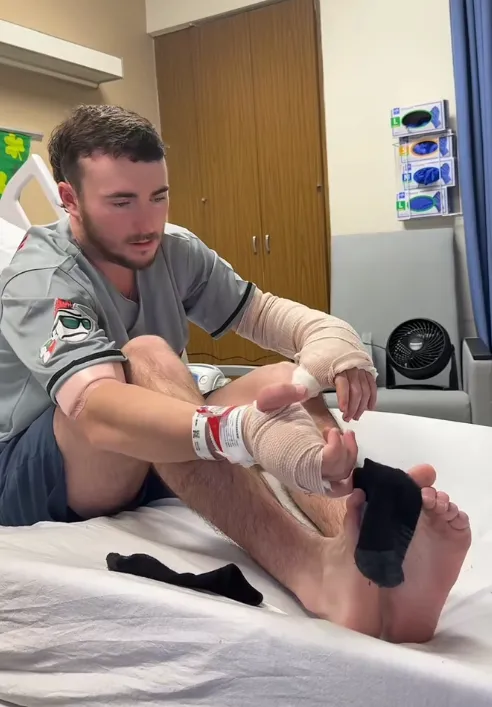
Or confirmation that the injury has taken more than anyone was prepared to lose.
And until those operating room doors open again, one haunting question remains.
Will this surgery finally protect Hunter’s limb?
Or reveal that the fight has reached an outcome no one is ready to accept?