

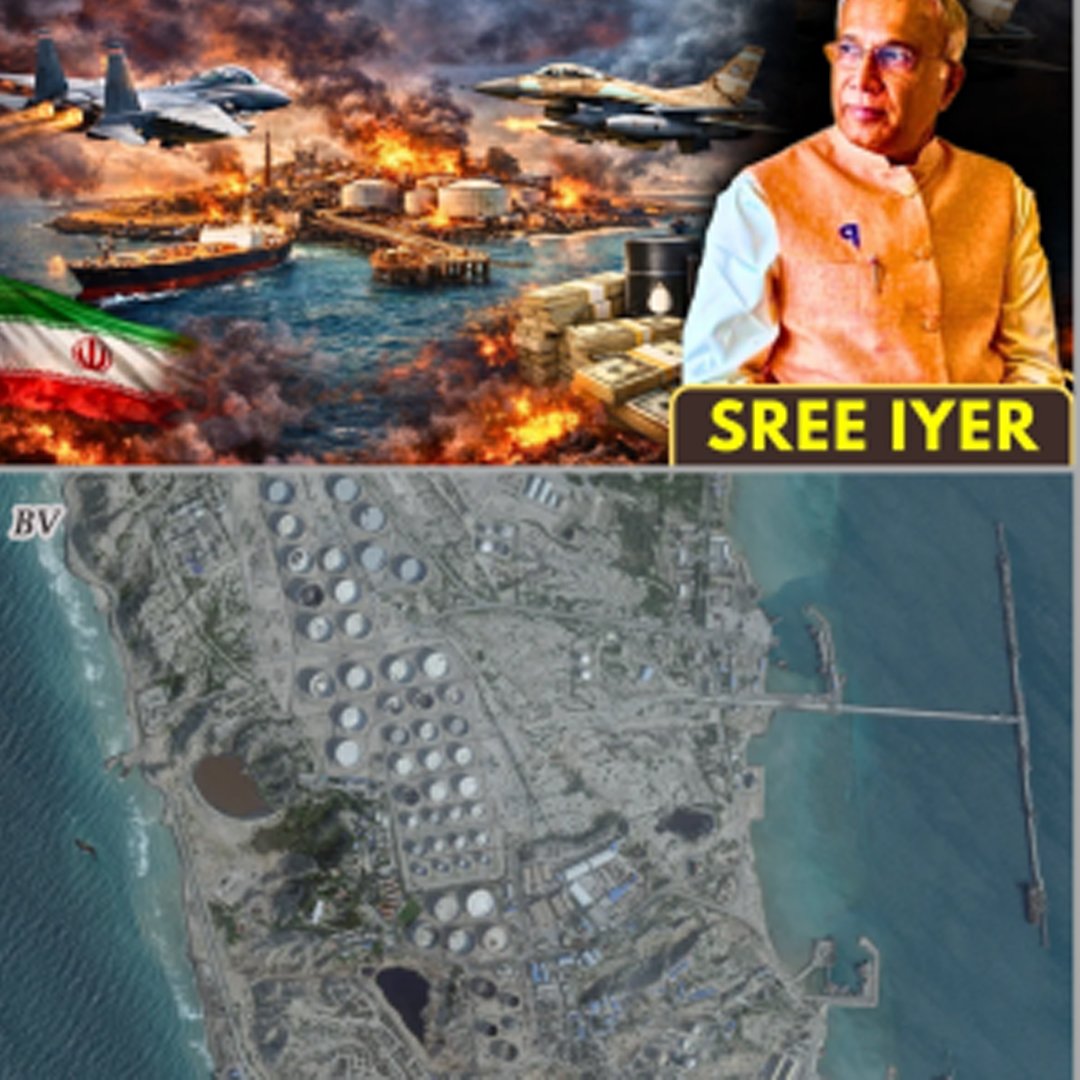
Kharg Island: The Tiny Gulf Outpost That Could Ignite Global Chaos – Will the US Strike Iran’s Oil Heart?
The Middle East hangs on a knife’s edge as whispers of a dramatic new escalation ripple through Washington and Tel Aviv: could the United States and Israel finally strike—or even seize—Kharg Island, Iran’s most vital oil lifeline? For weeks, the US-Israeli campaign has hammered Iranian targets with precision airstrikes, plunging cities into darkness, igniting fuel depots in apocalyptic flames, and crippling parts of Tehran’s war machine.
Yet one critical asset remains eerily untouched: the small coral outpost in the Persian Gulf that handles up to 90% of Iran’s crude exports.

As oil prices surge to levels not seen since the darkest days of past crises, and Iran vows ferocious retaliation, the question looms larger by the hour—will Kharg Island become the next flashpoint that tips the region, and perhaps the world, into chaos?
Kharg Island is no ordinary speck of land.
Barely a few miles long, this fortified terminal sits about 25 kilometers off Iran’s southwestern coast, connected by undersea pipelines to the vast oil fields inland.
Since the 1960s, it has evolved into the beating heart of Iran’s energy economy.
Massive tankers load day and night at its berths, capable in theory of handling seven million barrels per day, though real exports hover around 1.
3 to 1.
6 million bpd under normal conditions—still enough to generate billions in revenue that funds everything from domestic subsidies to the Islamic Revolutionary Guard Corps’ operations.
In the frantic days before the latest strikes intensified, Iran ramped up loadings to near-record levels, stockpiling crude and pushing exports toward three million barrels daily as a desperate hedge against what was coming.
The island’s strategic value is impossible to overstate.
Cut it off, and Iran’s primary source of hard currency vanishes almost overnight.
Analysts warn that a direct assault or seizure could halve production and stall exports entirely, starving the regime of funds needed to sustain its military machine amid relentless bombardment.
JP Morgan has sounded the alarm: such a move would trigger “severe retaliation” in the Strait of Hormuz—the narrow chokepoint through which one-fifth of global oil passes—or against neighboring energy infrastructure in Saudi Arabia, the UAE, and beyond.
Tehran has already demonstrated its willingness to strike back, launching missiles and drones at US bases and Gulf allies, closing shipping lanes temporarily, and vowing that “no oil will leave the Middle East” until the attacks cease.
The risk is clear: one wrong move on Kharg could ignite a broader conflagration, sending oil prices skyrocketing past $150 a barrel and plunging global economies into turmoil.
So why hasn’t it been hit yet? Despite heated discussions in the White House—reportedly including scenarios for special forces raids or outright seizure—the island has escaped the barrage that has already devastated refineries, storage depots near Tehran, and other facilities.
Black smoke still billows over the capital from recent strikes, residents describe scenes of “apocalyptic” darkness, and yet Kharg’s loading arms continue to operate, tankers queuing as if the war were a distant rumor.
Experts point to a delicate calculus.
Bombing the terminal would likely cause a sustained, severe spike in global oil prices at a time when markets are already jittery.
Seizing it with ground troops—perhaps elite units like Delta Force—would require a risky amphibious or airborne operation far from friendly shores, exposing American forces to Iranian coastal defenses, fast boats, and missile barrages.
And the blowback could be catastrophic: Iran has threatened to “burn” vessels in the Strait, mine the waters, or target Saudi and Emirati facilities in tit-for-tat escalation.
President Trump’s administration appears torn between temptation and caution.
Reports suggest the idea of controlling Kharg aligns with a long-standing “energy dominance” doctrine—Trump himself floated seizing Iranian oil assets decades ago.
Opposition figures in Israel, like former Prime Minister Yair Lapid, have openly called for destroying the island’s facilities to “cripple Iran’s economy and topple the regime.
” Yet the reluctance persists.
A full-scale attack could alienate key allies wary of economic fallout, empower hardliners in Tehran, and draw in other powers—China, Iran’s top buyer, relies heavily on those shipments.
Even as airstrikes continue, Kharg stands as a deliberate red line, a last lever of pressure held in reserve.
But the clock is ticking.
With the conflict entering its second week and Iran defiant, refusing surrender despite devastating losses—including high-profile leadership casualties—the pressure builds.
Satellite imagery shows continued activity at the island, tankers departing under heavy escort, storage tanks reportedly holding millions of barrels as a buffer.
Military planners in Washington weigh options: precision strikes to disable loading infrastructure without total destruction, a blockade to strangle flows gradually, or the boldest play—a lightning seizure to hand leverage directly to coalition forces.
Each path carries existential risks.
A crippled Kharg means Iran loses its financial oxygen, potentially accelerating regime collapse or forcing desperate concessions.
Yet it also invites asymmetric warfare on a massive scale: swarms of drones over Gulf shipping, attacks on tankers, or strikes on global choke points that could halt energy flows worldwide.
The world watches breathlessly.
Oil traders brace for volatility, governments eye strategic reserves, and ordinary people—from Hanoi to Houston—feel the pinch at the pump.
Kharg Island, once obscure, now symbolizes the razor-thin margin between contained conflict and global catastrophe.
One decision could change everything: a single strike, a daring raid, or continued restraint.
As sirens wail across the region and smoke rises anew, the question echoes louder—will Israel and the US cross the final line and attack Kharg Island? Iran’s oil lifeline hangs by a thread, and the next move could snap it.