

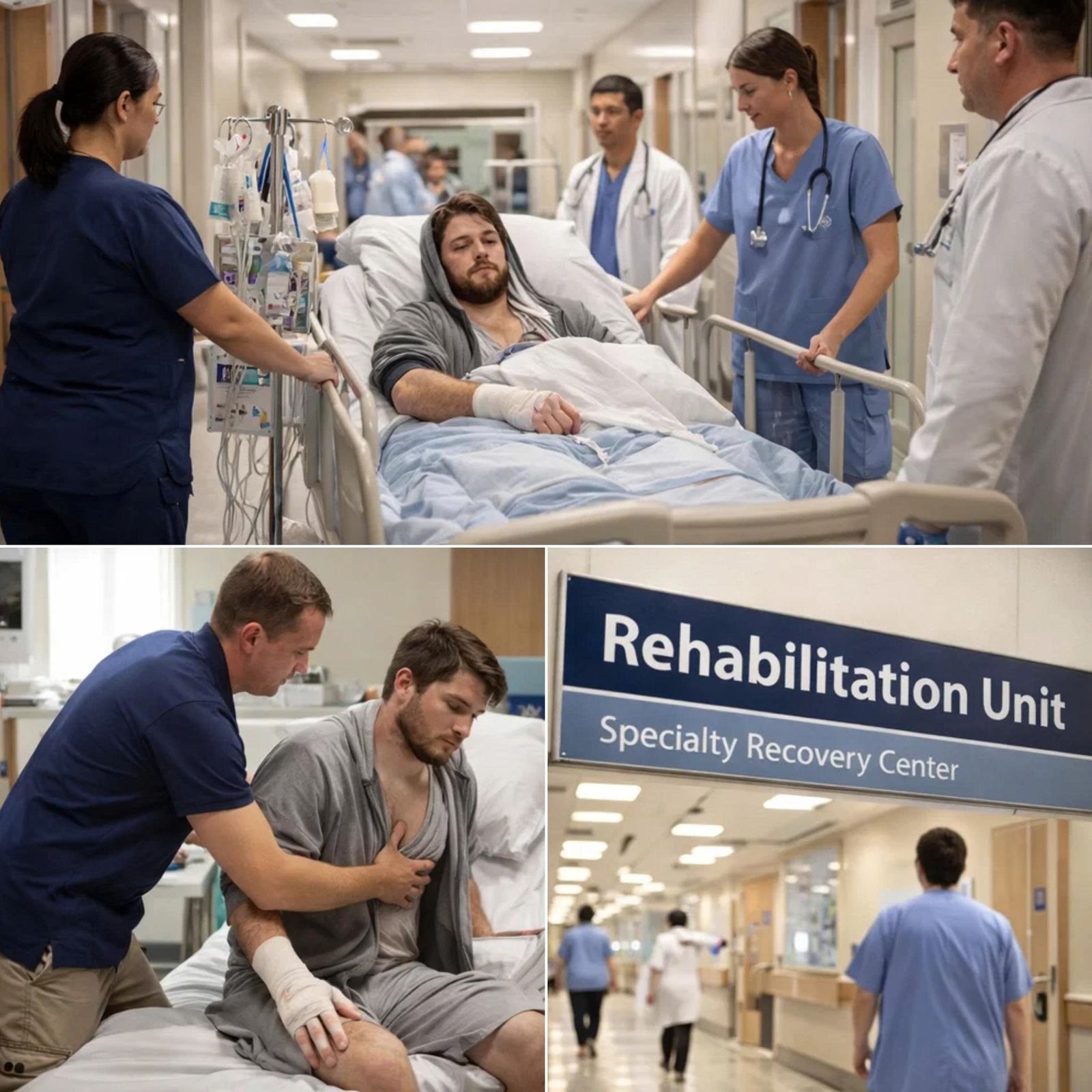
The transfer is now official.
After weeks spent inside the intense world of acute trauma care, Hunter Alexander is being moved to PAM Health Specialty Hospital at Ochsner LSU —
a change that may look procedural on paper, but emotionally and medically represents something much larger.

This is not just a room change.
It is a turning point.
For weeks, Hunter’s recovery has been defined by survival.
Every day revolved around urgent monitoring, protecting circulation, preventing infection, managing wounds, and getting through one critical window after another.
In that phase, the goal was immediate and unforgiving: keep him stable, preserve what could be saved, and prevent the next setback from becoming catastrophic.
That is what acute trauma care is built for.

Survival.
But this transfer signals that the focus is beginning to change.
Now, the conversation shifts toward rehabilitation, long-term wound care, and rebuilding strength.
Facilities like PAM Health are designed for patients who are no longer in the most dangerous stage of crisis, but who still need high-level medical support as healing continues.
That distinction matters.
Because transfers like this are not made casually.

They happen when doctors believe a patient is stable enough to leave the most critical environment behind — and strong enough to begin the next stage of recovery.
That does not mean Hunter is fully healed.
It does not mean the road ahead will suddenly become easy.
It does not mean procedures, setbacks, or pain are gone forever.
But it does mean that the medical team now sees enough stability to move from emergency containment into structured recovery.
And that is significant.

Inside acute trauma care, the central question is:
Can we stop things from getting worse?
Inside long-term rehab, the question becomes:
How much can we help him rebuild from here?
For families, that shift can feel enormous.
In the hospital’s most critical phase, every hour feels fragile. Updates carry fear.
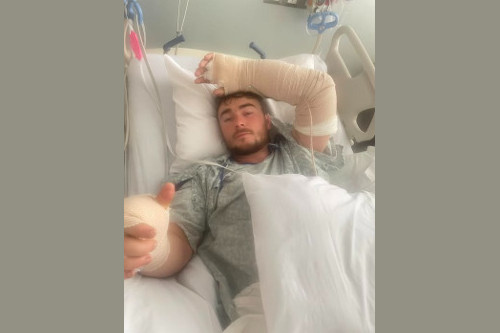
The future feels suspended between crisis and hope. A transfer like this doesn’t erase that trauma, but it introduces something that has been missing for weeks:
Direction.
Instead of emergency consults, there will now be therapy plans.
Instead of only reacting to complications, the team can begin setting goals.
Instead of simply fighting to hold the line, the focus can begin turning toward movement, nerve recovery, wound progression, and physical adaptation.
There will still be pain.

There will still be setbacks.
There will still be days when progress feels painfully slow.
But there will also be structure.
Physical therapists will work on strength and mobility.
Occupational therapists will focus on function and adaptation.
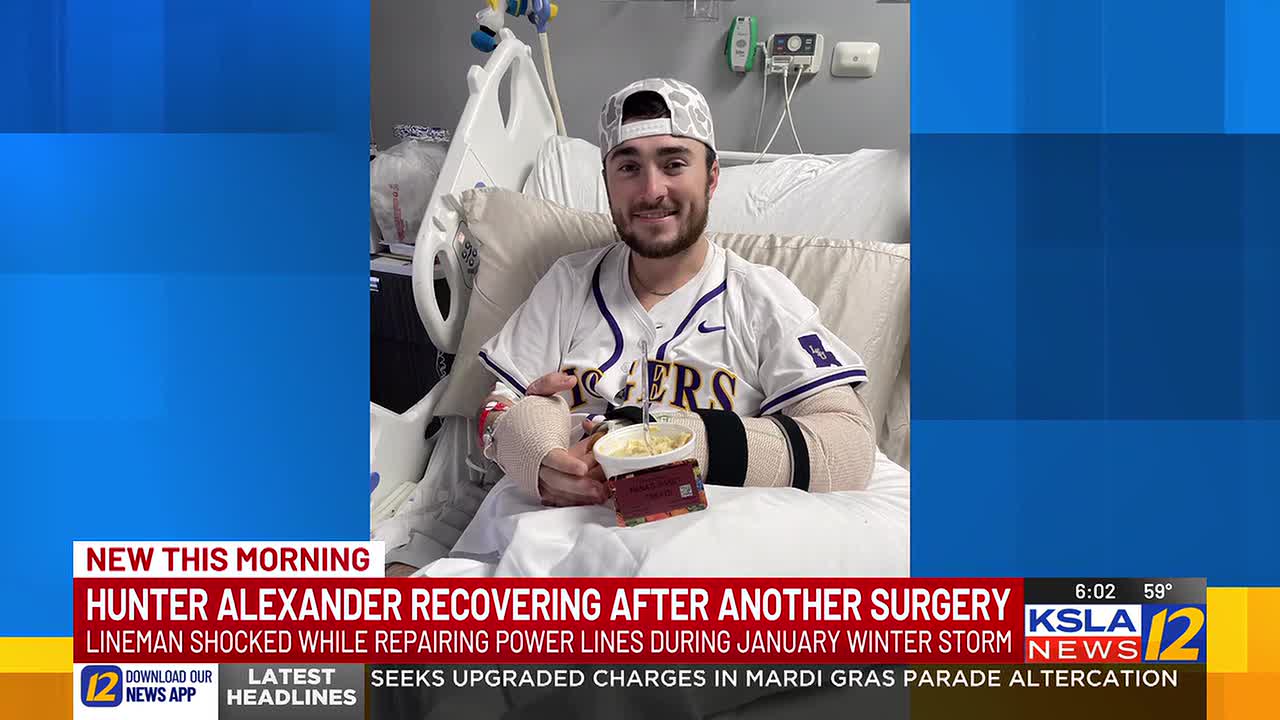
Wound care teams will continue monitoring healing closely.
And every small gain will begin to matter in a different way.
This is not the end of the battle.
It is the beginning of a different kind of fight.
The first fight was about getting through the danger.
This one is about learning how to move forward after it.

And sometimes, rebuilding can be just as demanding as surviving.
Because survival happens in moments of crisis.
Recovery happens in patience.
In repetition.
In frustration.
In small wins that don’t always look dramatic from the outside.

Still, the fact that Hunter is making this transfer sends one clear message:
He made it through the most dangerous stretch.
The surgeries.
The complications.
The fragile hours when everything could change without warning.
Now the question is no longer only whether he will make it through.

Now the question is what he may be able to reclaim.
How much strength.
How much movement.
How much independence.
How much life.

That is what makes this moment feel so emotional for those who have followed his journey closely.
Not because everything is resolved.
But because the direction has finally changed.
And after weeks of fighting simply to stay ahead of disaster, moving forward may be the most meaningful milestone yet.