

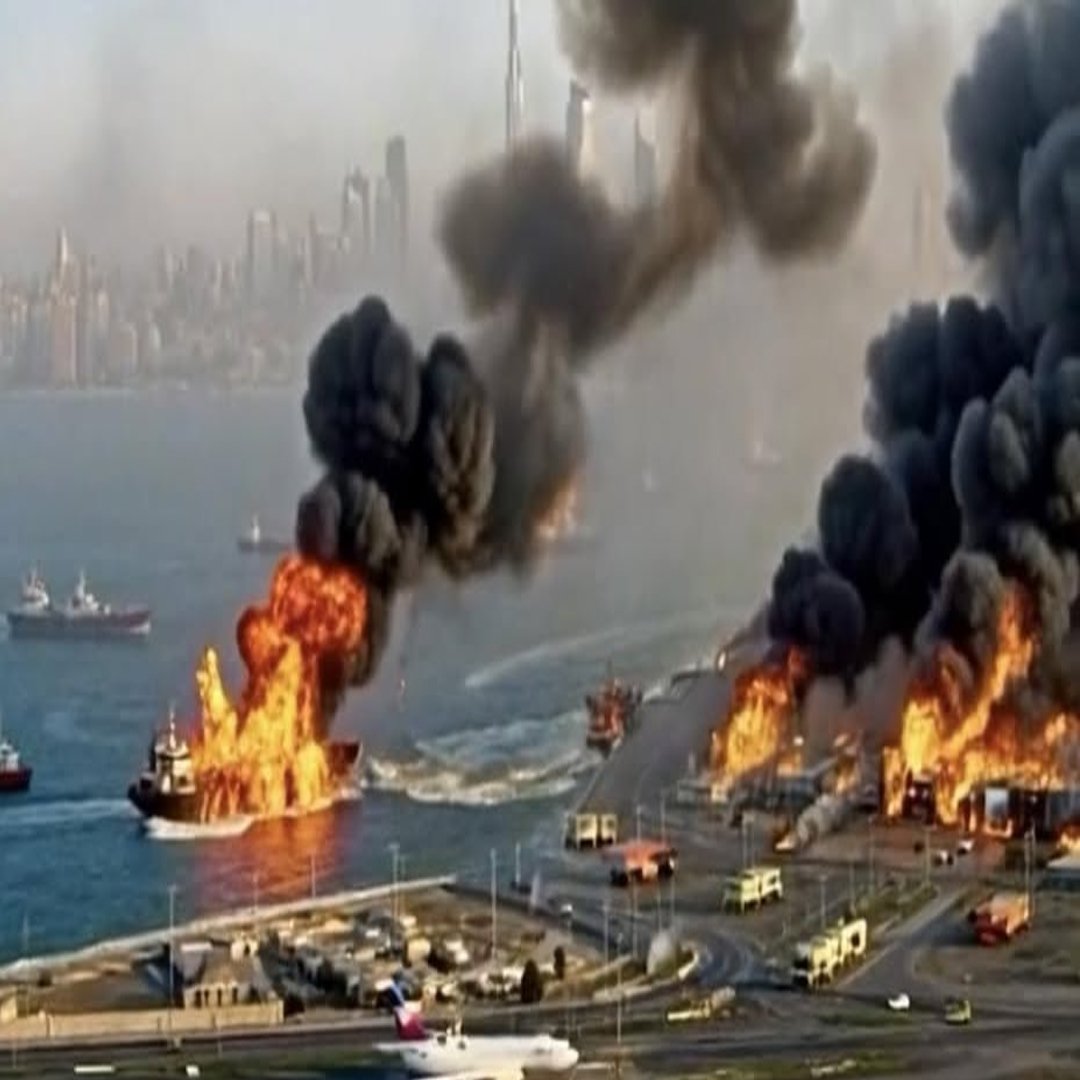
Iran targeted the world’s busiest international airport Wednesday and attacked commercial ships as U.S. and Israeli strikes rocked Tehran, while the United Nations’ most powerful body demanded a halt to the Islamic Republic’s strikes on its Gulf neighbors that threaten global oil supplies.
According to Associated Press the latest attacks marked an escalation in Iran’s campaign aimed at generating enough global economic pain to pressure the United States and Israel to end the war that started 12 days ago. But there were no signs that the conflict was subsiding.
On Thursday, an Iranian attack sparked a major fire on Bahrain’s Muharraq Island, home to the island kingdom’s international airport. Authorities urged people to stay indoors and close windows to avoid smoke. The airport has jet fuel tanks, and other tanks in the area serve the kingdom’s oil industry. Also, an attack on Iraq’s Basra port killed at least one person and forced a halt to operations at all the country’s oil terminals. Farhan al-Fartousi, the director-general of the General Company for Ports of Iraq, said the attack targeted a vessel in a ship-to-ship transfer area at the port on the Persian Gulf. Iraq’s commercial ports remained open, though the oil terminals had been shut, according to his statement carried by the state-run Iraqi News Agency. The first week of war with Iran cost the United States $11.3 billion, according to the Pentagon, which provided the estimate to Congress in a briefing earlier this week, according to a person familiar with the situation who spoke on condition of anonymity to discuss the private meeting. The military reported spending $5 billion on munitions alone in the war’s first weekend. Both sides have dug in, hoping to outlast the other as the conflict upends trade routes, chokes supplies of fuel and fertilizer coming out of the Gulf and threatens air traffic through one of the world’s most-traveled regions. Iran has targeted oil fields and refineries in Gulf Arab nations and effectively stopped cargo traffic through the narrow Strait of Hormuz, through which a fifth of all traded oil passes. In response, the International Energy Agency agreed to release 400 million barrels of oil, the largest volume of emergency oil reserves in its history, in a bid to counter the war’s effects on energy markets. The U.S. planned to release 172 million barrels of oil next week from its Strategic Petroleum Reserve to combat steep prices. The U.N. Security Council voted Wednesday to approve a resolution demanding a halt to Iran’s “egregious attacks” on its Gulf neighbors.
Among the most recent attacks, four people were wounded after two Iranian drones hit near Dubai International Airport in the United Arab Emirates, though flights continued, the Dubai Media Office said. Firefighters extinguished a blaze early Thursday at a luxury apartment tower in Dubai Creek Harbor after an Iranian drone strike. At Oman’s Port of Salalah, crews battled a blaze at fuel storage tanks there, according to the Oman News Agency. “The international community is resolute in rejecting these Iranian attacks against sovereign countries that are threatening the stability of the peoples, especially in a region of strategic importance to global economy, energy, security and security of global trade,” said Bahrain’s U.N. ambassador, Jamal Alrowaiei. The
13-0 vote in the U.N’s most powerful body reflects Iran’s isolated position as it has aggressively responded to Israeli and U.S. strikes. China and Russia – two Iranian allies – abstained from the vote. Their U.N. ambassadors called the proposal “extremely unbalanced” in not mentioning the strikes against Tehran that began the war.
Note: Photo below is A.i-generated that used for illustration purposes only