


For most of April, Nathan Lukes looked like a player trapped in a nightmare he couldn’t explain — a starting outfielder for the Toronto Blue Jays suddenly unable to recognize his own swing, timing off, confidence fading, and production nearly disappearing altogether.
But what fans didn’t see was the real battle happening behind the scenes.
Before Toronto’s weekend series against the Arizona Diamondbacks, Lukes finally revealed the hidden reason behind his collapse: vertigo symptoms that left him disoriented, physically unstable, and fighting through a constant sense of dizziness every time he stepped into the batter’s box.
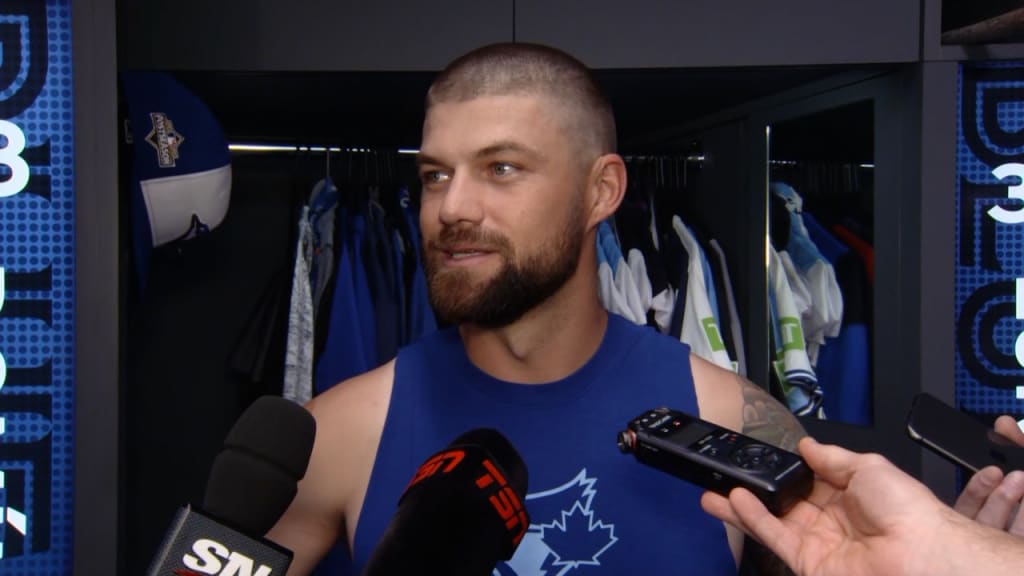
“I don’t know where it came from or how it started,” Lukes admitted, describing a sensation that made baseball feel almost impossible. “It’s hard to hit when the world is spinning and you feel like you might throw up at any second.”
Those words reframed everything.
What looked like a mechanical slump was actually a physical and neurological challenge that quietly derailed his start to the season. Lukes entered April in brutal form — just two hits total, a staggering 0-for-23 stretch, and a batting line that collapsed to .065 with an OPS barely above .180. For a player expected to contribute as Toronto’s primary right fielder, it was a shocking decline.
The turning point came in Phoenix.
According to team reporting, Lukes met with a specialist before the Diamondbacks series on April 17. He didn’t start that game, but he was cleared to appear off the bench — and immediately delivered a pinch-hit single that hinted something had shifted. More importantly, he was given targeted vision and balance exercises designed to address the vertigo symptoms impacting his perception at the plate.
What followed wasn’t gradual improvement.
It was a sudden eruption.
On Saturday, April 18, manager John Schneider made a bold decision: Lukes was moved into the leadoff spot against elite right-hander Zac Gallen. It was a high-risk move for a player still searching for consistency — but it paid off instantly.

Lukes opened the game with a clean single, immediately setting the tone. He later scored on a Jesus Sánchez RBI hit, then added two more singles across the afternoon. Even though he was stranded twice and the Blue Jays ultimately fell 6-2 after a late Corbin Carroll grand slam off reliever Jeff Hoffman, Lukes’ individual performance marked the clearest sign yet that something had changed.
But Sunday is where the story fully exploded.
Toronto’s offense, which had been stuck in one of its quietest stretches of the season, came alive in devastating fashion against starter Ryne Nelson. Before Arizona could even record an out in the field, the Blue Jays had already piled up eight runs in a first-inning avalanche.
And at the center of it all was Lukes.

Once again leading off, he sparked the rally with another single, immediately coming around to score on a Vladimir Guerrero Jr. base hit. But his defining moment came later in the same inning: with the bases loaded and momentum surging, Lukes delivered a bases-clearing double that broke the game wide open and sent shockwaves through the Diamondbacks’ dugout.
It wasn’t just a big hit — it was a statement swing.
He wasn’t done.
Lukes added another double in the third inning, marking his first extra-base hits of the entire season. In the span of a single game, he went from struggling to find the barrel to punishing pitches with authority and confidence.
Across the weekend, he piled up six hits and three RBIs — a dramatic reversal from the early-season version of himself that looked lost at the plate.
The timing couldn’t have been more critical for Toronto.
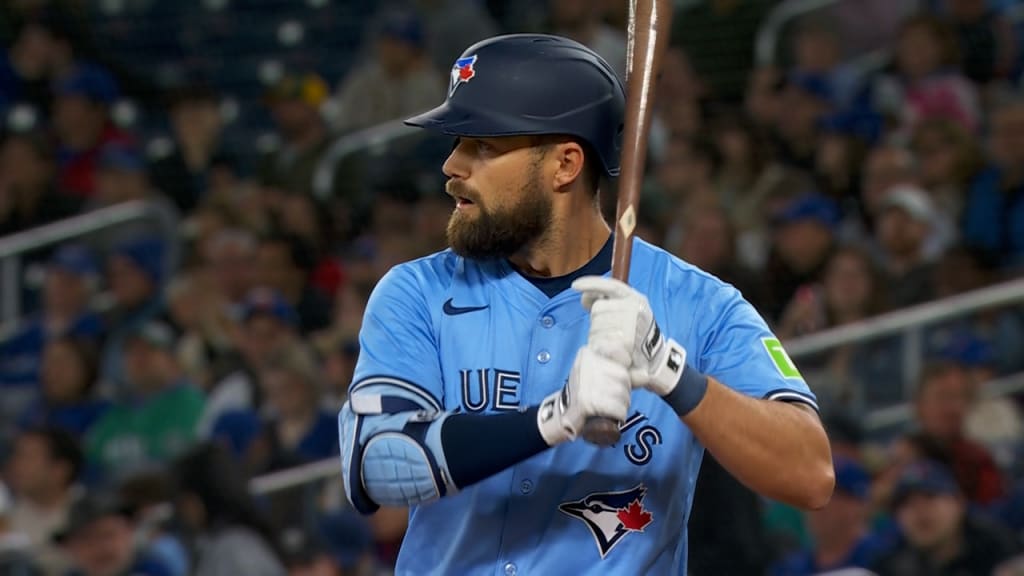
Even with Sunday’s offensive explosion, the Blue Jays have spent much of the year searching for consistency at the plate. Before the Arizona finale, the team had scored just seven total runs across four games. Their overall offensive ranking remains near the bottom of MLB, with limited power production and few home runs to speak of. No player on the roster has more than three homers, and the team ranks poorly in both home run output and slugging metrics.
That context makes Lukes’ breakout even more significant — not just as a personal turnaround, but as a potential spark for a struggling lineup.
What makes the story so compelling is how fast it all unfolded. One week, Lukes was battling dizziness and posting one of the worst stat lines in baseball. The next, he was leading off games, setting the table, and delivering the biggest offensive inning of Toronto’s season.
Whether this marks a permanent turnaround or a short-lived surge remains uncertain.
But one thing is undeniable: Nathan Lukes didn’t just recover over the weekend — he reintroduced himself to the league in the most dramatic way possible.
And for a Blue Jays team still searching for identity at the plate, that might be the most important development of all.