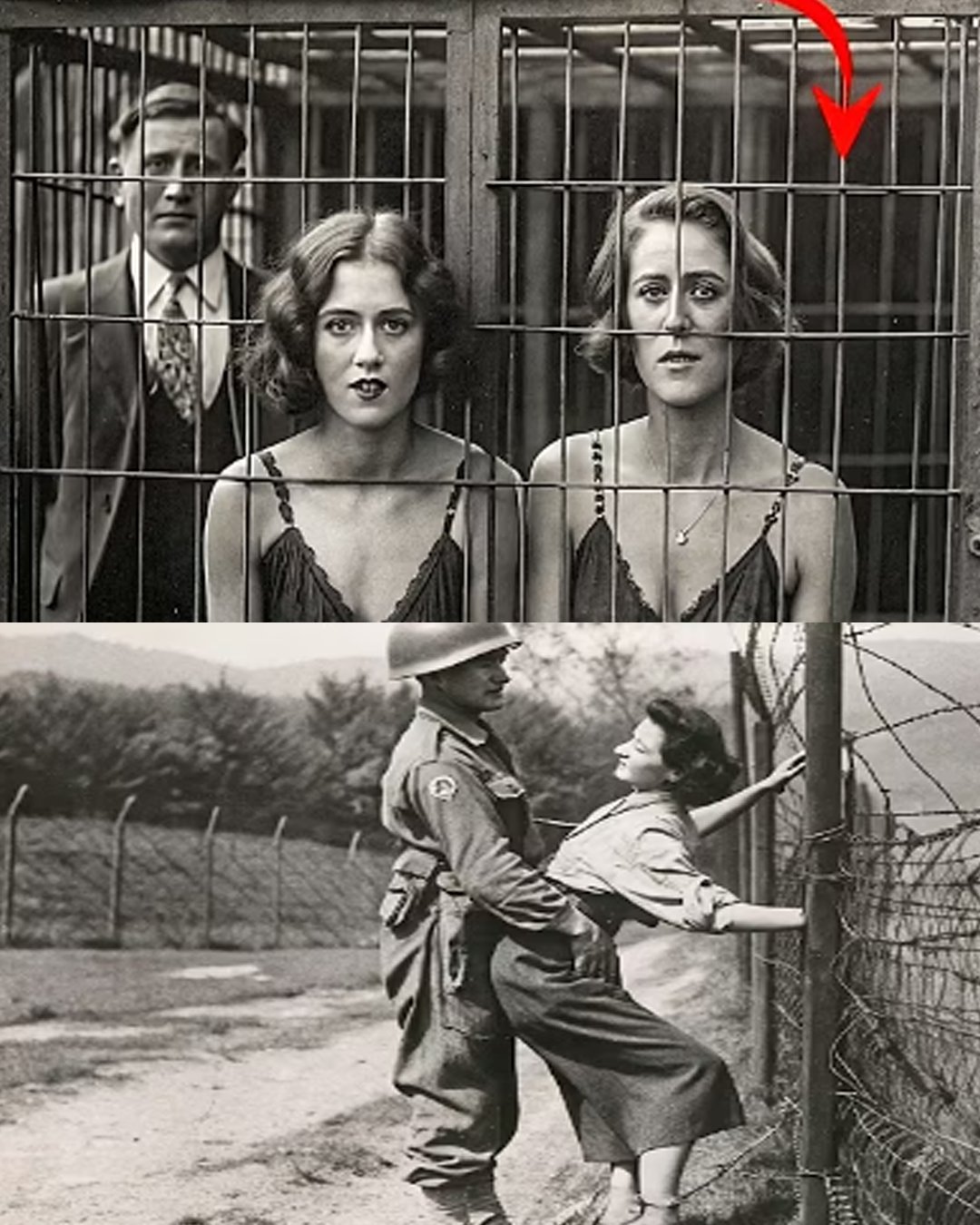
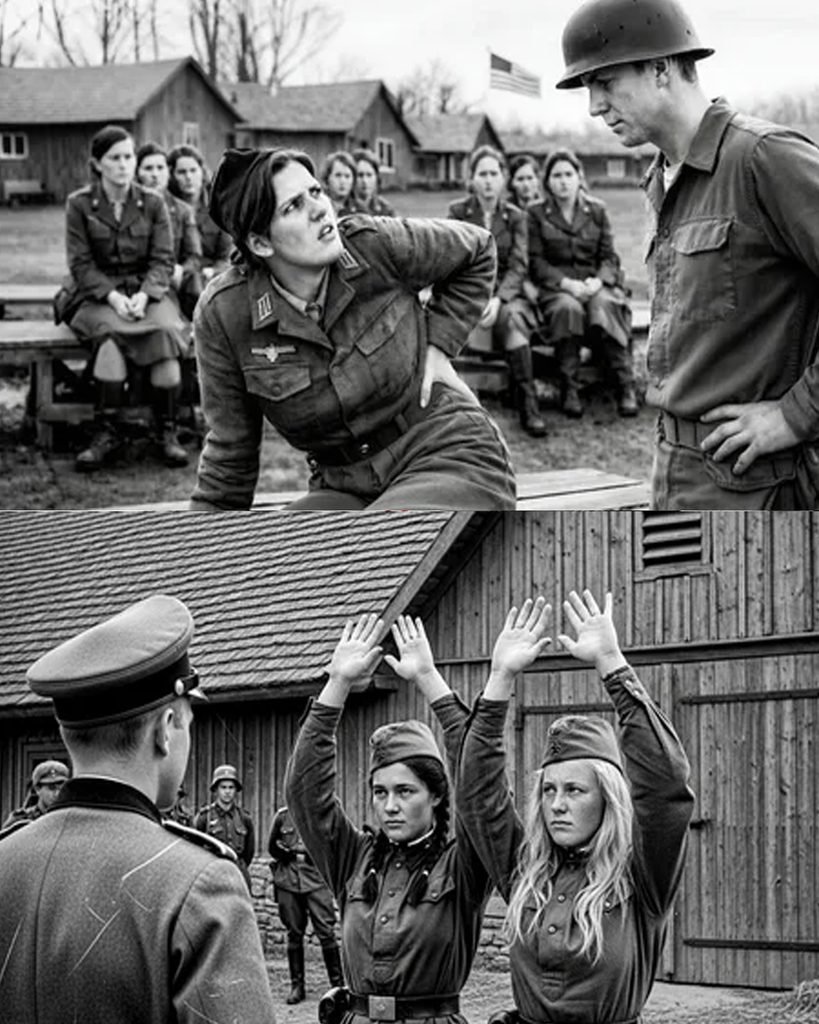
A photograph believed to have been taken in the early 1940s captures a young woman in a floral dress standing in the middle of an empty street. Her mouth is open in astonishment, and her eyes are fixed on something beyond the camera’s frame. No one knows for certain what she saw. The photographer preserved her reaction, but the cause of that reaction remains unknown. Among the countless images that have survived from the past, it is precisely these unanswered questions that make us look a little longer. Sometimes, the most fascinating part of a historical photograph is not what appears within its borders, but the story that remains hidden beyond them.
We live in an age when almost every moment can be documented. A small smartphone can store thousands of photographs, adjust lighting, transform colors, and remove unwanted details in seconds. Portraits are carefully selected, smiles are prepared for the camera, and moments that appear spontaneous are sometimes the result of numerous attempts to capture the perfect shot.
Yet when we look at old photographs, particularly those everyday images that were never widely circulated, we may encounter something entirely different.
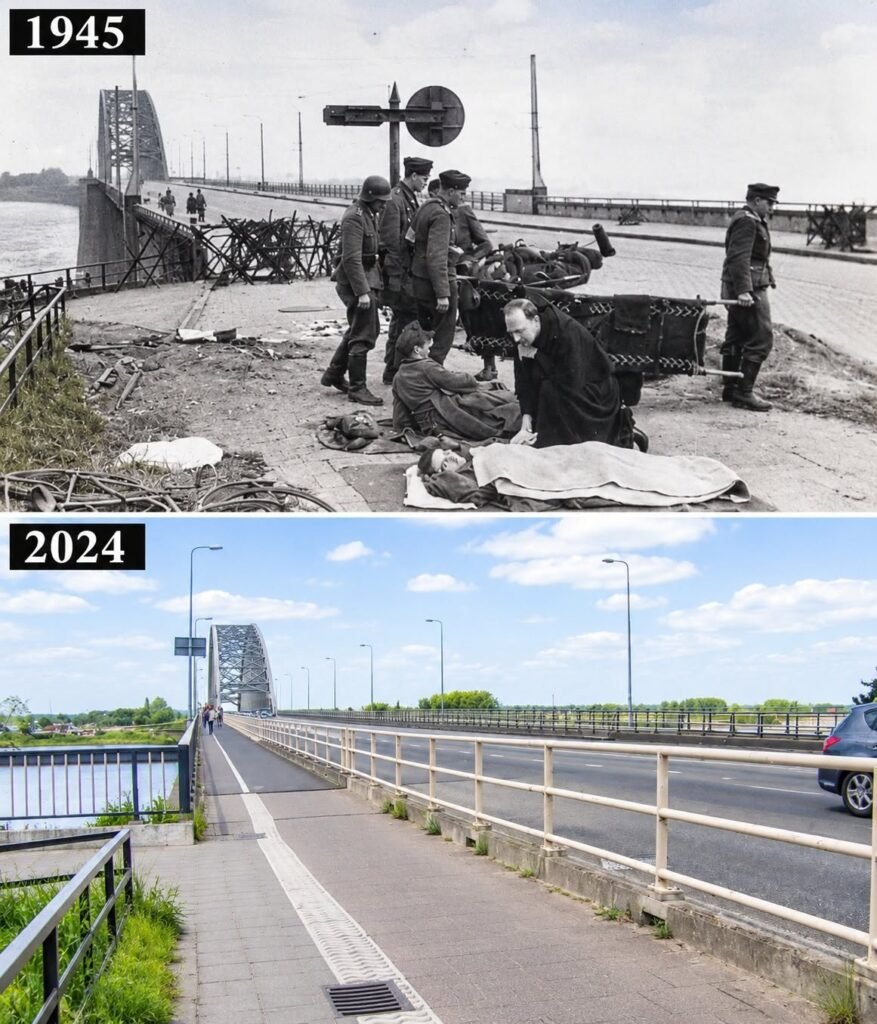
Their appeal does not necessarily come from perfect composition or technical sharpness. Sometimes, it comes from a face unexpectedly turning toward the camera, a movement frozen halfway through, or a small incident that those involved probably never imagined would interest people decades later.
These photographs transport us back to a world in which people did not live with the expectation of appearing on social media. They went to work, met friends, attended gatherings, cared for their families, and experienced unexpected moments just as people do today.
The difference is that most of those moments have disappeared with time.
Only a small number have survived.

And those surviving images remind us that the past was not shaped solely by major events, famous individuals, or decisions that changed the course of history. It was also formed by millions of ordinary lives, filled with emotions and experiences that rarely appear in history textbooks.
For decades, the historical photographs most familiar to the public have generally been images that passed through some form of selection. Newspapers sought photographs capable of communicating information clearly. Archives prioritized images with documentary significance. Families often preserved their finest portraits, important celebrations, and moments they particularly wanted to remember.
That meant countless other images were left behind.
A crooked frame.
Someone blinking at the wrong moment.
A movement that blurred the subject.
An unexpected incident occurring just before the photographer could adjust the camera.
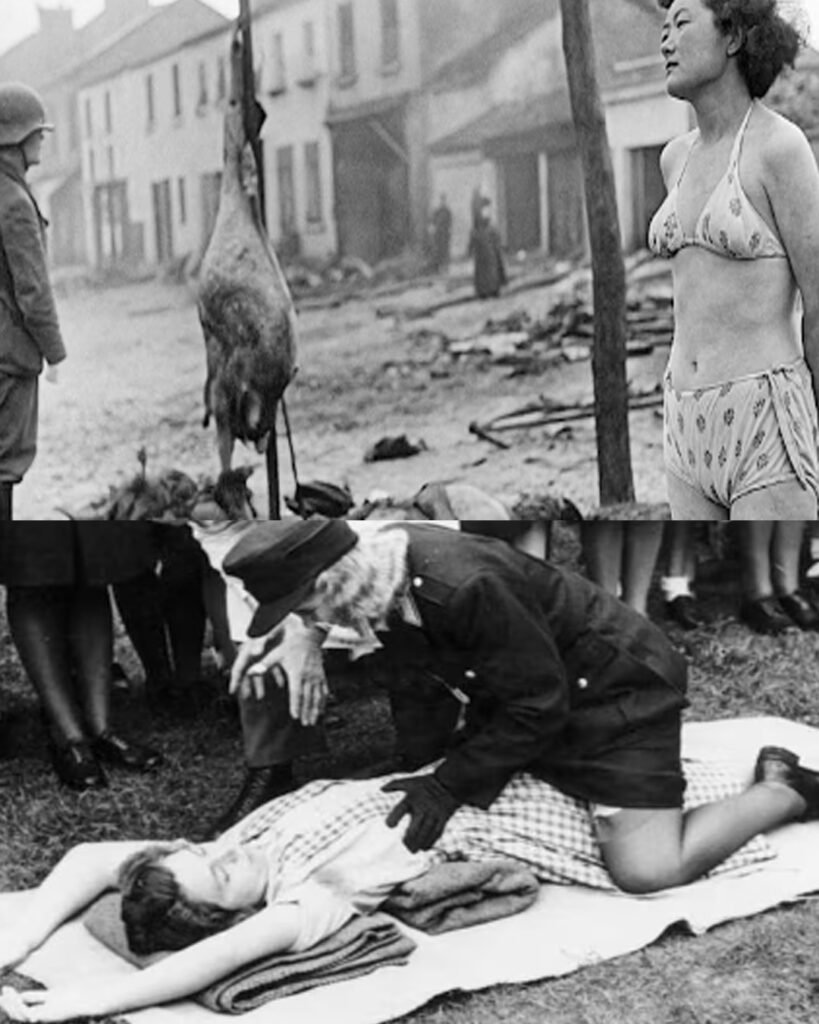
At the time they were taken, such photographs might have been dismissed as technical failures or considered too informal for a family album.
But as decades pass, those very imperfections can become the qualities that make them extraordinary.
Because they show that people were not always standing still, smiling politely, and waiting for a beautiful photograph.
Life continued even when the camera was not ready.
One example described in the collection is a photograph of a group of friends enjoying a picnic during the 1950s.
At first, the scene seems entirely ordinary. Friends have gathered outdoors to enjoy a relaxing afternoon together. But at the precise moment the photograph is taken, a sudden gust of wind sweeps through, sending hats and napkins flying.
The people gathered there burst into laughter.
The camera preserves the moment.
According to the accompanying description, there is no indication that the incident was staged. It was simply something unexpected that happened during an otherwise ordinary gathering.
However, without access to the original photograph, information about its photographer, location, or archival records, the precise circumstances cannot be independently verified.
Even so, the description illustrates a remarkable aspect of everyday photography.
A picnic may leave no trace in any historical chronicle. There is no major political decision, no military operation, and no dramatic event transforming society.
Yet for the people appearing in the photograph, it may have been a memorable day.
Perhaps what makes images like this so compelling is not that they record something extraordinary. On the contrary, they suggest that ordinary experiences are also worthy of preservation.
An unprepared smile can sometimes tell us more about an era than we might expect.
Alongside the picnic photograph, the collection’s description mentions a child watching a street performer.
In the captured moment, a balloon suddenly bursts close to the child’s face. The camera records the expression of astonishment that appears almost instantly.
It is an unmistakably human reaction.

We do not need to know which city the child lived in, what kind of family they came from, or what happened earlier that day to recognize the surprise on their face.
Emotions such as astonishment, confusion, delight, and embarrassment do not belong exclusively to any generation.
They exist across historical periods.
And that is one reason vintage photography can narrow the distance between the present and the past.
When we examine a photograph taken many decades ago, we usually notice the external differences first.
The clothing has changed.
The hairstyles are no longer fashionable.
The automobiles belong to another age.
The streets, shops, and everyday objects may seem unfamiliar.
But then our attention settles on the human faces.
Someone struggling not to laugh.
Someone startled by something unexpected.
A child looking curiously at the world.
Suddenly, the distance between the generations seems smaller.
We may not fully understand the social circumstances of the people in the photograph. Yet we can still recognize their familiar reactions.
That is something everyday photographs can accomplish, even when they do not document a major historical event.
However, when discussing photographs described as previously unseen, an important question must be asked: Where did they actually come from?
According to the original account, the images in the collection have circulated among collectors and people interested in history. Some are said to have originated from boxes of photographic negatives, old trunks in attics, family possessions sold at estate sales, or the archives of local photography studios.
These are all possible ways in which photographic material can be rediscovered.
During the era of film photography, pressing the shutter did not immediately produce a finished image that could be viewed on a screen.
Film had to be processed using appropriate chemical methods. The resulting negatives could then be used to produce photographic prints.
The process required time, equipment, and money.
Not every roll of film was printed in its entirety.
Not every printed photograph was placed in an album.
And not every album survived through successive generations.
When a family moved house, a photography studio closed, or the possessions of someone who had died were sorted, old photographs could be misplaced, forgotten, discarded, or passed into other hands.
A box of photographs might remain untouched for years, with nobody knowing exactly what it contained.
An envelope holding negatives might lose its identifying label.
A photograph might lose the name of its creator.
A face might become unrecognizable to everyone still living.
And when these materials reappear, the person who discovers them may face a problem far greater than simply cleaning or restoring the images.
How can the true story behind a photograph be established?
This is where the fascination of vintage photography meets the responsibility of historical research.
A photograph can reveal a great deal, but it does not automatically explain everything.
An image may record clothing, objects, architecture, activities, and expressions at a particular moment.
However, without an original caption or supporting documents, we may not know who the people were, why they were there, what happened immediately before the camera was used, or what occurred afterward.
Photographs believed to have been taken during the Second World War require particular care when placed within their historical context.
The early 1940s were a period when war had profoundly affected many parts of the world. Military campaigns, civilian displacement, and sweeping changes in social life created an atmosphere of uncertainty across numerous countries.
But not every photograph taken during those years directly reflects the war.
An empty street does not necessarily indicate the aftermath of an attack.
A frightened expression does not prove that someone has just witnessed a military event.
An unusual moment does not automatically become evidence of a major historical incident.
And this distinction is especially important when considering the photograph of the young woman in the floral dress, believed to have been taken in the early 1940s.
According to the description, she is standing in an empty street.

She looks upward.
Her mouth is open in an expression that could be interpreted as astonishment.
But whatever she is looking at remains outside the frame.
That is all the description allows us to establish.
The original account suggests several possibilities: perhaps a runaway horse, an unexpected encounter with someone she knew, or a bird that startled her.
Yet these possibilities are merely hypothetical examples illustrating the absence of information.
There is no basis for declaring any of them to be true.
Nor can we conclude that the woman was witnessing fighter aircraft, an air raid, or any other military activity simply because the photograph is believed to date from wartime.
The historical period alone is insufficient to determine the nature of the incident.
The most remarkable feature of the photograph, therefore, is not a historical secret that has finally been solved.
It is the limitation of what a photograph can tell us.
The camera recorded a reaction.
But the cause of that reaction remained beyond its field of view.
That is a genuine gap in the historical record.
And it reminds us that history does not always provide complete answers.
We often approach the past through events with established conclusions, clearly defined dates, and identifiable individuals.
But in everyday life, countless moments leave too little evidence to be fully explained.
The woman in the photograph may have continued with her day immediately after the image was taken.
Whatever surprised her may have lasted only a few seconds.
For the people present, the reason might have been perfectly obvious.

But decades later, once the photograph has become separated from its original circumstances, something that was once self-evident becomes an unanswered question.
This is one of the fascinating paradoxes of historical documentation.
A photograph can survive longer than the memory of the event it depicts.
And the further we move from the moment it was taken, the more difficult establishing the truth can become.
The story continues with another image, this time believed to date from the 1960s.
In the described photograph, a group of men in suits are attending what appears to be a formal dinner.
Everything seems to follow the familiar rules of social etiquette.
The clothing is immaculate.
The setting appears ceremonial.
The guests may be participating in an official gathering.
But then something unexpected happens.
A waiter trips, sending a tray of drinks flying.
The camera is said to have captured the almost simultaneous reactions of those who witnessed the accident.
Some appear stunned.
Others seem concerned.
A few look as though they are struggling to suppress their laughter.
In a single instant, the formality of the dinner is interrupted by an entirely ordinary mishap.
What makes the image interesting is not the seriousness of the incident.
It is the contrast between a carefully prepared social occasion and the unpredictability of life.
No matter how much people attempt to control their surroundings, unexpected events remain possible.
A formal dinner can still become the setting for an awkward accident.
Elegantly dressed guests can still reveal spontaneous reactions.
And a moment that might have been excluded from an official photographic record can become an image that encourages future generations to look more closely.
Of course, as with the other photographs described in the collection, we must distinguish the accompanying story from independently verified information.
No original archival material has been provided to establish the identities of the guests, the location of the dinner, or the precise circumstances of the accident.
The description should not be transformed into a definitive account of a verified historical event.
Nevertheless, this does not diminish the significance of the broader subject.
Even when identities and circumstances remain unknown, everyday photographs can encourage us to reconsider how human beings appear in collective memory.
In official historical collections, men wearing suits at formal gatherings are often photographed standing solemnly, shaking hands, or looking directly at the camera.
Such images can have clear documentary value.
They may identify participants, establish the location of an event, and sometimes reveal the social standing of those present.
But a photograph of an unexpected mishap offers a different perspective.
It suggests that these individuals existed as more than the social roles they performed.
They were also people capable of spontaneous reactions to unpredictable events.
This is not a discovery that changes the course of history.

But it can make our understanding of the past feel more human.
And perhaps that is precisely why previously overlooked vintage photographs continue to attract attention.
In the digital world, taking photographs has become far easier than it was during the age of film.
A moment can be recorded from numerous angles.
An unflattering photograph can be deleted immediately.
An awkward expression can be replaced by another image.
Editing tools allow users to improve photographic quality, but they can also make the distinction between a spontaneous moment and a carefully constructed image harder to recognize.
This does not mean modern photography lacks authenticity.
Nor does it mean every vintage photograph presents an untouched version of reality.
From the earliest periods of photographic history, people have posed for cameras, arranged compositions, adjusted lighting, and decided what should appear within the frame.
An old photograph can still be staged.
An apparently spontaneous image can still be the result of preparation.
And an inaccurate caption can completely distort how viewers understand a photograph.
Therefore, the value of vintage photography does not rest on the assumption that everything it shows is unquestionably true.
Its value lies in its ability to provide visual traces of the past, particularly when those traces can be compared with other historical sources.
A photograph accompanied by a date, location, photographer’s name, and identification of its subjects generally offers greater research value than an image of unknown origin.
A roll of negatives preserved alongside a photography studio’s records may provide more reliable context than a digital copy shared online without a caption.
And a photograph examined alongside diaries, letters, local records, or archival documents can help reconstruct aspects of history that might otherwise remain forgotten.
It is this process that makes collecting and studying vintage photographs resemble a form of historical investigation.

“Some content was generated using AI tools (including ChatGPT) and edited by the author for creativity, storytelling, and historical illustration purposes. Historical facts and key details should be verified against reliable historical sources. Any AI-generated or reconstructed visuals are intended for illustrative purposes and should not be interpreted as original historical photographs or archival evidence.”
Để lại một bình luận