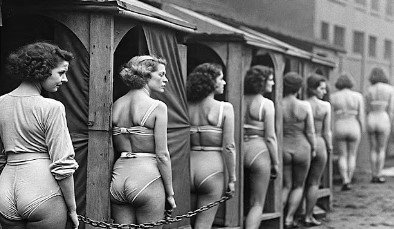
Our grandparents used to say that times were very different, and these photos prove it. They show city streets full of horses and trams, workers doing manual labor that machines can do today, and families dressed in their finest clothes for portraits.
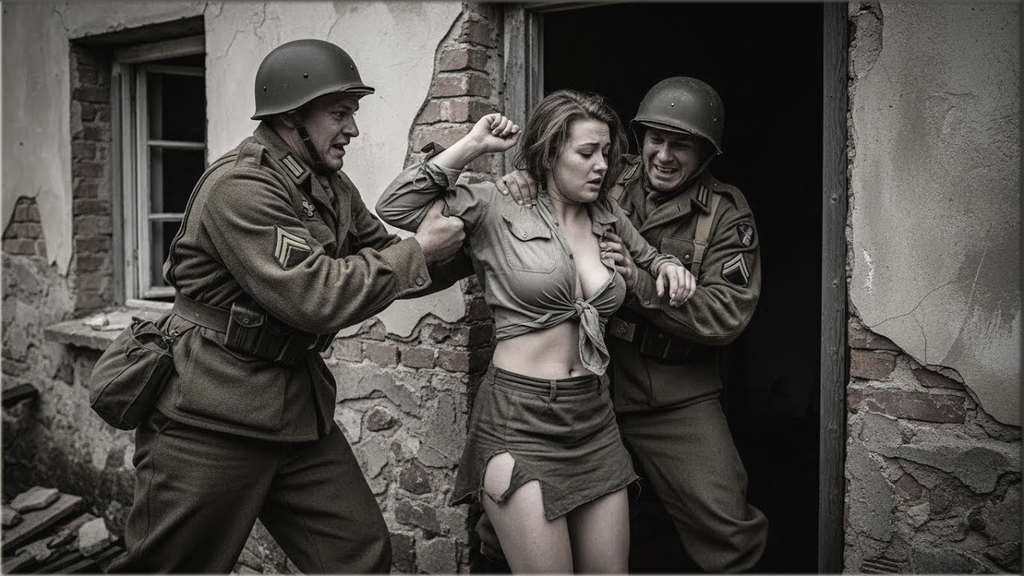
This page is a rare and constantly updated photo album. Each time you visit, the collection is shuffled, so regular visitors always find photos they’ve never seen before.
Scroll down to begin. If a photo catches your attention, take a closer look at the background, because old photos often contain little surprises.
 A gunner is curled up inside a spherical turret, a glass and steel sphere suspended beneath bombers like the B-17 and B-24. The turret is so cramped that the gunners, often the smallest members of the crew, sit huddled with their knees drawn up for hours on end. Poet Randall Jarrell, who served in World War II, wrote a famous short poem about this job, “The Death of a Spherical Turret Gunner.”
A mannequin in the museum illustrates how a head press worked, with the head held beneath an iron lid and a screw lowered from above. Devices like this are displayed in “torture museums,” where guides present them as historical evidence from the Middle Ages. Researchers argue that evidence is scarce, and many devices were manufactured or invented long after the Middle Ages. The real purpose of this display is to make you imagine the worst.
 A gigantic steam-powered machine with legs made of rubber tubing stands majestically in the city square. It looks more like a digital artwork created to resemble an old photograph than a real machine. However, it embodies how people once envisioned the future: bigger engines, more pipes, and the belief that anything could be built if you added enough steel.
 On October 22, 1895, the Granville Express to Paris arrived at Montparnasse station too fast, crashed through the station wall, and fell onto the tracks below. Although the photograph is striking, only one person died: a woman on the tracks was struck by falling debris. The train slowed down, the brakes failed, and the train driver was fined 50 francs. This remains one of the most famous railway photographs ever taken.
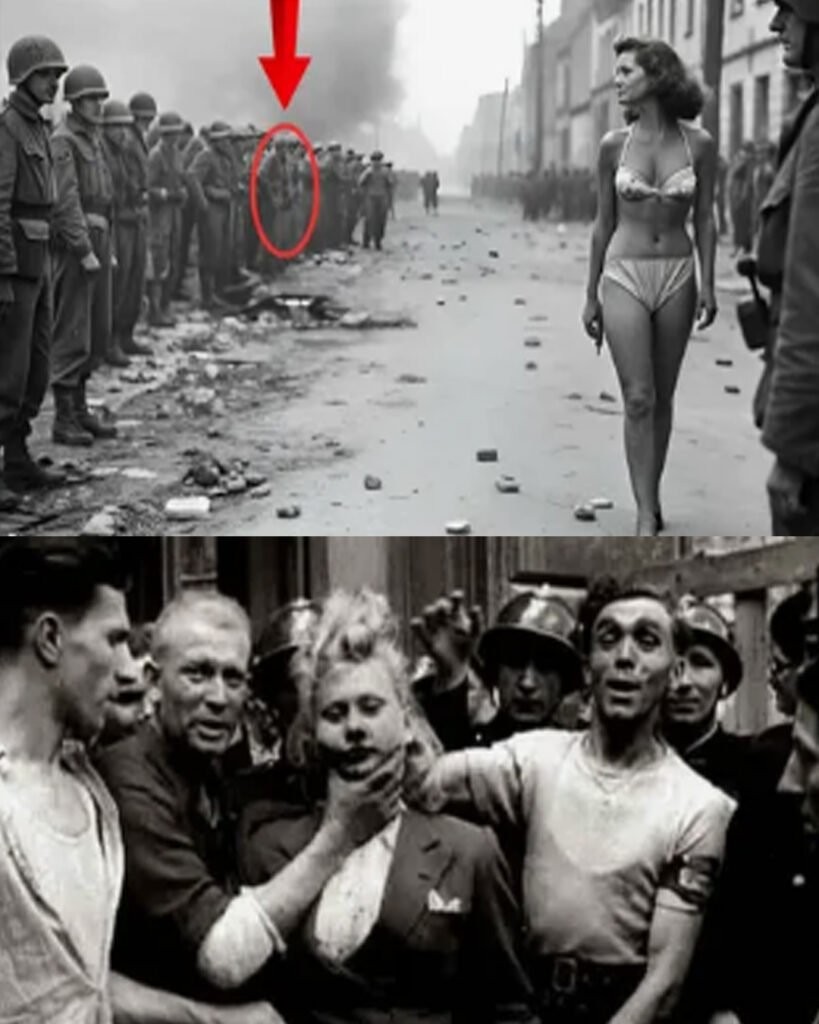
When affordable roll-on film cameras became available around 1900, photography moved beyond the studio and into everyday life. People began taking pictures during picnics, on the beach, and in front of their homes.
Those candid, everyday photographs are a precious gift to us today. They show what people look like when they’re not dressed up for formal portraits.
He dug a grave for his dying daughter. Years later, it became a garden. 🥹🙏 In 2017, Chinese farmer Zhang Liguang learned that his 2-year-old daughter, Xinlei, had severe beta thalassemia, a blood disorder.
 The “Iron Military Court”: a coffin-shaped iron cabinet lined with spikes, famously considered the most brutal torture instrument of the Middle Ages. Surprisingly, historians have found no evidence that any medieval court ever used it. The most famous example, in Nuremberg, was probably assembled in the 1800s from older pieces, and its legend spread throughout Victorian museums and exhibitions. Most of the “Iron Military Courts” on display today belong to that period.
 Tutankhamun, the famous young king of Egypt, is represented by his mummified remains and modern reconstructions of his appearance. He died around 1324 BC, at the age of eighteen or nineteen. CT scans and DNA tests revealed he suffered from bone disease and malaria, rather than assassination, a long-held popular theory. His tomb, found almost intact in 1922, remains the most famous discovery in archaeological history.
 A gigantic three-wheeled bicycle with tiny gears and drive shafts from the 1800s. Before gears and chains, larger wheels meant greater distance traveled with each pedal rotation, which is why “penny-farthing” bicycles had such enormous wheels. Inventors continued to experiment with bizarre designs like this three-wheeled vehicle. The downside was the height: falling from a height was dangerous, and the chain-driven “safety” bicycles of the 1880s replaced them all.
 A woman wearing a gas mask is pushing a baby stroller designed to protect the baby from toxic gas. In the late 1930s, Britain was preparing for gas attacks, but they did not materialize. By September 1939, approximately 38 million gas masks had been released, including special helmets for infants, which parents had to manually inflate, and colorful “Mickey Mouse” masks for toddlers.
Take a moment to look beyond the main subject of each photograph. The background often tells its own story, from hand-painted shop signs to clothes drying between buildings.
It is these small details that make old photographs so captivating. They allow us to imagine the sounds, smells, and hustle and bustle of a street from a bygone era.
 The image shows an advertisement for the Ramset tool, a device that uses a small amount of gunpowder to fire hooks and pins into hard concrete. The product label explains that the hooks are fired into the wall, and then people sit on chairs suspended from those hooks, creating “stacked chairs” with an area of just four square feet (approximately 1.2 square meters) per person. Gunpowder-powered tools like this are still used on construction sites today.
 A girl is held upright in a wheeled frame, supporting her chin and neck. Frames like these resemble early 19th-century orthopedic devices, when doctors attempted to straighten the spine using traction, braces, and splints. Some of these devices looked quite frightening, and the results were inconsistent. Modern medicine has moved on to lighter braces and surgery.
 The Bronze Bull: a hollow bronze bull supposedly made for Phalaris, a cruel tyrant of Akragas in Sicily around 550 BC. Ancient writers recount that its creator, Perillus, was supposedly the first person to be imprisoned inside it. No original has ever been found, so no one knows how much of this story is true. The model in this museum embodies the idea that has kept the legend alive for 2,500 years.
 Two people risked their lives playing tennis on the wing of a biplane at a very high altitude above the ground. After World War I, thousands of cheap, surplus aircraft created “aerial acrobats,” pilots and wingmen who traveled through towns and fairs performing daring stunts for paying audiences. Many famous photos of these stunts were staged, but the danger was real: the wingmen worked without parachutes.
 Dermal horns: cone-shaped masses of tightly packed keratin, the same protein as fingernails, that protrude directly from the skin. Doctors have noted horns on the scalp, face, and hands for centuries, and most look more frightening than they actually are. They are usually removed and examined, as in significant cases, the skin at the base turns out to be damaged or cancerous.
The outfits in these photos can tell you a lot about the year, season, and even the occasion. Pay special attention to the hats: for decades, almost no one went out without a hat.
Men wear fedoras, baseball caps, or straw hats, while women’s hats vary from simple styles to elaborate designs decorated with ribbons and feathers.
 A rusty steel helmet with an unexploded shell stuck inside was found in a plowed field. Battlefields always leave behind their remnants. In northern France and Belgium, farmers still dig up World War I shells every year, a harvest locals call the “iron harvest.” Bomb disposal teams remove tons of shells annually, some of which still contain explosives or toxic gases.
 Let’s delve deeper into the practice of foot binding from childhood. These tiny, “lotus-like” feet came at a painful price: fractured arches, frequent infections, and lifelong difficulty walking. In the early 1900s, Chinese reformers and foreign missionaries campaigned to end the practice, and the last women who still bound their feet lived into the 21st century.
 A typist wears a helmet with a sealed visor connected to a breathing tube. Such devices promised to block out noise and distractions, or provide fresh air, in busy offices. The most famous idea of this kind was the “Isolator” helmet by publisher Hugo Gernsback in 1925. No one wore it for long, and the open-plan office still exists today.
 A chastity belt, supposedly fastened by knights to their wives before embarking on the Crusades. Historians are skeptical about this. The earliest drawings of the belt date back to around 1400, and many belts in museums have been re-dated to the 1700s and 1800s, some made as exotic artifacts. The legend of the jealous knight is far more famous than the belt itself.
 ‘Car & motorboat’: a hybrid vehicle from the 1910s, half car, half boat, photographed by a news agency of the time. Inventors continued to try to combine these two elements. The last mass-produced amphibious vehicle was the 1942 DUKW military vehicle, and the German Amphicar of the 1960s was the only vehicle that ordinary people could afford.
Railways connected countries in the 19th and early 20th centuries. Steam locomotives transported passengers, mail, and goods, and railway stations became the heart of burgeoning towns.
Old railway photographs reveal everything from massive locomotives to tiny rural stations, along with the teams of train operators.
 Hugo Gernsback’s “Telescope,” introduced in 1963 as a head-worn television, featured a small screen for each eye and two antennas. It never became a product. Gernsback, the publisher who coined the science fiction genre and after whom the Hugo Award is named, envisioned these head-worn glasses half a century before virtual reality technology emerged.
 A 19th-century engraving depicts a craniotomy, showing a doctor using a hand-cranked instrument called a trephine to drill into the patient’s skull, alongside a diagram of the instruments. Surgeons performed this procedure to treat skull fractures, and before the advent of ether anesthesia in the 1840s, patients remained conscious. Survival depended largely on preventing infection. During the American Civil War, about half of the soldiers who underwent craniotomy survived.
 An armored vehicle on a street lined with cinema signs, seemingly in Germany. Armored vehicles were used by police and military during the turbulent period following World War I, when cities like Berlin witnessed street fighting from 1918 to 1923. This particular vehicle has a rounded appearance, with the characteristic rivets of the first generation: heavy, slow, and built to intimidate crowds.
 A golden Buddha statue, a CT scan of the inside of the statue, and several mummified monks seated. The CT scan, taken in the Netherlands in 2015, shows a mummified monk seated inside the statue, believed to be a Chinese master approximately a thousand years old. In Japan, a select few monks have pursued an even more extreme path: a long-term diet consisting only of nuts and bark, along with a tea made from toxic lacquer resin, to preserve their bodies before death. Self-mummification was banned in the 1870s.
 Ronnie and Donnie Galyon, born in 1951 in Ohio, were conjoined at the abdomen. They shared most of their digestive system and were never separated. They lived for 68 years, making them the longest-living conjoined twins on record, and in their final years, they chose a quiet life together in their hometown.
Thank you for taking a few minutes to look at these photos. These old pictures remind us that every ordinary day eventually becomes history.
The images on this page are sourced from various archives and collections. Image captions are brief descriptions, and any dates or locations mentioned are approximate.
Please come back soon. The collection will be rearranged each time you visit, so there will be different pieces next time.
Some content was generated using AI tools (including ChatGPT) and edited by the author for creativity, storytelling, and historical illustration purposes. Historical facts and key details should be verified against reliable historical sources. Any AI-generated or reconstructed visuals are intended for illustrative purposes and should not be interpreted as original historical photographs or archival evidence.
Để lại một bình luận