

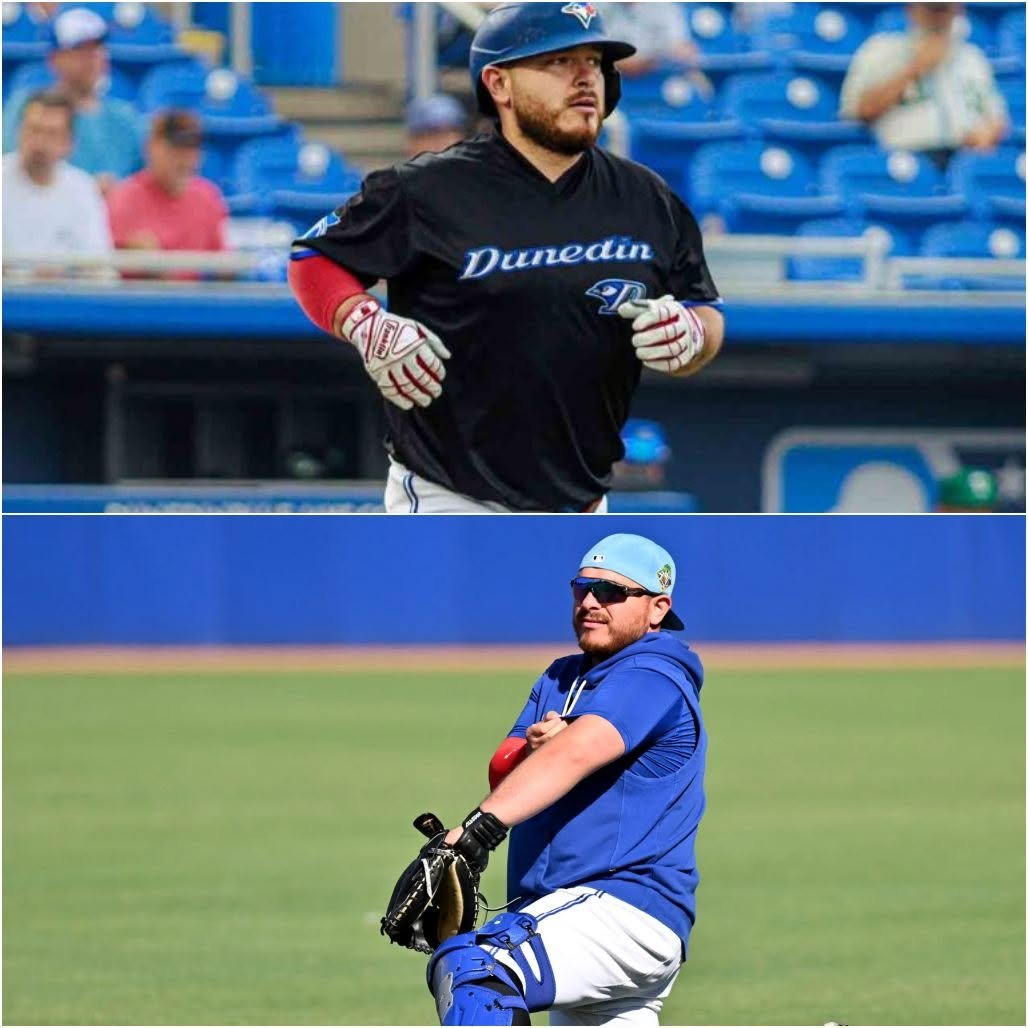
The struggling Toronto Blue Jays are about to get their captain back. Two-time All-Star catcher Alejandro Kirk is finally nearing a return to action after spending the last two months sidelined on the injured list with a broken thumb.
Kirk’s absence has been deeply felt. His irreplaceable combination of a reliable right-handed bat, pristine pitch-framing, and masterful game-calling was central to Toronto’s success last season, and it’s no coincidence that the ballclub has scuffled mightily since he went down.
However, his injury opened the door of opportunity for rookie Brandon Valenzuela. After a strong showing in Spring Training, the 25-year-old has completely seized the moment at the MLB level, firmly cementing himself as the Blue Jays’ backup catcher of both the present and the future.
On the other hand, veteran Tyler Heineman has significantly regressed following his breakout 2025 campaign. He has been mistake-prone and an absolute non-factor at the plate. Because Valenzuela has thoroughly outplayed Heineman in virtually every facet of the game, the front office faces an awkward roster dilemma when it comes time to activate Kirk.
Could the Blue Jays simply carry all three catchers on the active roster? Technically, yes—but they absolutely shouldn’t.
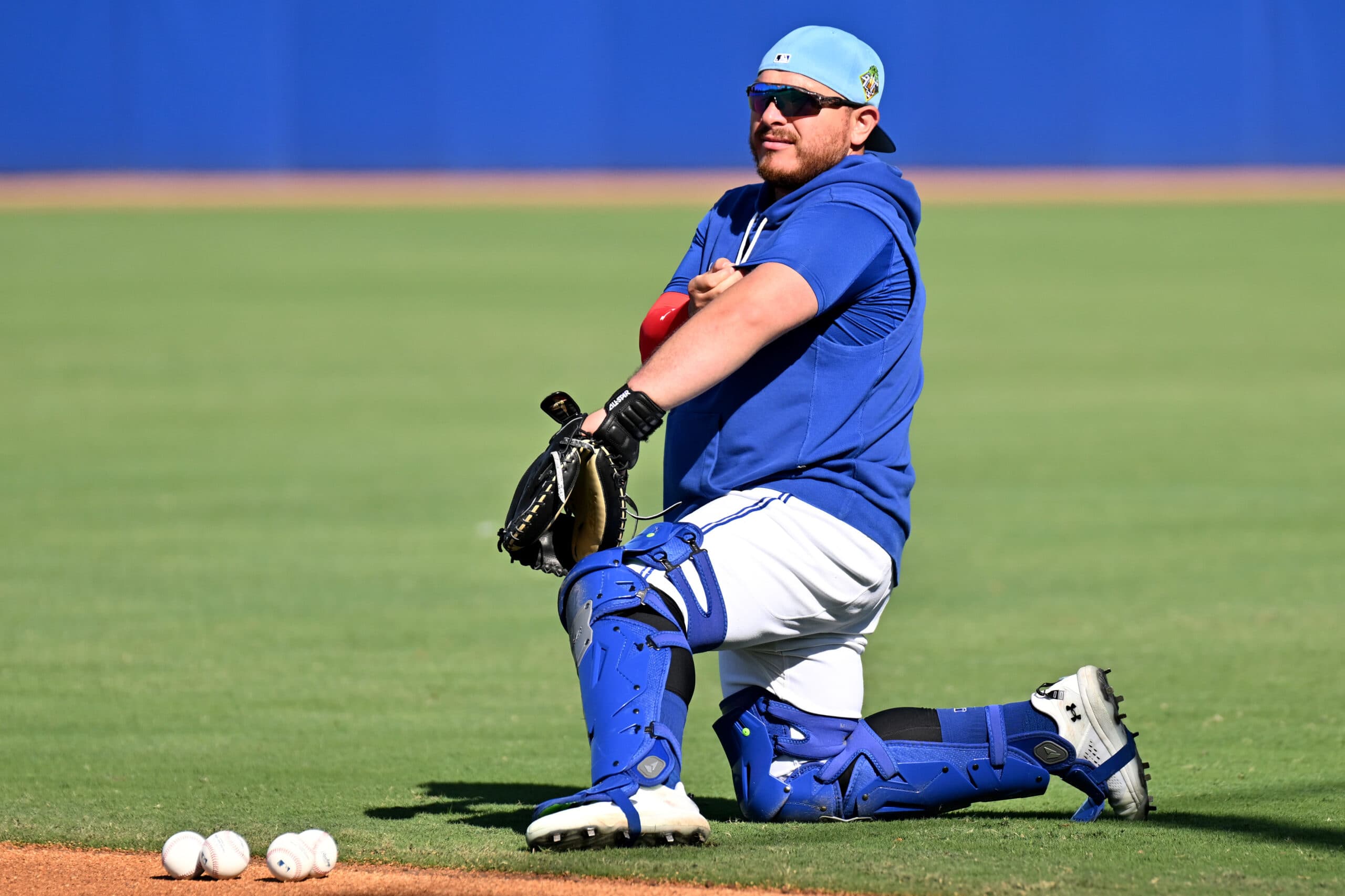
The Offensive Black Hole
The primary argument against rostering three catchers is that Heineman simply hasn’t provided enough offensive utility to justify a bench spot. Through 85 plate appearances in 2026, he has been roughly 80% worse than the league-average hitter, limping along with a meager 19 wRC+ and a 16 OPS+.
A look at the analytics explains the steep drop-off. Heineman’s Batting Average on Balls in Play (BABIP) has plummeted from a fortunate .342 last year to an icy .196 this season, suggesting that good luck played a massive role in his 2025 breakout. While that indicates he has faced some bad luck this summer, he isn’t doing himself any favors—his walk rate is down, his strikeouts are up, and he is rarely making hard contact.
Defensively, Heineman has rounded into solid form after committing several baffling blunders when Kirk initially went down in early April. He currently ranks in the 81st percentile or better in framing, blocking, and caught-stealing above average. Yet, in today’s game, a catcher has to boast elite, Patrick Bailey-level defensive metrics to offset being an automatic out in the batter’s box.
Valenzuela Has Earned the Backup Role
Meanwhile, Valenzuela has indisputably earned the right to stay. The rookie has provided legitimate pop, launching six home runs and pitching in a solid .748 OPS, all while playing stellar defense behind the dish. While Heineman grades out as a slightly better ball-blocker, Valenzuela has actually surpassed him in both framing and throwing out prospective base-stealers.
In the modern game, active roster spots are incredibly valuable commodities—especially for a team like the Blue Jays that relies heavily on platoons, pinch-hitting, and mixing and matching their offensive pieces late in games.
Keeping Heineman as a third catcher would inevitably force Toronto to option a productive position player down to Triple-A Buffalo. Promising bats like Yohendrick Piñango or Charles McAdoo would likely be the casualties, despite both having contributed significantly more to the 2026 offense than Heineman. (Deciding what to do with those young bats once slugger Addison Barger returns from his elbow injury is a separate headache entirely).
No Room for Sentimentality
Ultimately, the Blue Jays have played far too poorly this season to afford sentimental roster construction. Heineman was a fantastic story and a crucial piece of the puzzle last year, but over a substantial 2026 sample size, he has simply ceased to be a positive contributor.
Valenzuela has proven beyond a shadow of a doubt that he can be trusted as a premier second-string catcher. When Kirk steps back into the dugout, the blueprint is simple: run with your star duo, and leave the three-catcher experiment behind.