

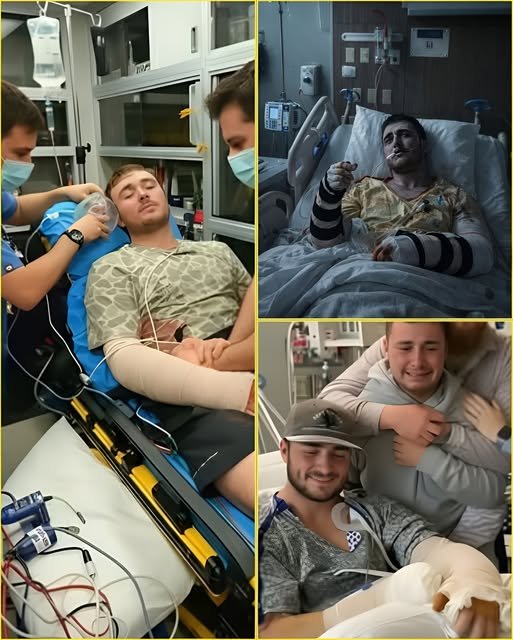
The voltage may have stopped weeks ago.
But inside Hunter Alexander’s body, the battle is still unfolding.
HUNTER ALEXANDER CONDITION UPDATE: Surgeons Forced to Intervene Again as Deep Tissue Damage Progresses
The latest update on 24-year-old lineman Hunter Alexander brings difficult but not unexpected news.
Doctors have been forced to intervene again.
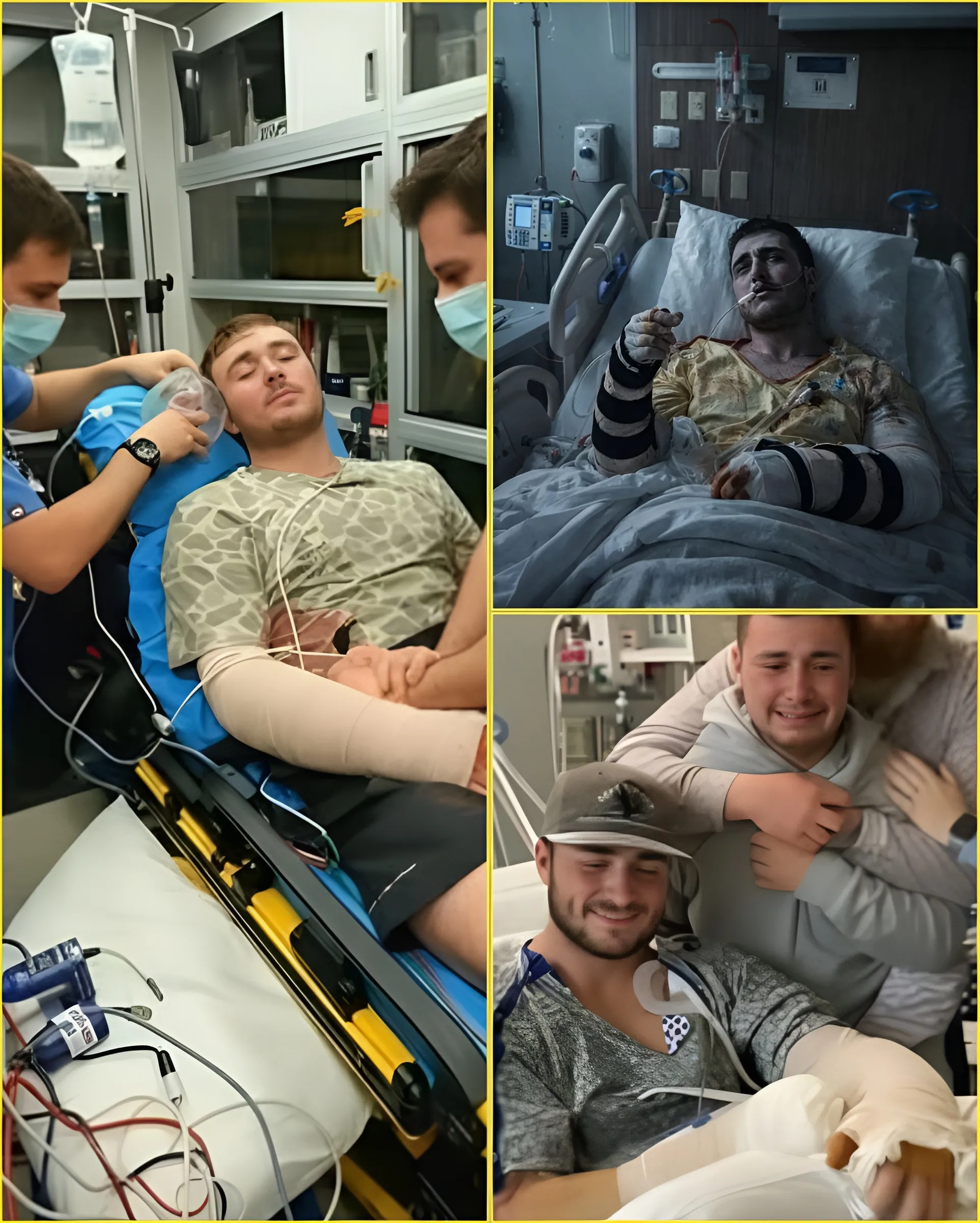
Over the past 48 hours, Hunter’s medical team identified concerning signs linked to the deep tissue damage caused by the original 13,000-volt electrical injury — trauma that specialists warned from the beginning could evolve beneath the surface long after the initial shock.
Hunter remains in intensive care as trauma and reconstructive specialists closely monitor circulation, muscle viability, and nerve response in the affected areas.
And this week, that vigilance led to another critical decision.
The Hidden Complexity of High-Voltage Trauma
Electrical injuries of this magnitude are rarely straightforward.
While Hunter was stabilized after the initial incident, physicians cautioned early on that high-voltage currents do not behave like typical burns. Instead of damaging only what the eye can see, electricity travels unpredictably through muscle, nerve pathways, and vascular systems.
The external wounds may appear contained.
The internal destruction often is not.
Swelling, compromised blood flow, and progressive tissue deterioration are common complications. In some cases, muscle that initially appears viable can weaken over time as circulation fluctuates.
That appears to be what prompted the latest surgical intervention.
Another Procedure in a Long Fight
Late last night, surgeons performed a follow-up operation aimed at removing additional damaged tissue and relieving pressure in affected compartments — a necessary step to prevent further deterioration and reduce the risk of infection.
The procedure lasted several hours.
According to family representatives, Hunter’s vital signs remained stable throughout surgery — a small but meaningful victory in a recovery defined by razor-thin margins.
“He’s fighting,” one relative shared quietly. “Every hour he’s still here is a win.”
The focus of this latest intervention was preservation: saving as much healthy muscle and nerve function as possible while preventing complications that could cascade quickly in severe electrical injuries.
A Recovery Measured in Phases
Doctors continue to emphasize that recovery from high-voltage trauma unfolds in stages.
First comes stabilization — protecting the heart, lungs, and vital organs.
Then comes surgical management — removing necrotic tissue and protecting circulation.
Next comes reconstruction and rehabilitation — often a months-long journey involving physical therapy, nerve recovery, and pain management.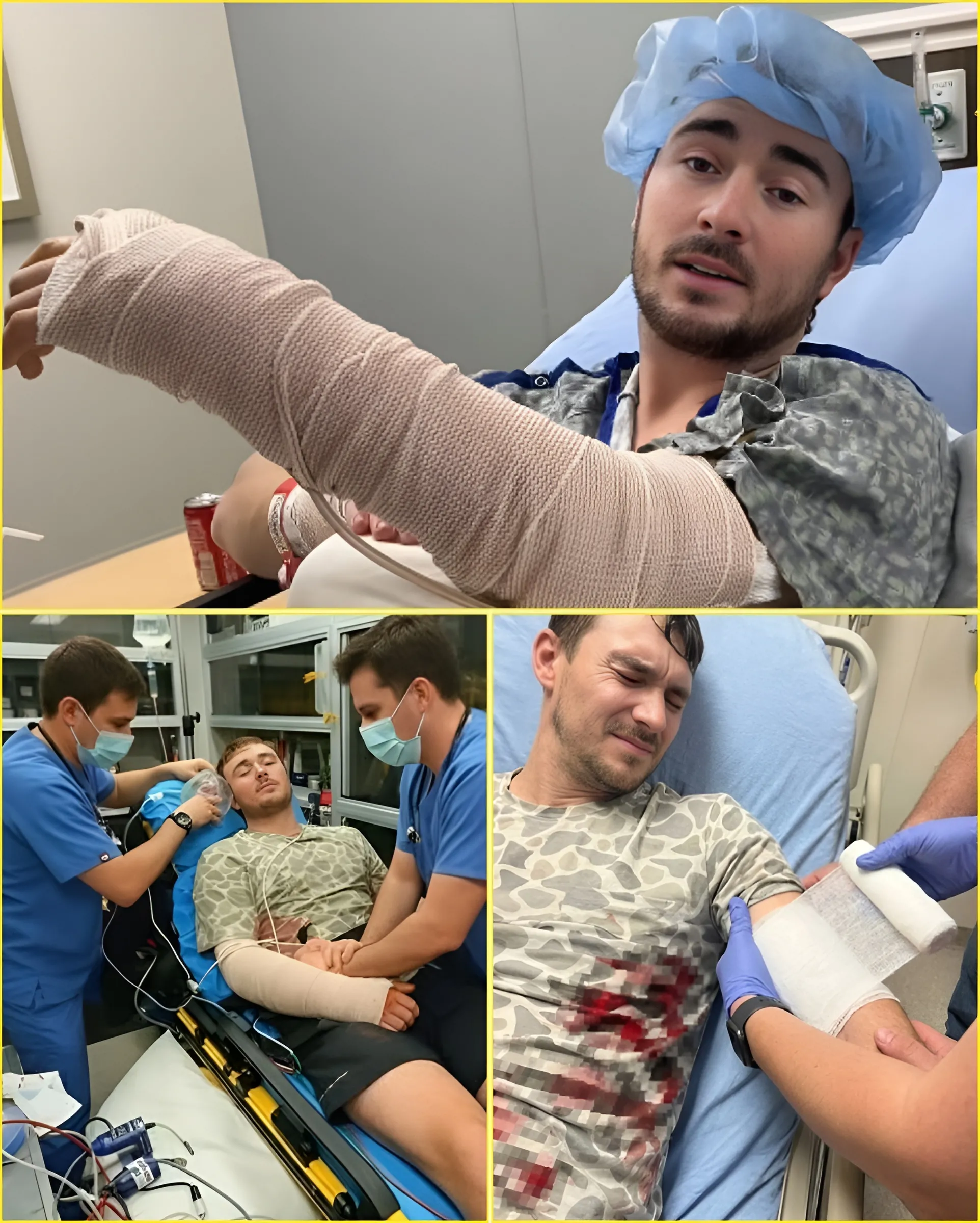
Hunter is still in the surgical management phase — where decisions must be made carefully and sometimes repeatedly.
Electrical damage doesn’t always reveal its full extent at once. That uncertainty is what makes the process fragile.
Physicians are now monitoring:
• Blood flow in the affected limbs
• Signs of infection
• Nerve responsiveness
• Overall systemic stability
Reconstructive specialists remain involved as planning continues for future stages of recovery.
Community Support Intensifies
News of the latest intervention has sparked renewed waves of support.
Prayer groups have formed both locally and online. Friends and fellow linemen continue sharing messages of encouragement. Candlelight gatherings are reportedly being organized in solidarity.
For the family, that support matters more than many realize.
The ICU can feel isolating. Updates are measured. Outcomes are uncertain. But knowing that thousands are watching and hoping provides strength in a season where exhaustion runs deep.
Not Hopeless — But Critical
Despite the seriousness of the setback, medical sources have not characterized Hunter’s condition as hopeless.
Youth remains in his favor. His cardiovascular stability has held. His resilience through multiple procedures continues to be noted by care providers.
But there is no minimizing the reality:
High-voltage electrical trauma is one of the most severe forms of injury the human body can endure.
The coming days will be crucial in determining how well his body responds to this latest intervention — and whether further procedures will be required.
Holding the Line
Those closest to Hunter describe him as determined and stubborn in the best possible way — someone who has never backed down from hard work or harsh conditions.
That same determination now plays out behind hospital doors, in a battle that cannot be seen from the outside.
For now, the focus remains clear:
Stabilize.
Protect.
Preserve.
And pray.
The world continues to watch, wait, and hope — believing that medicine, resilience, and relentless support can carry Hunter Alexander through yet another critical chapter in his fight for recovery.
Further updates are expected as doctors continue round-the-clock evaluation.
And the message from his family remains simple:
Keep praying.