

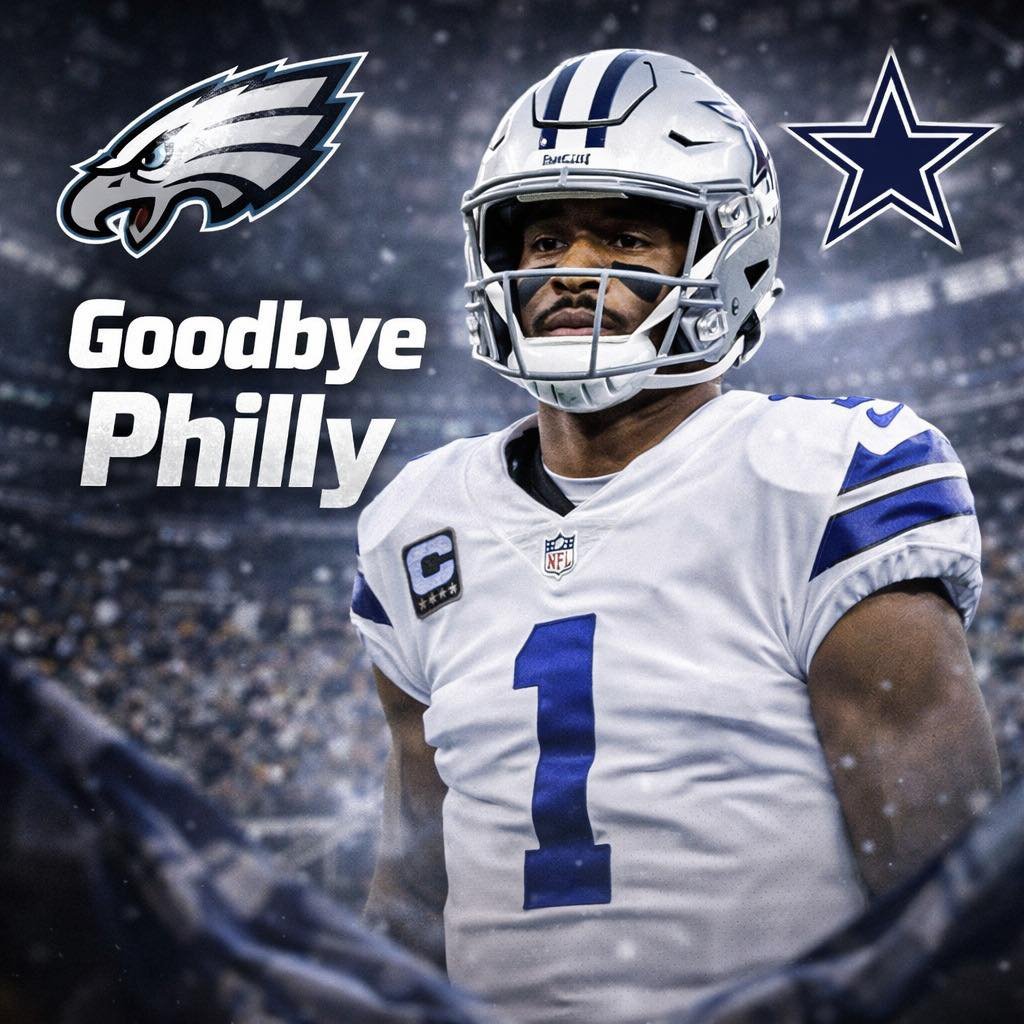
In a stunning move that’s sure to send shockwaves through the NFC East, the Dallas Cowboys are set to poach edge rusher Jaelan Phillips from their division rivals, the Philadelphia Eagles. The former first-round pick, who electrified Philly’s defense after a midseason trade from the Miami Dolphins in 2025, is packing his bags for Big D. There, he’ll reunite with new defensive coordinator Christian Parker, whose Eagles roots run deep. Goodbye, Philly—hello, Dallas dominance. The NFC East just got a whole lot nastier.
The Blockbuster Signing: Phillips Heads West
Sources close to the negotiations confirm that Phillips has agreed to a four-year, $85 million deal with the Cowboys, including $52 million guaranteed. The contract, expected to be finalized once the new league year begins on March 12, 2026, represents a bold departure from the Jones family’s historically conservative approach to free agency. But with Dallas desperate to revamp a defense that ranked dead last in sacks last season (a measly 32), this splash was inevitable.
Phillips, 27, burst onto the scene as a revelation for the Eagles after being acquired in a 2025 trade deadline deal that sent a second-round pick and a conditional fourth to Miami. In just eight games with Philly, he amassed 51 pressures (sixth among edge defenders, per Pro Football Focus), a 19.2% pass-rush win rate (also sixth), and a 10.5 PRP score (ninth), combining sacks, hits, and hurries. His explosive athleticism—honed at UCLA before Miami drafted him 18th overall in 2021—turned heads, even as the Eagles crashed out in the Wild Card round.
But Philadelphia’s front office, led by the ever-calculating Howie Roseman, played the long game. Opting against the franchise tag (projected at $24.5 million for edge rushers), Roseman prioritized compensatory picks and cap flexibility. Phillips, sensing a bigger payday and a chance to chase a ring, tested the waters. Enter the Cowboys, who pounced during the legal tampering period.
The Parker Connection: A Match Made in Defensive Heaven
What makes this signing even more intriguing? Christian Parker’s fingerprints are all over it. The Cowboys’ new DC, hired on January 23, 2026, after a stint with the Denver Broncos, has strong ties to the Eagles organization from his early coaching days. Parker overlapped with key Philly personnel during his time in the NFC East pipeline, and his schematic expertise—blending aggressive blitz packages with zone coverage—meshes perfectly with Phillips’ skill set.
Parker, who’s been meticulously assembling his staff (hence the delay in his introductory presser), sees Phillips as the cornerstone of Dallas’ defensive overhaul. “Jaelan’s the kind of disruptor who changes games,” a source familiar with Parker’s vision told us. “He’s got the bend, the power, and the motor to anchor our front. With his familiarity from cross-division scouting, it’s a no-brainer.”
Cowboys fans, starved for defensive star power since the DeMarcus Lawrence era, are already buzzing. This move echoes the surprise acquisition of Quinnen Williams in 2025, which bolstered the interior line but left the edges exposed. Now, Phillips slots in opposite Micah Parsons, creating a nightmare tandem for opposing quarterbacks like Jalen Hurts—whom he’ll now face twice a year from the enemy side.
Cap Gymnastics and the Bigger Picture
Dallas entered free agency $29 million over the cap, but restructures are the Cowboys’ specialty. By converting base salaries into signing bonuses for Dak Prescott, CeeDee Lamb, and Tyler Smith, the team freed up over $65 million in space. Phillips’ deal, averaging $21.25 million annually, pushes the envelope—but it’s a calculated risk.
“Edge rusher was priority No. 1,” said a team insider. “We can’t play it safe anymore. The Drought—30 years without a Super Bowl—ends with bold moves like this.”
The Cowboys aren’t stopping here. Look for them to re-sign veteran Jadeveon Clowney for depth and use one of their two first-round picks (Nos. 14 and 28, via a 2025 trade) on another EDGE prospect, perhaps from the loaded 2026 class like Ohio State’s JT Tuimoloau or Penn State’s Abdul Carter. Combined with Phillips, this could transform a leaky unit into a top-10 defense overnight.
NFC East Implications: Nastier Than Ever
For the Eagles, losing Phillips stings. Their pass rush, already thinned by Haason Reddick’s departure last offseason, now faces a rebuild. Roseman will likely pivot to the draft or bargain-bin free agents, but expect compensatory magic—a third-round pick in 2027 if Phillips’ deal qualifies.
Meanwhile, the NFC East rivalry intensifies. Dallas-Philly games, already bloodbaths, now feature Phillips hunting his old teammates. The Giants and Commanders? They’ll feel the ripple effects in a division where every edge counts.
Cowboys Nation, your patience is rewarded. With Phillips joining forces with Parker, the Star is shining brighter. The West just claimed its newest gunslinger—and the East is on notice.
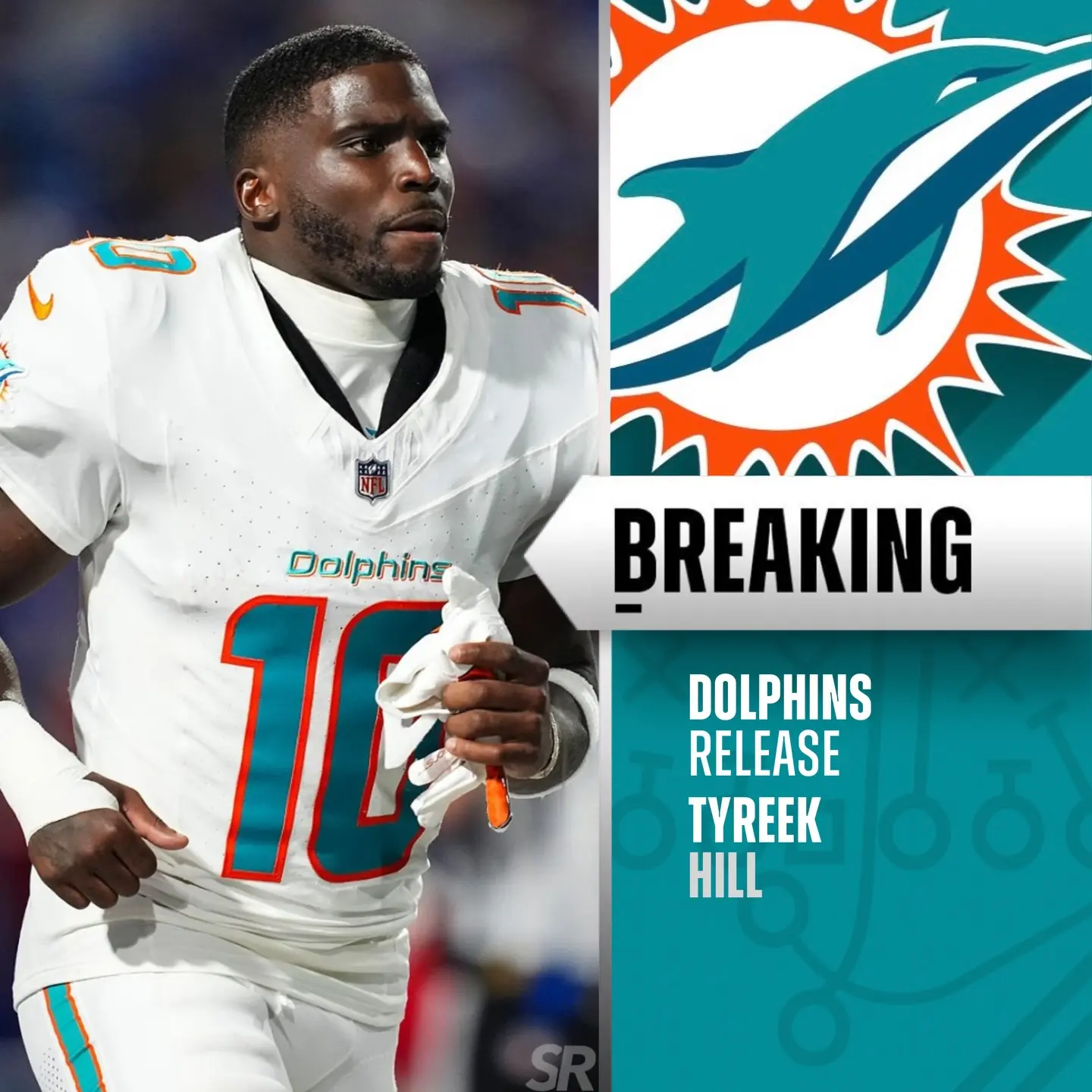
In a move that instantly reshapes the NFL landscape, the Miami Dolphins have reportedly informed star wide receiver Tyreek Hill that he will be released, a decision that frees up approximately $35 million in salary cap space for the franchise.
The news sends shockwaves through the league. Hill, widely regarded as one of the most explosive playmakers in football, has been the centerpiece of Miami’s high-powered offense since his arrival. His speed, route precision, and game-breaking ability forced defenses to adjust entire game plans weekly.
Now, that era appears to be over.
A Stunning Organizational Shift

4
The decision to move on from Hill is as strategic as it is dramatic. By releasing him, the Dolphins immediately gain financial flexibility, positioning themselves to address multiple roster needs — whether through free agency extensions, defensive reinforcements, or long-term planning around quarterback Tua Tagovailoa.
Still, the timing and magnitude of the move cannot be understated.
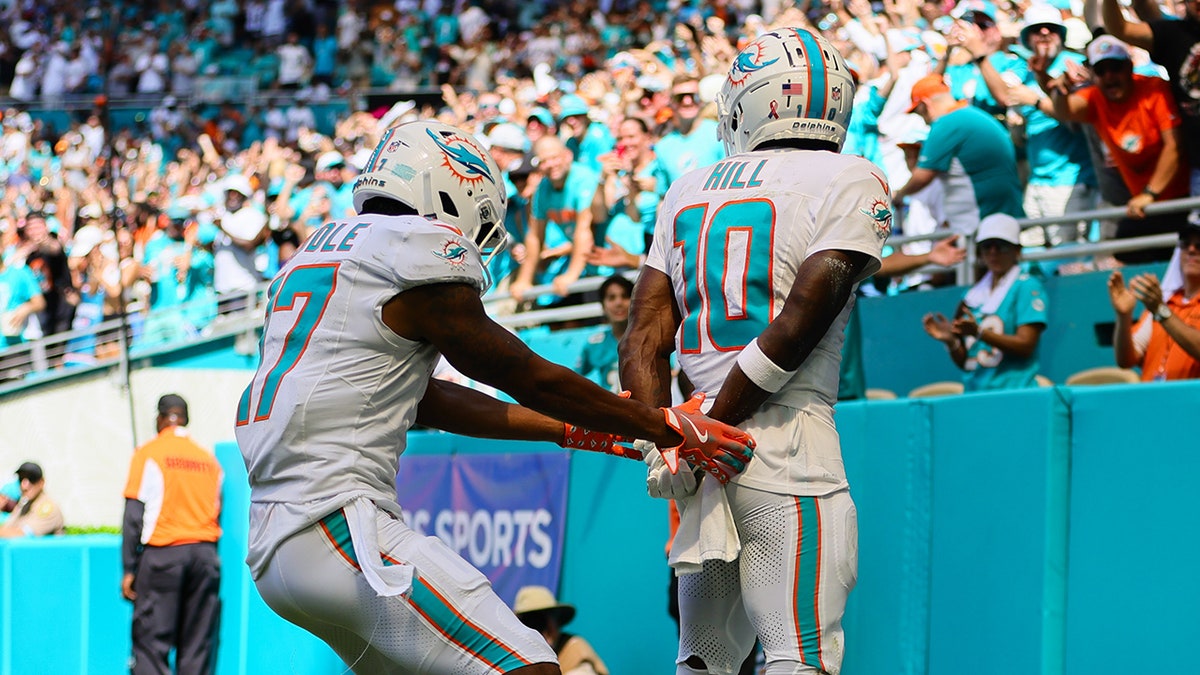
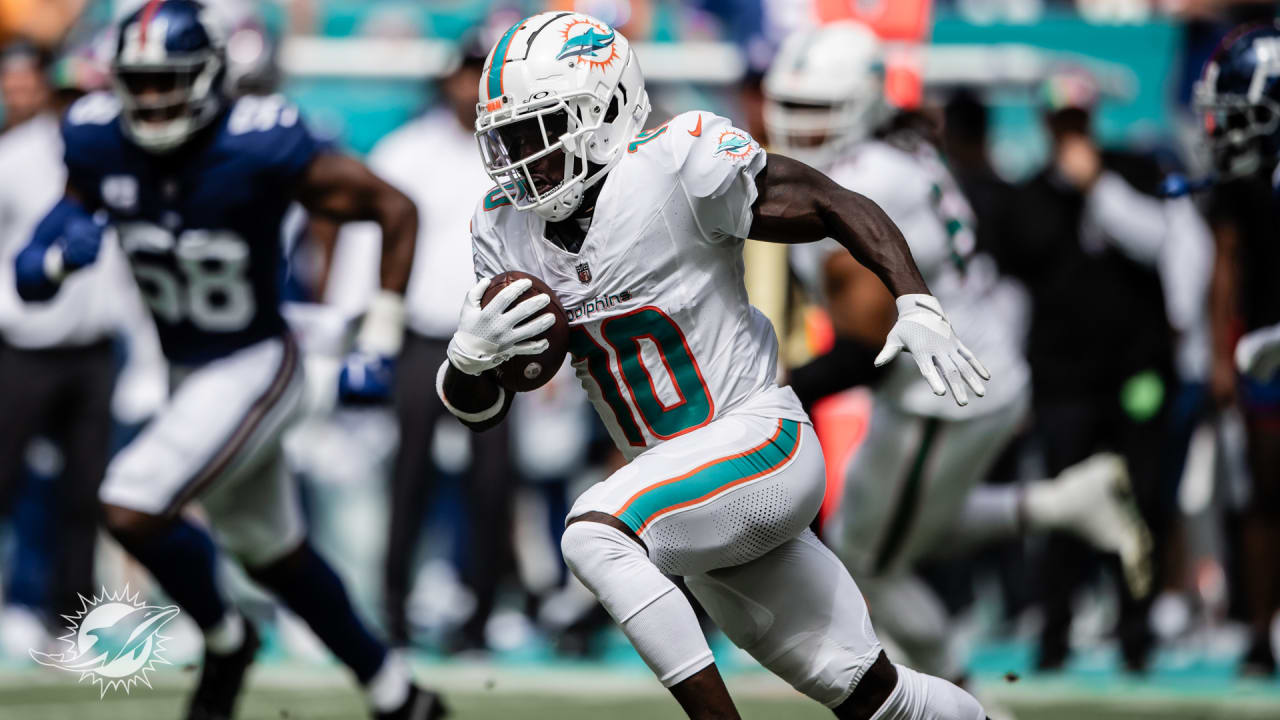
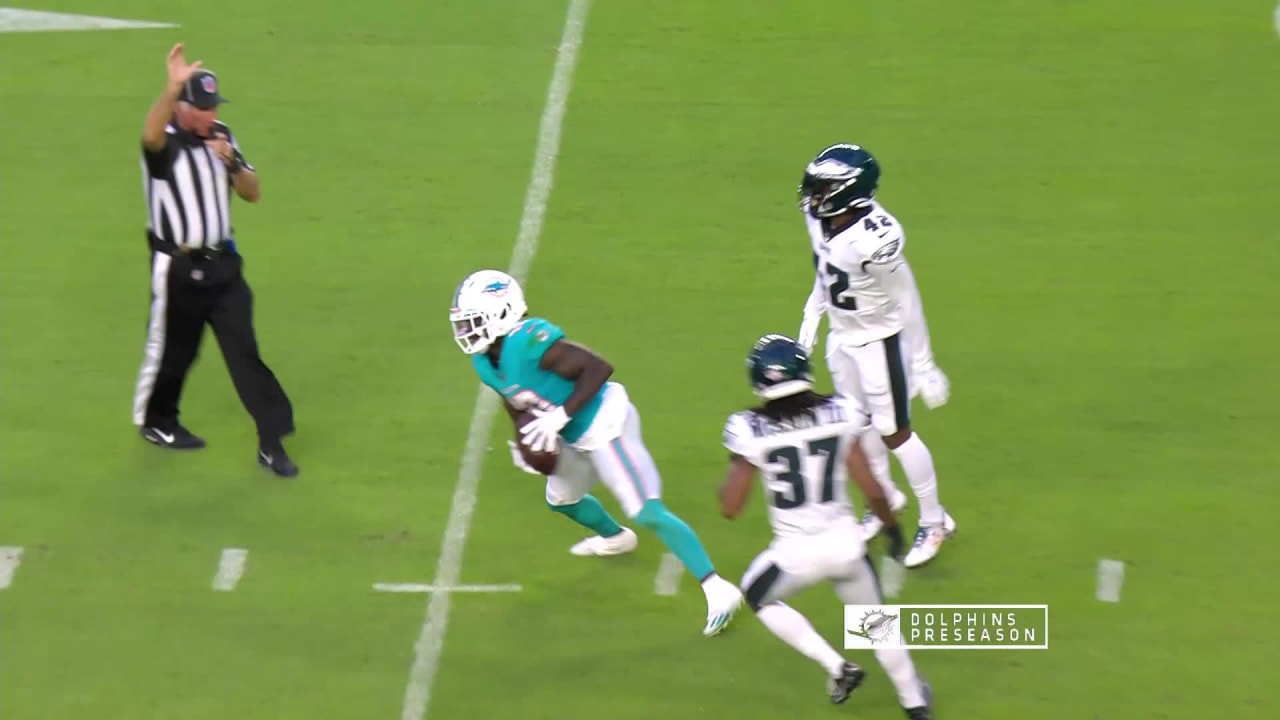
Hill was not just a productive receiver — he was the identity of Miami’s vertical offense. Since joining the Dolphins in 2022 after his blockbuster trade from the Kansas City Chiefs, Hill redefined expectations for the franchise. He consistently ranked among league leaders in receiving yards and touchdowns, earning Pro Bowl and All-Pro recognition while helping transform Miami into a legitimate AFC contender.
His presence stretched defenses horizontally and vertically. Safeties were forced to play deeper. Corners were left on islands. Offensive coordinator Mike McDaniel built much of his scheme around Hill’s rare acceleration and ability to create separation within seconds.
And now, the Dolphins must recalibrate.
Cap Space vs. Star Power
The financial component is central to this decision. Saving $35 million in cap space is substantial in today’s NFL economy. It allows Miami to:
- Reinforce an offensive line that has battled inconsistency and injuries
- Invest in defensive depth within a competitive AFC
- Preserve flexibility for future contract negotiations
But parting ways with elite talent is never simple.
Hill’s production wasn’t theoretical — it was tangible and measurable. Defenses feared him. Teammates fed off his energy. Fans embraced his electrifying style and signature celebrations.
His ability to flip a game with a single touch made him one of the league’s most marketable and dangerous offensive weapons.
What This Means for Tua Tagovailoa
4
For quarterback Tua Tagovailoa, this marks a significant turning point.
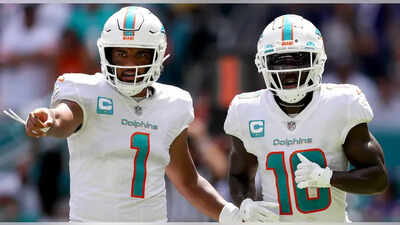
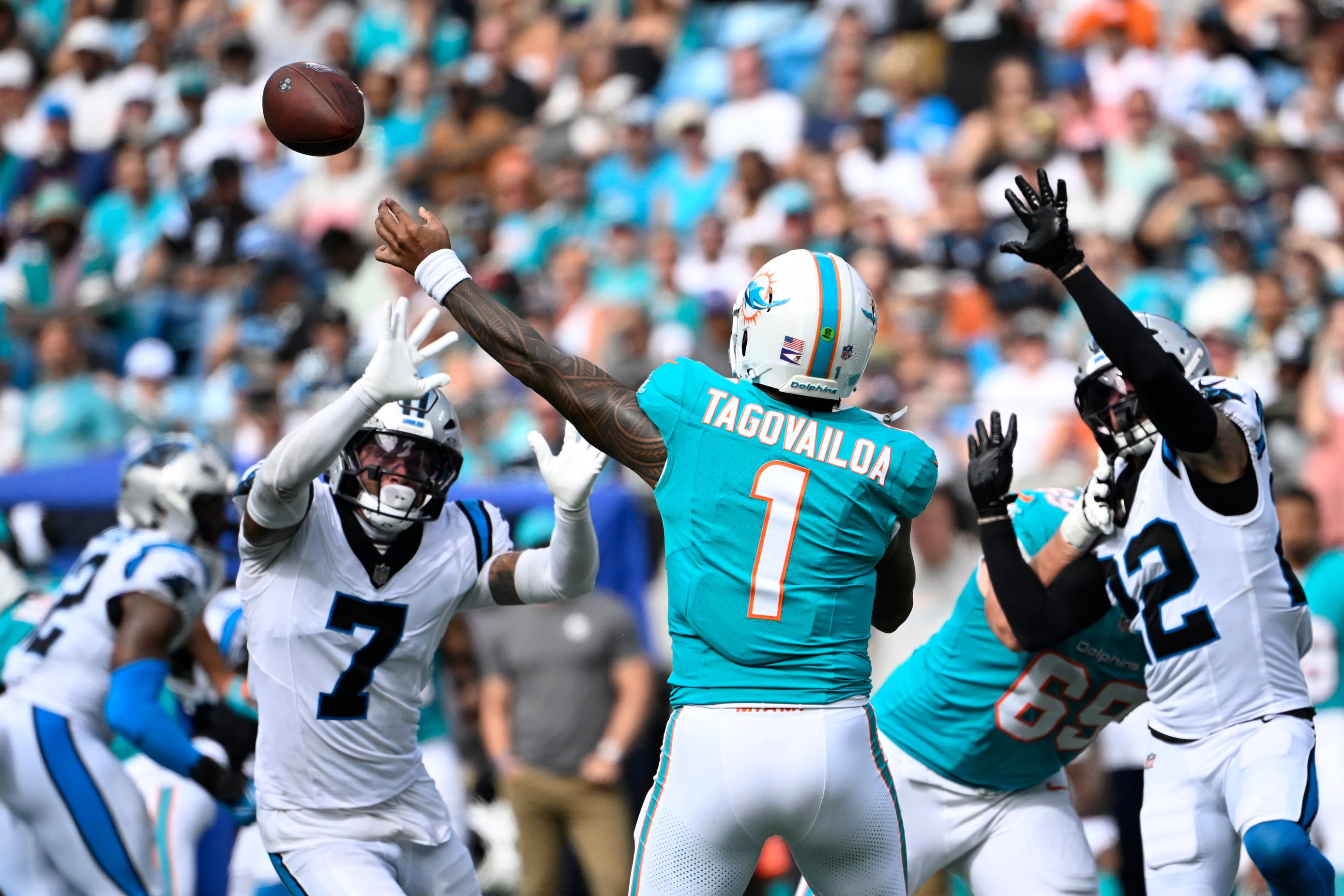
The chemistry between Tagovailoa and Hill was undeniable. Hill’s speed complemented Tua’s timing-based passing system perfectly. Quick reads, anticipatory throws, and explosive yards after catch became the backbone of Miami’s offense.
Without Hill, Tagovailoa’s margin for error narrows. The Dolphins still possess talented weapons, but replacing a player who can command double coverage on every snap is nearly impossible.
This shift may signal a philosophical evolution — perhaps toward a more balanced offense or a deeper distribution of targets rather than reliance on a singular superstar.
League-Wide Implications
The release of Tyreek Hill immediately ignites speculation around the NFL.
Contending teams with cap flexibility will undoubtedly explore adding a proven game-breaker. Hill, even beyond his prime speed peak, remains one of the most feared receivers in the league.
His résumé speaks for itself:
- Super Bowl champion
- Multiple-time All-Pro selection
- One of the fastest recorded players in NFL history
- Consistent 1,000+ yard seasons
Wherever he lands, he alters the competitive equation.
The Dolphins’ Long-Term Vision
This move suggests the Dolphins are prioritizing roster sustainability over star concentration. In today’s NFL, depth and cap health often determine playoff longevity.
Still, the emotional impact cannot be ignored.
Hill wasn’t just productive — he symbolized Miami’s resurgence. He brought swagger, confidence, and national relevance back to the franchise. Prime-time games felt different. Defensive coordinators lost sleep.
Now the Dolphins enter a new chapter — one that emphasizes flexibility, structural balance, and financial strategy.
Whether it proves visionary or risky will depend on how effectively that $35 million is reinvested.
Final Thoughts
Releasing Tyreek Hill is not merely a transaction — it is a statement.
It signals that the Dolphins are willing to make bold, uncomfortable decisions in pursuit of long-term stability. Yet in doing so, they part ways with one of the most electrifying talents of this generation.
For Miami fans, the question now becomes clear:
Can cap space replace game-breaking speed?
The answer will unfold in the months ahead