

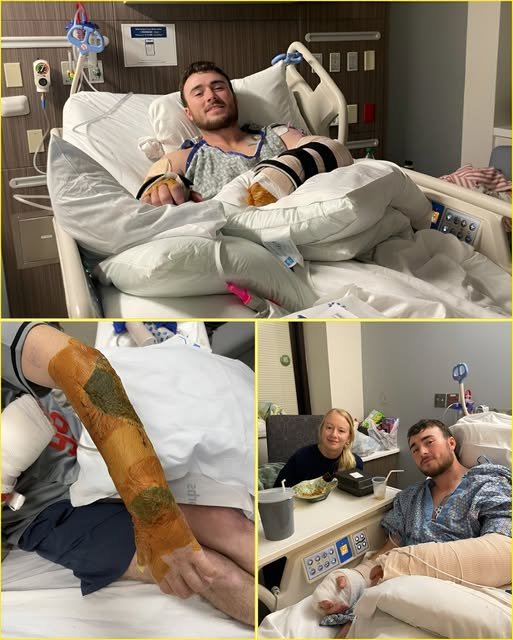
The machine is back beside Hunter’s bed — quietly humming, almost easy to overlook.
But for doctors and family members watching closely, the return of the wound vac signals something far more serious beneath the surface.
The Wound Vac Returns for Hunter Alexander — And Doctors Are Watching for What Can’t Yet Be Seen
Hunter Alexander’s recovery has already been defined by a series of delicate medical decisions — surgeries aimed at protecting circulation, removing compromised tissue, and preserving the long-term function of his injured arm.
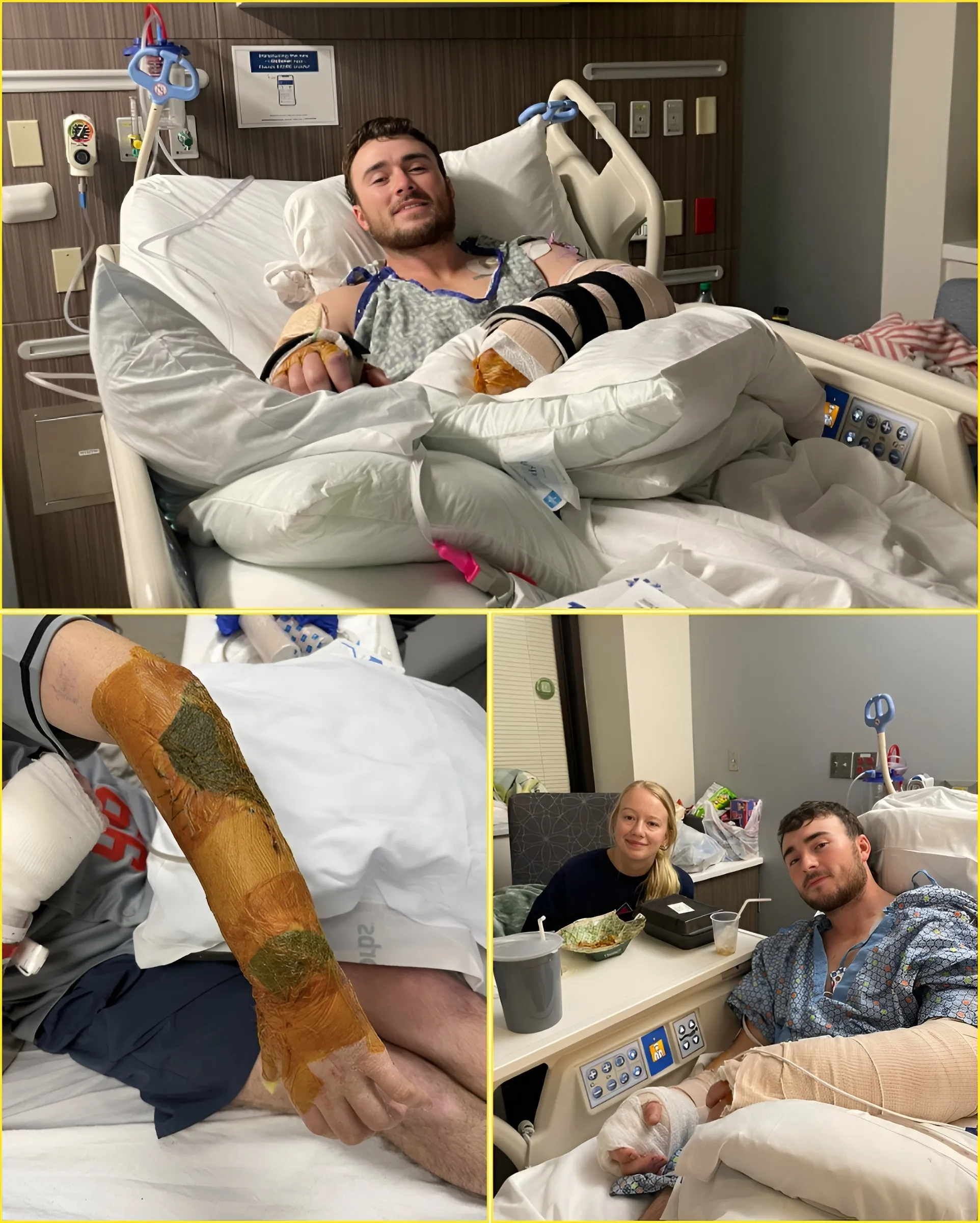
Now, another tool has returned to the center of his care.
The wound vac is back.
And while the device itself is commonly used in complex wound management, its reintroduction at this stage is prompting careful attention from Hunter’s medical team.
Because in cases involving severe electrical trauma, the real battle often unfolds below the surface.
Why Electrical Injuries Are So Difficult to Predict
Unlike blunt injuries or typical burns, electrical trauma behaves in ways that can be deeply deceptive.
When high-voltage current travels through the body, it doesn’t simply damage the skin. It often follows paths through muscle, blood vessels, and nerves, causing injury in patterns that may take days — sometimes even longer — to fully reveal themselves.
At first, tissue may appear viable.
Circulation may seem intact.
But deeper layers can continue evolving as microscopic vascular damage progresses.
That’s why doctors often return to the same areas repeatedly during recovery.
They aren’t guessing.
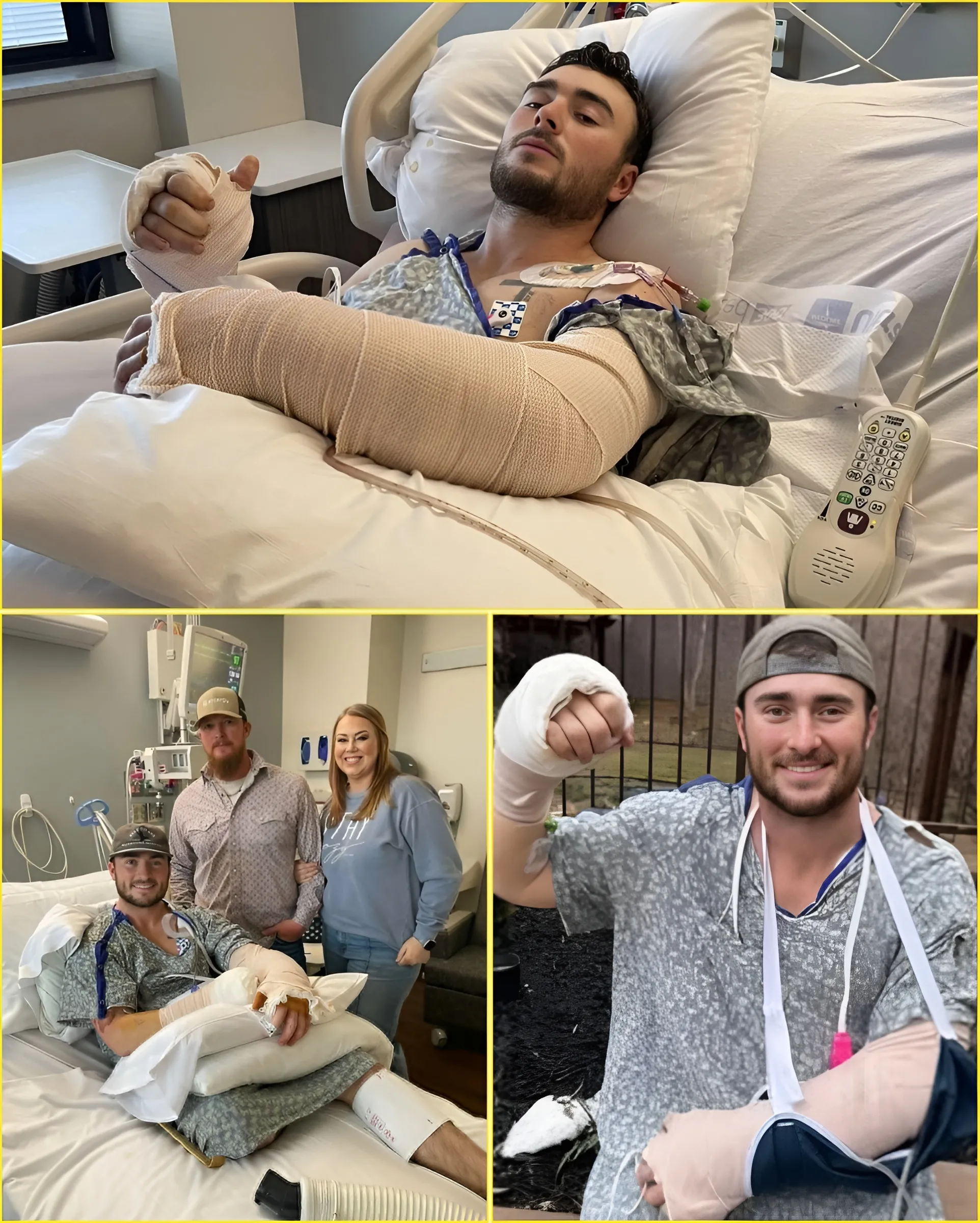
They’re monitoring how the injury continues to declare itself.
What the Wound Vac Actually Does
A wound vacuum — formally known as negative pressure wound therapy — is designed to create a controlled healing environment around complex injuries.
The device works by applying gentle suction through specialized dressings, helping:

• Remove excess fluid from the wound
• Reduce swelling that can threaten circulation
• Protect exposed tissue from infection
• Promote the growth of new, healthy tissue
In many recoveries, wound vacs are used early after surgery.
But when they return after a period of stabilization, it can indicate that doctors want tighter control over the healing process.
That doesn’t mean something has failed.
Instead, it means the medical team is responding carefully to what the body is showing them.
Why Doctors Are Preparing for Another Possible Surgery
Alongside the return of the wound vac, doctors are also preparing for the possibility of another procedure.
At this stage, surgery would not be exploratory out of curiosity.
It would be strategic.

In electrical injuries, surgeons sometimes reopen wounds to reassess tissue viability, remove any areas that have deteriorated, and ensure the best conditions for reconstruction.
That reconstruction could eventually include procedures like skin grafting if areas of tissue cannot regenerate on their own.
But no decision will be made until surgeons can directly evaluate the wound again.
The Question Everyone Is Asking
For families watching this process unfold, one question naturally rises to the surface:
Is the damage still evolving?
With electrical trauma, the answer can sometimes be yes — at least temporarily.
These injuries can reveal themselves in stages as swelling decreases and circulation patterns shift.
But doctors emphasize that this does not mean the situation is out of control.
It means they are actively staying ahead of it.
A Tool of Control — Not Defeat
The wound vac itself is not a sign that recovery is failing.
It’s a containment tool.
It helps doctors protect vulnerable tissue while they monitor deeper layers that cannot be seen from the outside.
In many cases, the device actually buys valuable time — giving the body space to heal while reducing the risk of infection or pressure-related complications.
For medical teams dealing with electrical injuries, vigilance like this is essential.
Because what appears stable today may still be evolving tomorrow.
The Emotional Weight of Another Step
For Hunter’s family, however, the return of the wound vac carries emotional weight.