

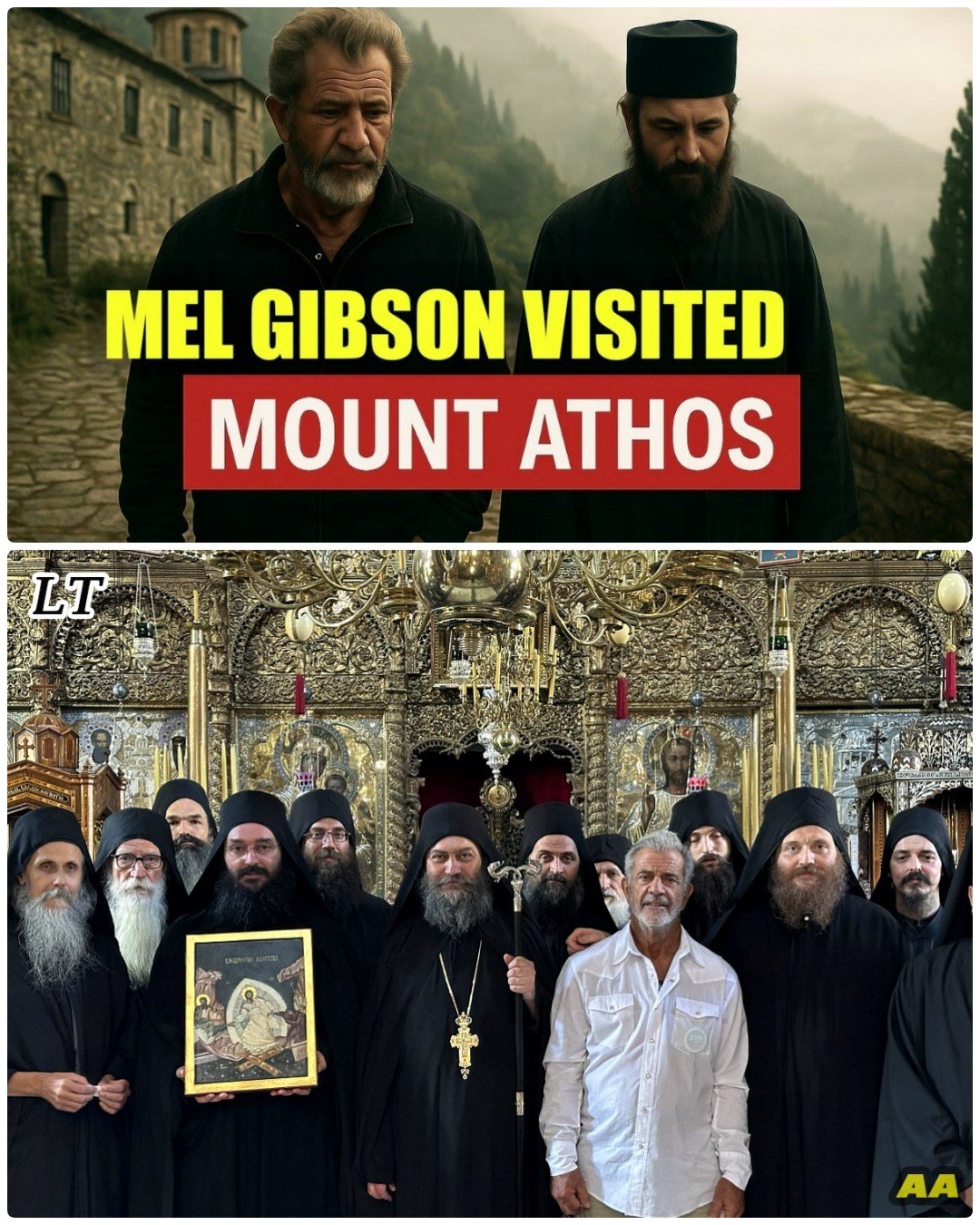
Before The Cameras Rolled: What Mel Gibson Sought on the Holy Mountain
Before the cameras begin rolling on a major film production, directors usually immerse themselves in scripts, casting decisions, and endless meetings with producers.
Storyboards are drafted, locations are scouted, and schedules are mapped out months in advance.

But before starting work on the long-anticipated biblical film The Resurrection, filmmaker Mel Gibson chose a very different path.
Instead of appearing at public events or discussing his plans with the press, Gibson quietly traveled to one of the most secluded and spiritually intense places in the Christian world.
His destination was Mount Athos, a remote peninsula in northern Greece known simply as the Holy Mountain.
For more than a thousand years, Mount Athos has existed almost outside the modern world.
Hidden behind forested hills and steep cliffs rising from the Aegean Sea, the region is home to a community of Orthodox monasteries that operate under strict spiritual traditions.
Roads are scarce, technology is limited, and daily life follows a rhythm that has changed little since the Byzantine era.
To many believers, Mount Athos represents one of the last places on Earth where ancient monastic spirituality continues in its purest form.
Entry to the peninsula is tightly controlled.
Visitors must receive special permission, and the number of people allowed each day is extremely limited.
The territory is governed by monastic authorities rather than ordinary civic institutions, and women are not permitted to enter at all.
For centuries, the mountain has been a destination for pilgrims seeking silence, reflection, and spiritual guidance.
When news later emerged that Mel Gibson had visited Mount Athos before beginning work on The Resurrection, the revelation immediately sparked curiosity.
Why would a Hollywood director travel to such a secluded religious sanctuary before making a film?
The answer may lie in Gibson’s long-standing interest in exploring the deeper spiritual dimensions of biblical storytelling.
More than two decades earlier, Gibson directed The Passion of the Christ, a film that portrayed the final hours of Jesus with unprecedented intensity.
The movie became one of the most talked-about religious films ever produced.
It was both praised for its emotional power and debated for its stark realism.
For Gibson, the film was more than a historical drama.
It was an attempt to immerse viewers in the emotional and spiritual weight of the story.
Now, years later, The Resurrection is expected to continue that narrative by exploring events following the crucifixion.
But depicting the Resurrection presents a challenge that few filmmakers have attempted on such a scale.
The story is not simply historical.
For believers around the world, it represents the central mystery of Christian faith.
Capturing that mystery on screen requires more than visual spectacle.
It requires an understanding of the spiritual meaning behind the event.
This may explain why Gibson traveled to Mount Athos before beginning production.
According to reports from individuals familiar with the visit, the journey was not part of a publicity campaign or promotional tour.
There were no cameras documenting the trip, no press releases announcing his arrival.
Instead, the visit appeared to be a quiet personal pilgrimage.
Mount Athos is home to twenty major monasteries and numerous smaller hermitages scattered across its rugged landscape.
Monks living there dedicate their lives to prayer, contemplation, and study.
Their days begin before sunrise and often continue late into the night with long liturgical services.
Visitors who arrive at the mountain often describe a profound sense of stillness.
The noise of modern life fades quickly once the ferry carrying pilgrims reaches the peninsula’s small harbor towns.
Paths wind through forests and stone courtyards where centuries-old monasteries stand against the cliffs.
Inside the monastery walls, life follows a disciplined rhythm.
Meals are simple.
Conversation is limited.
Hours pass in prayer or quiet labor.
For someone preparing to tell the story of the Resurrection on film, the environment offers something rare in modern filmmaking culture.
Silence.
Observers believe Gibson spent time speaking with monks, participating in prayer services, and learning about the theological reflections that have shaped Orthodox Christian spirituality for generations.
Mount Athos has long been considered a center of deep theological reflection on the mystery of resurrection and eternal life.
Monastic writings from the mountain explore themes of sacrifice, redemption, and spiritual transformation.
These themes closely mirror the story Gibson plans to bring to the screen.
Unlike historical research conducted in libraries or universities, time spent on Mount Athos offers a living connection to centuries of spiritual tradition.
Monks on the peninsula often view biblical events not only as historical moments but as living realities that shape daily life and prayer.
For a filmmaker seeking authenticity in portraying the Resurrection, such perspectives could prove invaluable.
Those who have visited Mount Athos often describe the experience as transformative.
Without the constant presence of technology, visitors become more aware of their surroundings.
The sound of church bells echoes across the hills.
Candlelight flickers inside ancient chapels filled with icons.
The atmosphere encourages reflection.
For Gibson, who has frequently spoken about the importance of faith in his creative process, the visit may have provided clarity about how to approach the next chapter of his biblical storytelling.
Filming the Resurrection requires careful balance.
The event itself is described briefly in the biblical texts, leaving filmmakers to imagine how to visually portray something that believers consider miraculous.
Too much spectacle could feel artificial.
Too little could fail to capture the profound significance of the moment.
By immersing himself in the spiritual traditions of Mount Athos, Gibson may have been searching for insight into how faith communities understand the Resurrection beyond the written words of scripture.
This approach reflects a broader trend among filmmakers who seek inspiration not only from academic sources but from living religious traditions.
Mount Athos has influenced thinkers, theologians, and artists for centuries.
Its monasteries preserve ancient manuscripts, liturgical chants, and spiritual practices that date back to the early centuries of Christianity.
The peninsula has survived wars, political upheavals, and cultural shifts while maintaining its unique identity.
For visitors, stepping onto the mountain often feels like entering a different era.
Stone pathways lead between monasteries whose walls have witnessed centuries of prayer.
Frescoes cover chapel interiors, depicting scenes from biblical history with vivid colors and symbolic imagery.
Many of these artistic traditions emphasize the Resurrection as the ultimate triumph of light over darkness.
Such imagery may have offered Gibson visual inspiration as he prepares to bring the story to the screen.
While details about the film remain limited, reports suggest that The Resurrection will explore not only the moment of Christ rising from the tomb but also the profound impact that event had on the early followers of Jesus.
The story may include the confusion, fear, and eventual transformation experienced by the disciples as they encountered the reality of the Resurrection.
These emotional and spiritual themes align closely with the contemplative traditions preserved on Mount Athos.
For centuries, monks there have reflected on how the Resurrection changed the meaning of suffering, sacrifice, and hope.
The decision by Mel Gibson to visit Mount Athos before beginning production therefore carries symbolic significance.
Rather than treating the Resurrection simply as a dramatic climax in a film, he appears to be approaching the story as something requiring deeper understanding.
For many observers, that decision reflects the same intensity that defined his earlier work.
When The Passion of the Christ was released in 2004, it surprised Hollywood by becoming one of the most successful religious films in history.
The film’s unflinching portrayal of suffering sparked debate, but it also moved millions of viewers around the world.
Now, with The Resurrection, Gibson faces an even greater challenge.
How do you portray hope after unimaginable suffering?
How do you depict a moment that believers consider the turning point of human history?
The quiet pilgrimage to Mount Athos suggests that Gibson is searching for answers beyond the typical boundaries of filmmaking.
The mountain offers no scripts, no production budgets, and no cinematic technology.
Instead, it offers something far older.
Centuries of prayer, reflection, and spiritual insight.
Those who have studied the traditions of Mount Athos often say that the mountain’s greatest lesson is simplicity.
In the silence of its monasteries, the most profound truths are often expressed in the fewest words.
Perhaps that simplicity will influence how the Resurrection is ultimately portrayed on screen.
As anticipation grows around the upcoming film, the story of Gibson’s visit to Mount Athos continues to intrigue both film enthusiasts and religious observers.
It is rare for a major Hollywood director to step away from the spotlight and seek inspiration in such a secluded spiritual environment.
Yet that journey may ultimately shape the tone and authenticity of one of the most ambitious biblical films of the modern era.
What exactly Mel Gibson discovered during his time on the Holy Mountain remains largely private.
But the decision to go there before filming began suggests that the story he plans to tell is not merely about history.
It is about faith.
It is about mystery.
And it is about understanding the meaning behind one of the most powerful events ever recorded.
feed: