Welcome to the Nation of History channel. Be sure to subscribe and like so you don’t miss out on more videos like this one. The photograph titled The Blind Girl was taken by Chrysler Strummolome in Hiroshima, Japan in 1963.
The image became a silent symbol of pain, human resilience, and the lasting scars of nuclear conflict. The view of destruction in Dresden’s old town, seen from the city hall tower on February 15th, 1945, reveals the devastating impact of Allied bombing during World War II. King George V took part in a famous hunting expedition in the Terai region of southern Nepal in 1911.
During the hunt, several wild animals were killed, including tigers and rhinoceroses. Lyndon B. Johnson is sworn in as President of the United States aboard Air Force One on November 22nd, 1963.
Standing beside him is Jacqueline Kennedy, wife of President John F. Kennedy, who had been assassinated 2 hours earlier in Dallas, Texas. Fidel Castro during a meeting with Nikita Kruchab in 1963 is shown smoking a cigar and wearing two Rolex watches, a detail that stood out due to the contrast between his communist image and the luxurious accessories.
Julius and Ethel Rosenberg kiss after being formally charged with espionage in the United States in the early 1950s. The couple was held responsible for passing confidential information about the American nuclear program to the Soviet Union. The headquarters of Mussolini’s Italian Fascist Party in 1934, located in Rome, served as a central hub for the administration and ideology of the fascist regime.
Under Bonito Mussolini’s leadership, the party aimed to consolidate power and promote Italy’s nationalist and authoritarian agenda. Charlie Chaplan and Mahatma Gandhi meet in London in 1931 during Gandhi’s visit to the United Kingdom to attend the roundt conference on India’s independence. Manfred von Richtoen, popularly known as the Red Baron, is pictured in 1917 at the height of his fame as a fighter pilot during World War I.
The Red Baron was feared by enemies and admired by fellow pilots until his death in combat in 1918. Japanese Lieutenant and war correspondent Dr. Sonji Sasamoto meets with Hungarian General Gorgi Rakovski on the Eastern Front during World War II in 1942.
US Navy divers prepared to load the Apollo 15 command module CM onto the USS Okinawa after its recovery from the ocean on August 7th, 1972. Vietnam veterans protested the war in 1970 with a sign reading, “We won’t fight another rich man’s war. ” The protest reflected the growing frustration among veterans, many of whom had been sent to fight in a controversial conflict.
A deaf man hugs a speaker to his chest in the 1970s to feel the music’s vibrations. During that decade, deaf individuals began exploring new ways to connect with music through the physical sensation of sound waves across the body. Prisoners are seen wearing wooden kangs in 1902, a traditional form of public punishment in parts of Asia, especially imperial China.
The kongs were heavy wooden frames locked around the neck, restricting movement and serving as humiliation. A kneeling elephant receives passengers while a handler of Indian origin firmly guides it. The image was taken during the British Raj period likely in the late 19th or early 20th century.
Native Americans perform a traditional ceremony and present a symbolic gift to a train engineer in the state of Oregon in 1940. The gesture represents a moment of respect and cultural exchange often staged for receptions or special railway events. A survivor of the Bukinvault concentration camp points and identifies a Nazi guard in 1945 shortly after the camp was liberated by Allied forces.
The image symbolizes the direct confrontation between victims and perpetrators, marking the beginning of historical accountability. The Canadraph camera in use in 1912 represents one of the earliest filming technologies in cinematic history. It was originally developed in the 1890s by William Kennedy Lorie Dixon under the supervision of Thomas Edison.
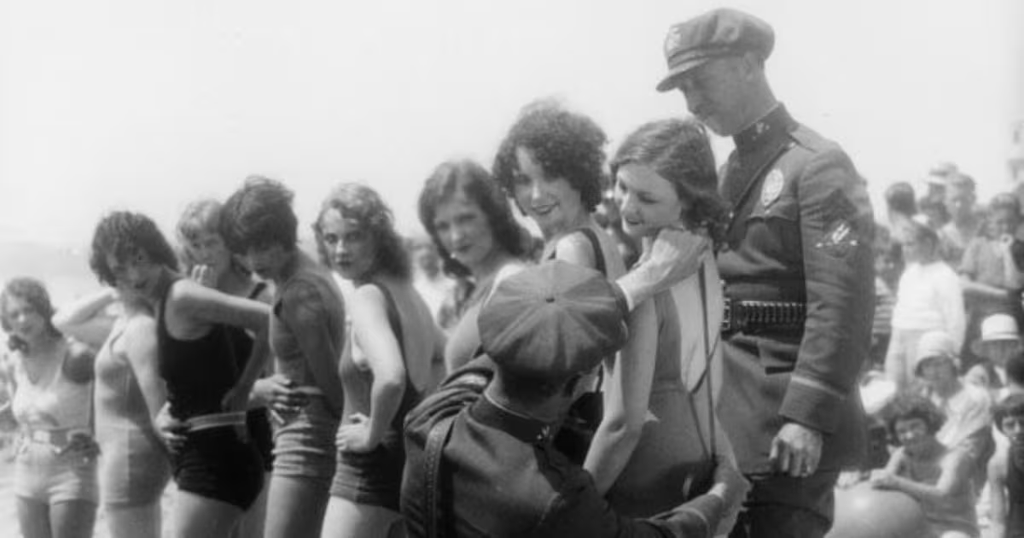
Finnish President Uro Kva Keinan and North Korean leader Kim IlSung stand together during an official visit to the Finnish Parliament in 1975. The meeting symbolizes cold war diplomacy between Finland and North Korea. A woman churns milk to make butter while reading a book in 1897 in a peaceful rural life scene.
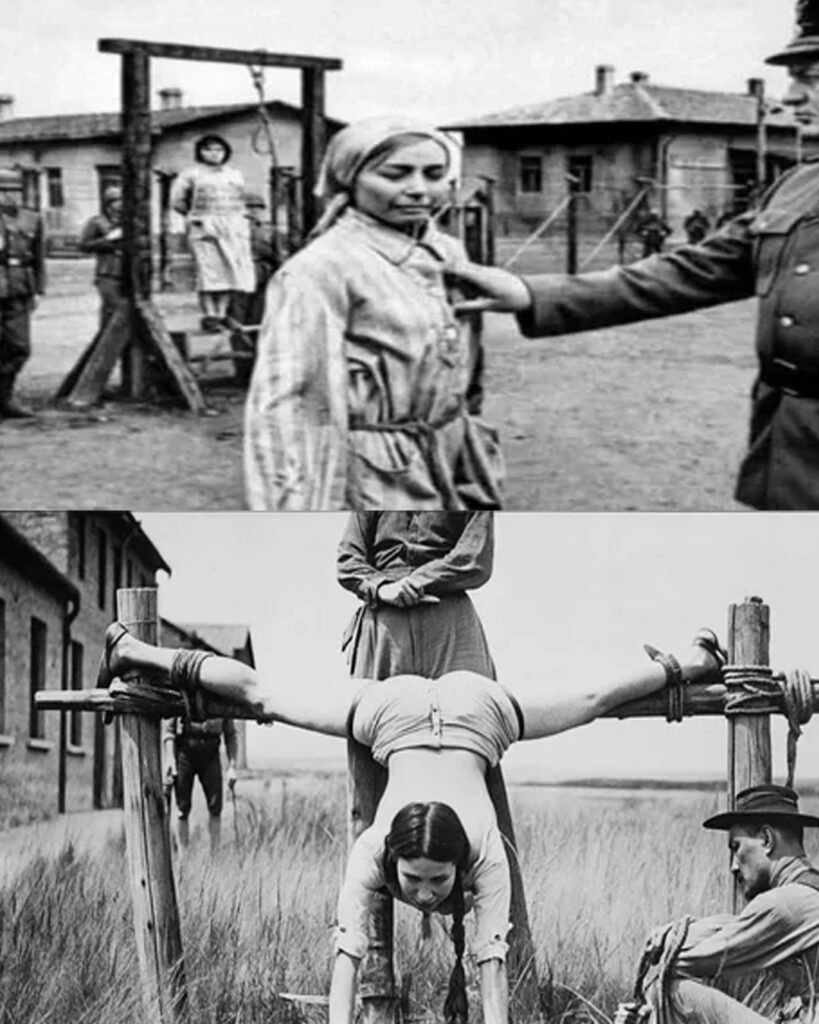
A small kitten, likely her companion, adds to the simplicity of the everyday setting. The image shows a person restrained in one of the cruel forms of punishment used in various cultures throughout history. The use of physical and public punishments was common in many civilizations where human suffering was often displayed as a warning to others.
Soldiers and civilians pose in front of a Union field hospital in Michigan during the American Civil War in the 1860s. The US flag in the background marks the presence of the Union Army at this temporary treatment site. A young girl appears in this image taken during the Great Depression in the United States in the 1930s.
The photo symbolizes the resilience of children during one of the hardest periods in American history. A playful forced perspective photo is captured on a beach around 1943. This kind of photography was popular among soldiers and civilians during World War II, offering light-hearted moments during difficult times.
A woman in uniform poses during World War II, representing the thousands who served in essential roles. Many worked as nurses, drivers, radio operators, mechanics, and in auxiliary military units such as the WAC, Women’s Army Corps, in the United States or the ATS in the United Kingdom. Harry S.
Truman served as an artillery captain during World War I. He commanded battery D of the 129th Field Artillery Regiment, part of the 35th Division of the United States Army. Clara Dear performs a daring jump from a bridge in Boston while handcuffed during a public escapism act.
Inspired by artists like Harry Houdini, she was known for her risky stunts and spectacular escape performances. Wounded Indian soldiers are treated inside the Royal Pavilion in Brighton, Sussex in 1918. During World War I, the Royal Pavilion, originally built as a royal palace for the Prince Regent, was converted into a military hospital for injured soldiers.
SBD Dauntless dive bombers are seen at the Douglas Aircraft Factory in Elsagundo, California in 1943. During World War II, the SBD Dauntless was one of the most important aircraft used by the US Navy. Workers take a lunch break on the St.
John’s Bridge in Portland, Oregon in 1931 during the final stage of construction. Workers take a lunch break on the Saint John’s Bridge in Portland, Oregon in 1931 during the final stage of construction. Marlene Dietrich is lifted by soldiers in New York in 1945 in a celebratory scene shortly after the end of World War II.
The image symbolizes her popularity among the troops and her active role in the war effort. Workers are seen hanging from the iron framework while painting the Eiffel Tower in 1932. Built in 1889, the tower required constant maintenance and was repainted regularly every 7 years.
The early days of aviation in the 1890s were marked by pioneering experiments with gliders and flying machines powered by propellers or flapping wings. Though still lacking reliable engines, the tests of the 1890s were essential to the development of modern aviation. The world’s first deep sea exploration vehicle called the Ba’athosphere was developed in 1930 by engineers William BBE and Otis Barton.
The baosphere marked the beginning of scientific exploration of the ocean’s depths. Wilbur Wright’s glider landed in Kittywake, North Carolina in 1901 during one of his early flight experiments. This model was an evolution of the tests conducted in 1900 and was used to study aerodynamic control during flight.
A helmet with a built-in communication device used by motorcyclists in the 1960s was a technological innovation of the time. This system allowed riders to communicate with each other while on the move. A police officer takes part in a judging contest in London, likely related to a dog competition, as was common at the time.
The event reflects the urban lifestyle and culture of London during the 1930s. Workers take a smoking break at a bridge construction site in 1950. The cigarette break was a common and almost symbolic habit among workers of the time.
The Golden Gate Bridge under construction in the 1930s during one of the biggest engineering projects of the time. Started in 1933 and completed in 1937, the bridge connected San Francisco to Marane County and became an icon of architecture and innovation. A thermal facial mask is used as a beauty accessory in the early 1940s.
Designed to gently warm the skin, it promised to improve circulation, reduce facial tension, and prepare the face for cosmetic treatments. Contestants take part in a beauty pageant in England in 1967, wearing outfits typical of the era and walking before the audience and judges. The scene represents a classic moment in British popular culture of the time.
The image shows a boy being cared for by soldiers, possibly in a wartime or conflict setting. The act of protection reflects human compassion, even in times of great adversity. The installation of a K6 phone booth in London in the 1930s marks a milestone in the UK’s telecommunications history.
Designed by architect Sir Giles Gilbert Scott, the K6 became an iconic design installed throughout the city. The 1900 Exposition Universal, also known as the Paris World’s Fair, was a grand event marking the end of the 19th century and the beginning of the 20th. Among the attractions were early versions of the subway train, the automobile, and the Lumiere brothers first cinema.
Note: Some content was generated using AI tools (ChatGPT) and edited by the author for creativity and suitability for historical illustration purposes.
Để lại một bình luận