


TORONTO — The atmospheric pressure surrounding the Toronto Blue Jays’ pitching staff just reached a historic high.
On Monday afternoon, the faint hope that ace Dylan Cease was merely suffering from baseline leg tightness evaporated. High-resolution imaging revealed a legitimate left hamstring strain, forcing the front office to place the $210 million cornerstone on the 15-day injured list. While manager John Schneider took a measured, optimistic tone—characterizing the strain as “mild” and projecting a short window of absence—the reality on the ground is stark. Cease’s spot in the rotation will need to be covered at least twice, beginning with this weekend’s high-stakes divisional series against the Baltimore Orioles.
For a pitching infrastructure already missing José Berríos and Cody Ponce for the calendar year, losing Cease plunges the club into a complex numbers game. The Blue Jays are already utilizing Spencer Miles to orchestrate a dedicated bullpen day every five days. Asking a heavily taxed relief corps to absorb a second routine bullpen game is an unsustainable blueprint that risks blowing up the entire staff before June arrives.
With a definitive roster decision required by Friday, general manager Ross Atkins and the front office must quickly navigate a narrow corridor of options to keep their wild-card aspirations functional. Here is how Toronto can strategically backfill Cease’s crucial vacancy.
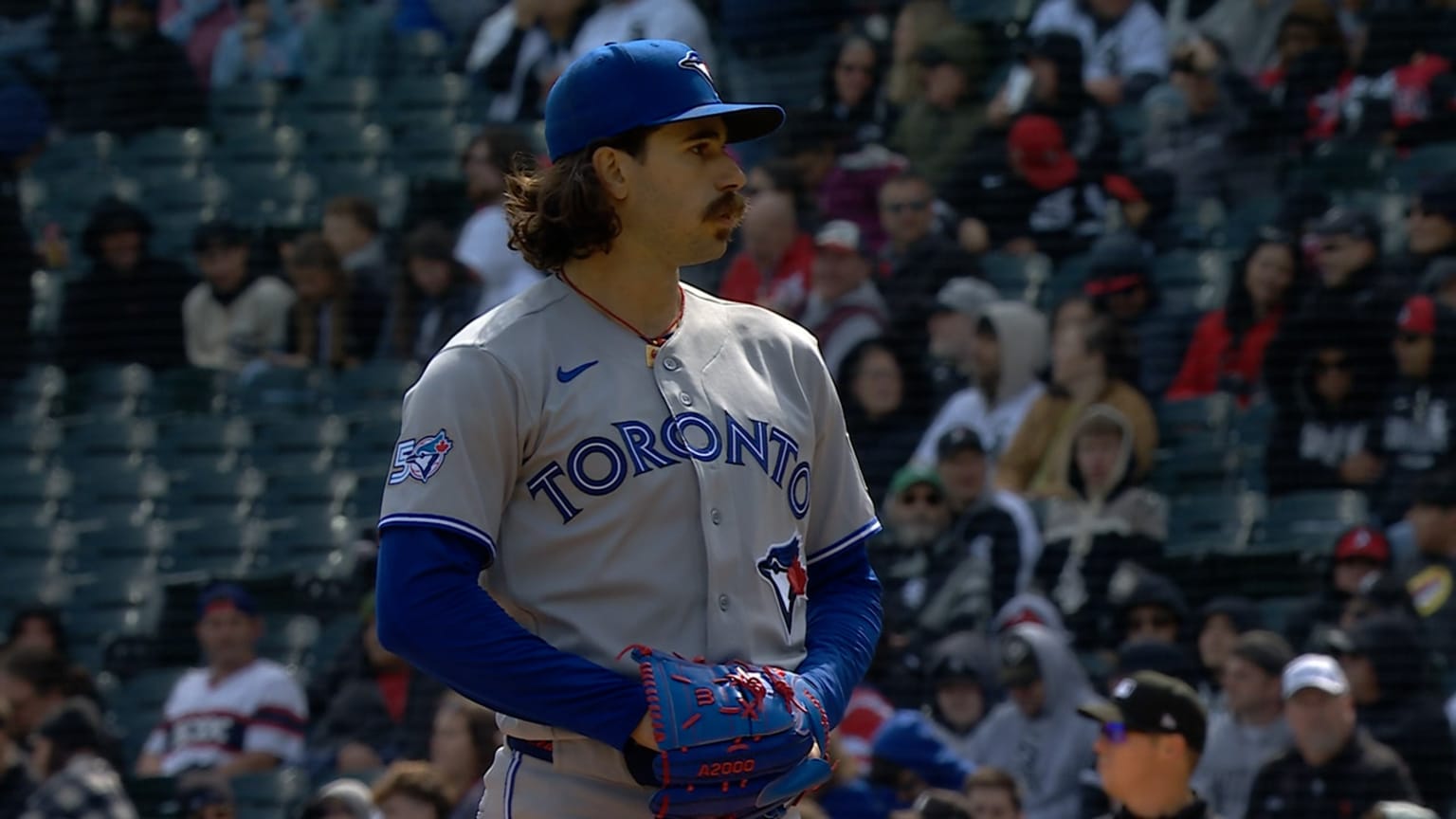
The Internal Grid: Sifting Through Triple-A Buffalo
Because external market acquisitions require time that the calendar simply does not afford, Toronto’s most immediate remedies reside on the roster of the Triple-A Buffalo Bisons. The front office will prioritize a traditional starter or a highly stretched-out bulk arm who can guarantee significant, low-stress innings.
Two distinct left-handed profiles have emerged at the top of the internal ledger:
1. Josh Fleming (LHP)
- The Case For: Fleming is widely regarded as the current frontrunner to inherit the assignment. The veteran southpaw has demonstrated exceptional efficiency in the minor leagues, relying on a heavy sinking fastball to generate rapid soft contact and ground balls.
- The Strategic Fit: The timing of Cease’s injury aligns perfectly with an upcoming series against Baltimore. The Orioles’ lineup features several aggressive, high-leverage left-handed and switch-hitting bats that historically struggle against elite, horizontal arm-side movement. Fleming’s specific profile gives Toronto a distinct tactical edge to neutralize Baltimore’s power alleys without over-indexing on high-stress velocity.
2. Alternative Minor-League Bulk Arms
- The Case For: If the club opts to save Fleming for a multi-inning relief capacity downstream, the Bisons possess a handful of depth starters working on parallel schedules.
- The Trade-Off: While turning to standard minor-league depth provides a traditional routine, it forces the Blue Jays to rely on unproven assets against a lethal AL East opponent during a critical juncture where Toronto (25-29) is fighting to stay within striking distance of the postseason picture.
The External Market: Is a Trade Feasible?
In a perfect scenario, the front office would simply leverage its minor-league capital to acquire an established, back-of-the-rotation starter via trade. However, executing a impactful transaction in late May is a notoriously difficult exercise in major-league front offices.
Most franchises are still evaluating their own mathematical playoff trajectories and are completely unwilling to sell off functional pitching assets this early in the summer marathon. Any available arm on the current trade block would likely command an inflated premier, forcing Ross Atkins to balance short-term desperation against long-term organizational health. While a trade remains a long-shot alternative for this specific weekly turn, expect the front office to keep lines of communication wide open as a macro-strategy if Cease’s timeline experiences any structural setbacks.
The Ultimate Waiting Game: The Elite Rehab Cavalry
The ultimate irony of Toronto’s current structural crisis is that arguably the most formidable rotation in baseball is currently throwing on back fields in Florida and preparing for simulated environments in Ontario. The Blue Jays are playing a high-stakes waiting game for an elite tier of former Cy Young champions and perennial All-Stars to complete their medical progressions:
- Shane Bieber: The 30-year-old veteran looked fantastic on Monday, launching his official minor-league rehab assignment with 2.0 scoreless frames for the Florida Complex League Blue Jays. His schedule charts a graduation to Single-A Dunedin by May 31.
- Max Scherzer: “Mad Max” is scheduled to face live hitters in a high-intensity simulation session at Rogers Centre this Wednesday, May 27—the final hurdle before launching his own minor-league assignment.
The Bottom Line
The return of Bieber and Scherzer creates a massive light at the end of a dark tunnel, but that light is still roughly four weeks away. Until the calendar flips to late June, the Blue Jays must survive on sheer adaptability, tactical deployment, and calculated risk management.
Whether it is Josh Fleming executing a soft-contact masterclass or an unexpected minor-league call-up holding the line, Toronto’s ability to successfully patch this latest hole against Baltimore will serve as the ultimate litmus test for their organizational depth.