

Green Bay, Wisconsin – The Green Bay Packers are entering a battle that is not taking place on the field, but could determine the long-term future of the franchise at Lambeau Field.
A new policy dispute in Wisconsin is quickly becoming the center of attention for Packers fans nationwide.
The heart of the issue is the Sports Broadcasting Act, commonly known as the SBA, enacted in 1961.
This law has long been seen as the foundation that allows the NFL to maintain a model of shared revenue and centralized television rights negotiations.
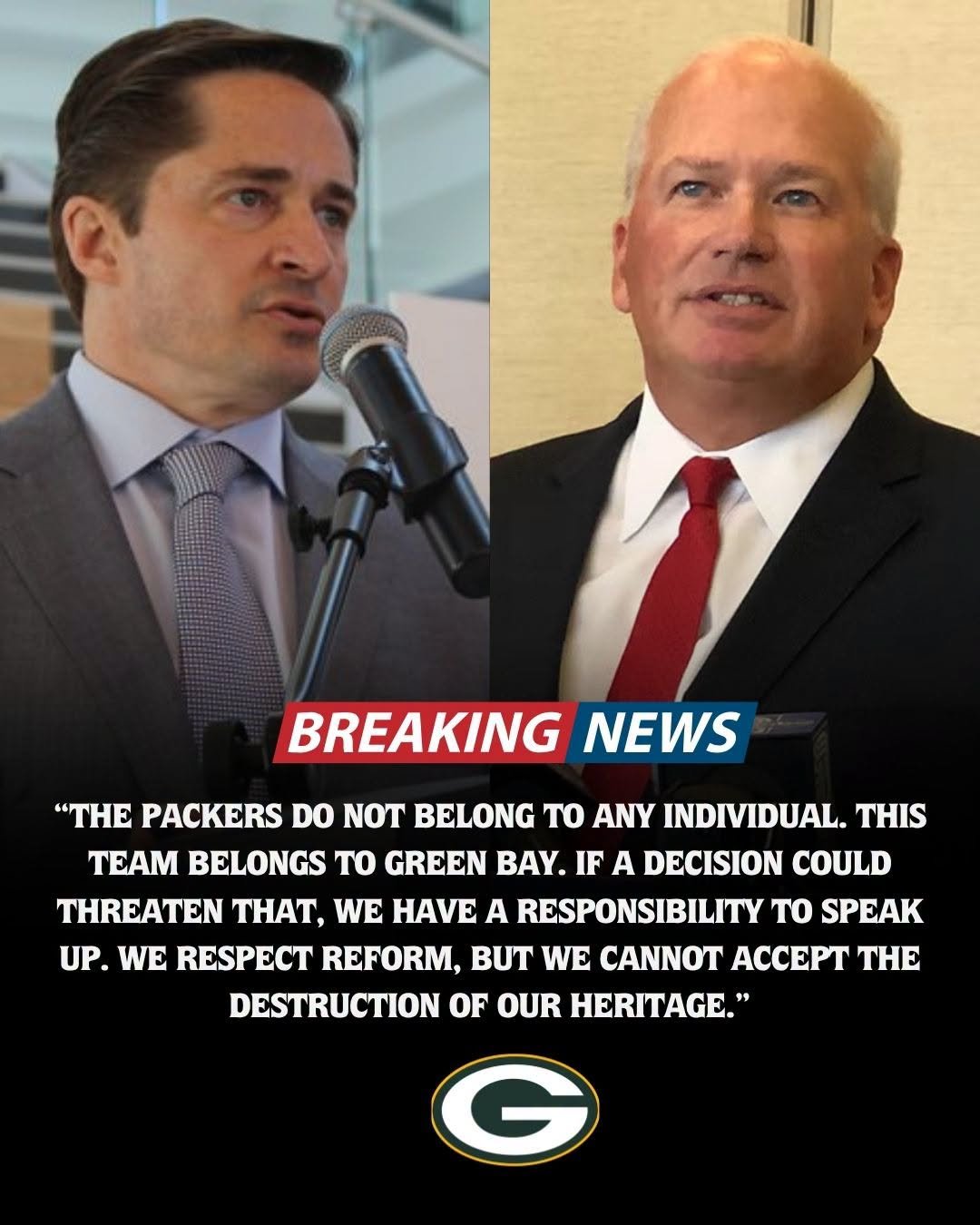
Ed Policy, a senior leader of the Green Bay Packers, has spoken out strongly after Congressman Scott Fitzgerald pushed efforts to review and potentially repeal the law.
According to Policy, this is not just a routine legal debate.
For the Packers, it is a matter of survival directly related to the team’s ability to exist in the smallest NFL market.
Policy emphasized that the current revenue-sharing model is the factor that allows Green Bay to compete fairly with teams in larger cities.
If that structure is broken, the Packers will face more severe financial pressure than any other franchise in the league.
He warned that repealing the SBA could create a domino effect, undermining the economic foundation that has protected the Packers for more than six decades.
In Policy’s view, this risk is not an exaggerated hypothesis.
It is a real threat to a team that does not belong to a private billionaire, but to the community.
The Packers are the only community-owned team in major American professional sports.
It is this unique model that has made the bond between Green Bay and the team an irreplaceable part of Wisconsin’s heritage.
Policy said that Fitzgerald and lawmakers need to view the issue beyond short-term political lenses.
He criticized the push to repeal the SBA without fully assessing the consequences for fans, local businesses, and the entire Green Bay community.
According to him, the Packers’ concerns are not ridiculous at all.
It is a warning bell about the future of a brand that has become an iconic symbol of American sports culture.
Policy called on Wisconsin lawmakers to consider a more cautious approach.
Instead of dismantling the entire existing legal framework, he argued that Congress should consider amending the law to adapt to the streaming era.
That is the way to address new problems without collapsing the foundation that has helped the NFL develop steadily for generations.
For the Packers, the issue is not only about television rights.
It is also about the ability to maintain competitive balance between large and small markets in a league that relies heavily on financial fairness.
Packers fans quickly reacted strongly on social media after Policy’s statement.
Many see this as one of the most important off-field debates regarding the team’s future in many years.
Lambeau Field is not just the home of the Packers.
It is the economic, spiritual, and identity center of a community that has lived with the team for generations.
Allowing Green Bay to face the risk of losing the team because of federal policy changes is something Policy says cannot be taken lightly.
He affirmed that the Packers will continue to fight to protect their place in Green Bay.
“The Packers do not belong to any individual. This team belongs to Green Bay. If a decision could threaten that, we have a responsibility to speak up. We respect reform, but we cannot accept the destruction of our heritage.”
The message from the team’s leadership is very clear.
The Packers are not against innovation, but they oppose any changes that could destroy the foundation that has helped the team survive and thrive.
Policy ended his position with a call for all parties involved to sit down together to find a long-term solution.
For him, the future of the Packers is not just a matter for one NFL team.
It is a matter for Green Bay, for Wisconsin, and for millions of fans who believe that Lambeau Field must forever be the home of the Packers.